
Originally published November 29, 2025. Last updated November 10, 2026.
I’ve been researching and writing about French school lunches since 2014, and if there’s one thing I’ve learned after more than a decade of spending time inside French elementary school kitchens and cafeterias, it’s that the system continues to evolve.
What began as a chance encounter with a French school cafeteria turned into a lasting fascination. I share that story in How I Accidentally Became Fascinated by French School Lunches.
French school lunches were already nutritious when I began documenting them. Today, there’s an even greater emphasis on sustainability, organic ingredients, responsible sourcing, and reducing food waste.
Some of these changes come from parents who expect better. Others come from new regulations, agricultural policies, and growing attention to where food comes from. And underneath it all is something I’ve observed repeatedly during my years in France: the belief that good food, including the food served to children at school, matters.
In this guide, I’ll take you inside French elementary school cafeterias to explain how lunches work today: what children eat, how meals are prepared and served, what national regulations require, and why the lunch experience is about much more than food.
I’ve also documented real French school lunch menus over the years, which you can explore throughout this article.
To understand why the lunch experience matters beyond nutrition, read 5 Reasons French School Lunches Are Important (It’s Not the Food).
How Long Is a French Elementary School Lunch Break?
In many French public elementary schools, the midday break lasts approximately two hours, often from 11:30 a.m. to 1:30 p.m. In the schools I’ve observed, children typically spend around 40 minutes seated at the table, with the remaining time devoted to outdoor recess.
Children generally eat the set menu in the school cafeteria or return home for lunch — a rhythm that still surprises many non-French parents.
And there’s much more happening during those 40 minutes than simply eating. Children learn to share a table, serve themselves, develop independence, and enjoy conversation over a meal.
I’ve explored these lessons in more detail in What French Children Really Learn at School Lunch.
Unlike in many American schools, packed lunches aren’t generally part of the system, except for certain medical arrangements. Children are usually offered the same daily menu, with accommodations for dietary and medical needs.
It’s a structured approach, but one that makes lunchtime an important part of the school day.
How French Elementary School Lunches Are Served
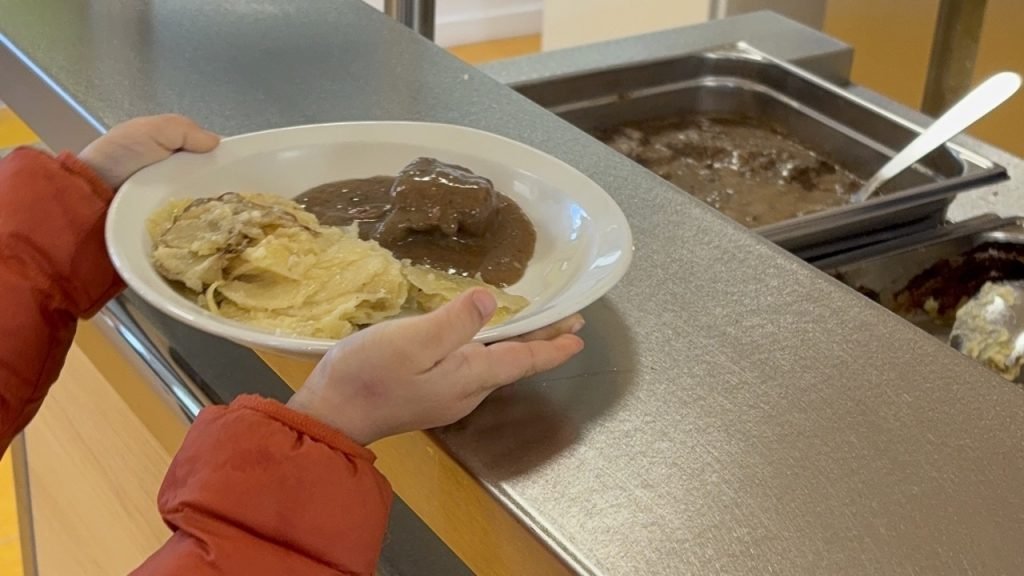
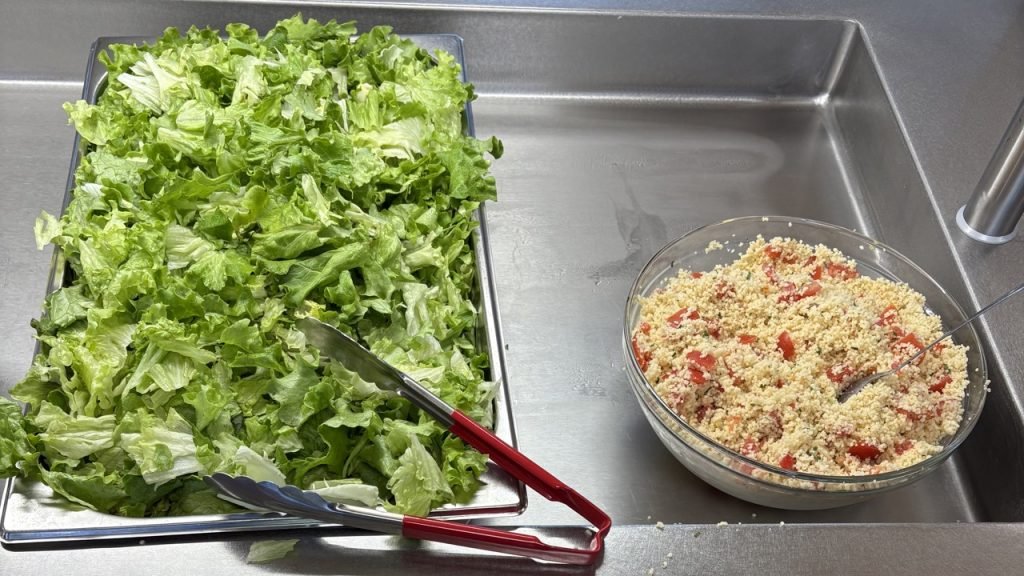
French elementary school cafeterias generally use two approaches to serving lunch: traditional table service or self-service stations. I’ve observed both over the years, and each has its own advantages.
1. Table Service (Restaurant Style)
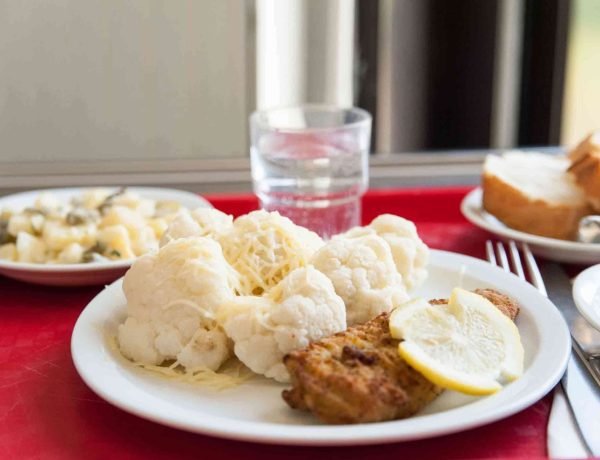
In many schools, children walk into the cafeteria and sit at small tables already set with plates, silverware, napkins, water pitchers, and fresh bread.
The starter arrives first, followed by the main course, sometimes served family-style from a shared platter. Then comes cheese or another dairy product, followed by dessert.
The children remain seated throughout the meal, with designated students sometimes helping refill water pitchers or replenish the bread.
It often feels closer to a simple neighborhood restaurant than a school cafeteria.
2. Self-Service Stations
In other schools, children move through several serving stations:
- Starter: Often a choice between two vegetable-based dishes, such as lentil salad, grated carrots, or taboulé.
- Main course and side dish: Served by cafeteria staff, who may ask children how hungry they are to help reduce food waste while encouraging them to taste different foods.
- Cheese and dessert: Usually a dairy product, fresh fruit, or occasionally a homemade baked treat.
Once they’ve finished eating, children head outside for recess.
Both approaches share the same underlying idea: lunchtime is an opportunity to sit down, enjoy a balanced meal, and develop good eating habits from an early age.
A Typical French Elementary School Lunch Menu
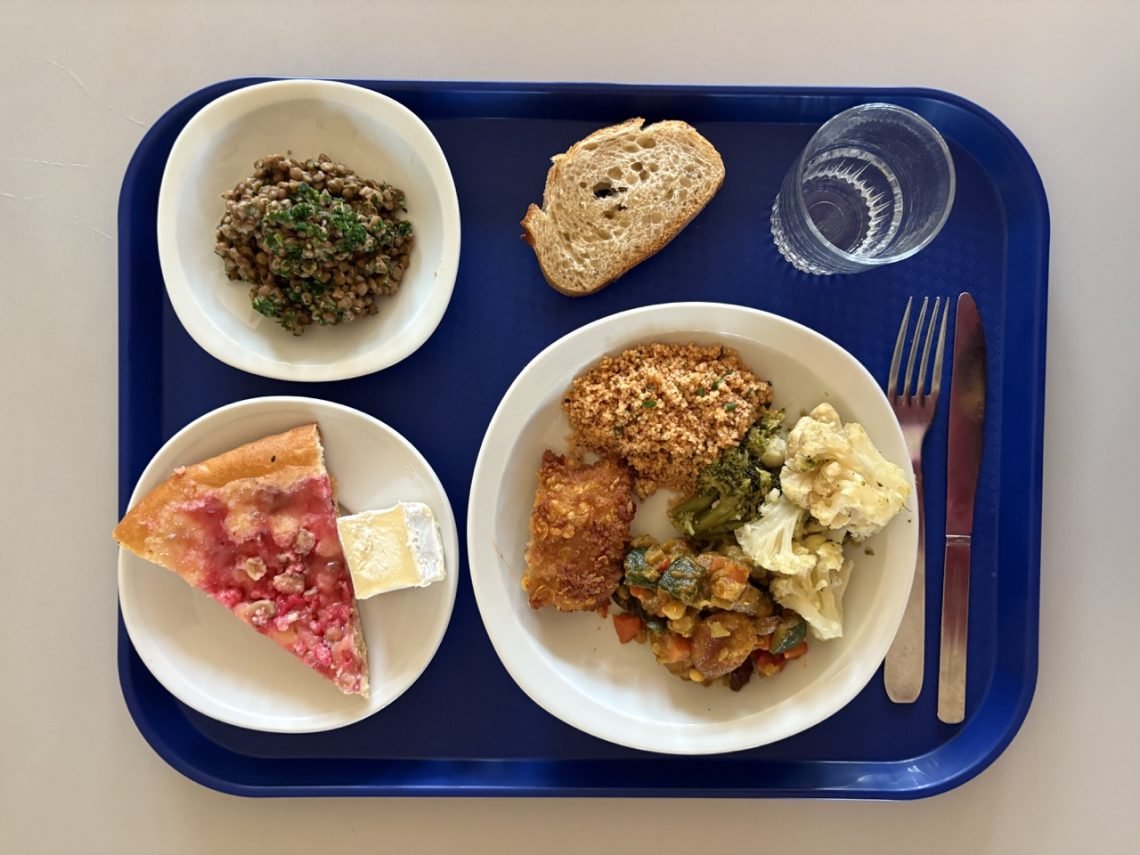
Here’s an example of a real French elementary school lunch menu from one of the cafeterias I’ve visited:
- Starter: Homemade lentil salad
- Main course: Crispy chicken
- Side dish: Homemade organic broccoli and cauliflower
- Cheese: Locally sourced goat cheese
- Dessert: Praline tart, organic apples, or clementines
Most French municipalities (communes) publish their weekly or monthly school lunch menus on their websites. Many indicate which dishes are homemade (fait maison), which ingredients are organic or locally sourced, and other information about food quality.
This gives parents an opportunity to see what their children are eating and learn more about the ingredients used.
And what does a meal like this actually cost families? Prices vary considerably from one municipality to another, often according to household income. I explain the differences in my article about how much French parents pay for elementary school lunches.
Join my free monthly newsletter
for everyday French life, simple habits & sustainable wellbeing.
And get The French Guide to Everyday Wellbeing straight to your inbox!
How French Elementary School Lunches Are Prepared
For a full behind-the-scenes look at how cantine staff actually prepare these meals, you can explore that here → Inside a French School Cafeteria Kitchen.
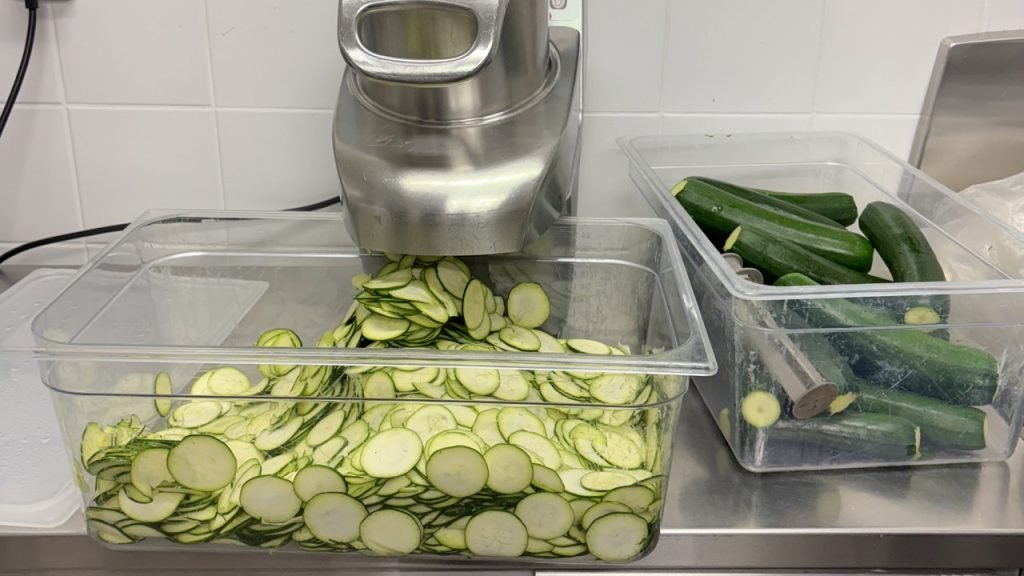
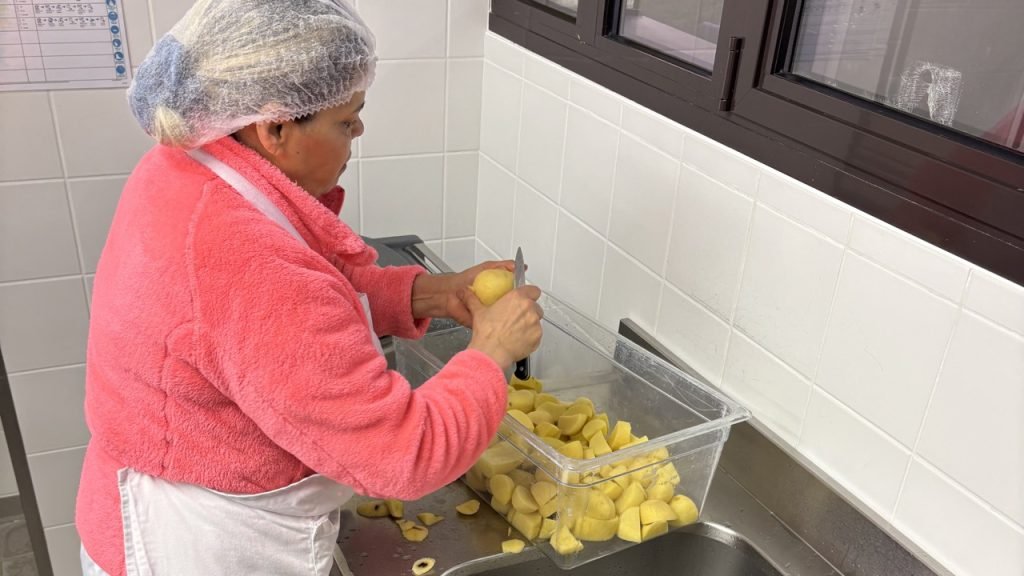
School lunch menus are generally planned weeks in advance, often with input from a dietitian to ensure nutritional balance. Dishes may be adjusted to provide the right variety of vegetables, proteins, starches, and desserts over several weeks.
There are three main ways French elementary school lunches are prepared:
- On-site kitchens: Meals are cooked directly at the school.
- Central kitchens: Meals are prepared in a larger kitchen serving several schools, then transported to individual cafeterias.
- External catering companies: Private providers, such as the French company Sodexo, prepare and deliver meals under contract with municipalities.
Each approach has its advantages and challenges. A meal prepared in a central kitchen isn’t necessarily lower quality than one cooked on-site. I explore these differences, and some common misconceptions, in Do All French Elementary School Lunches Look This Good?
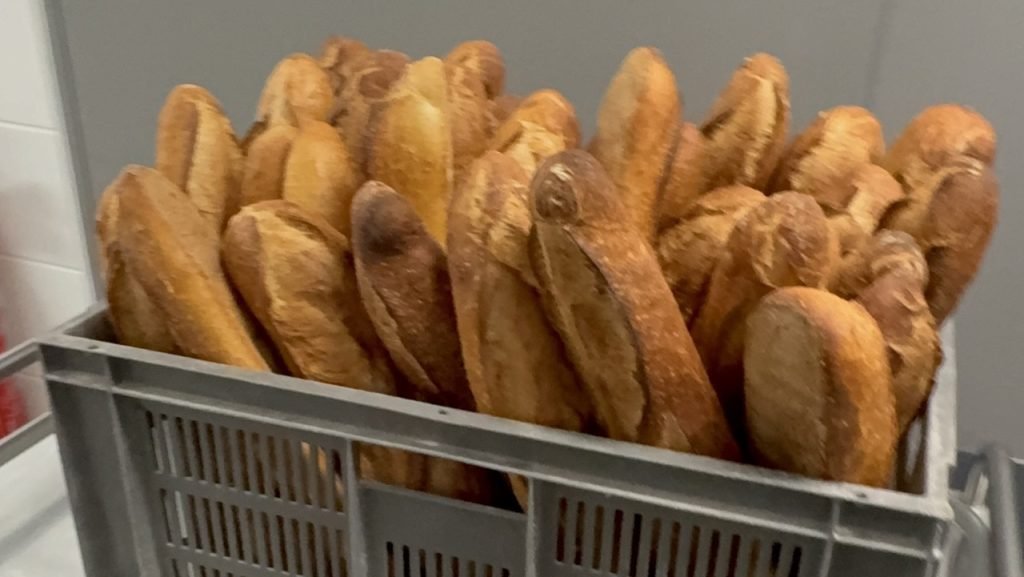
In the on-site kitchens I’ve visited, staff often arrive before 7:00 a.m. Vegetables are chopped, soups started, salads assembled, and main dishes prepared for the oven. Fresh bread arrives from local bakeries.
To see what a typical working day looks like for the people behind these meals, follow along in A Day in the Life of a French School Chef.
Not every dish is homemade, and I think it’s important to say that out loud. Some schools prepare a large share of their meals from scratch — soups, salads, gratins, and roasted meats — while others use ready-made components when staffing, equipment, or budgets require it.
School menus often identify homemade dishes (fait maison), organic ingredients, and products from local suppliers, although the level of detail varies by municipality.
And if you’d like to try some of these dishes at home, I’ve worked with a French school chef to create a downloadable collection of recipes actually served in French elementary school cafeterias: French School Lunch Recipe Guide.
Organic and Local Food: The EGalim Era
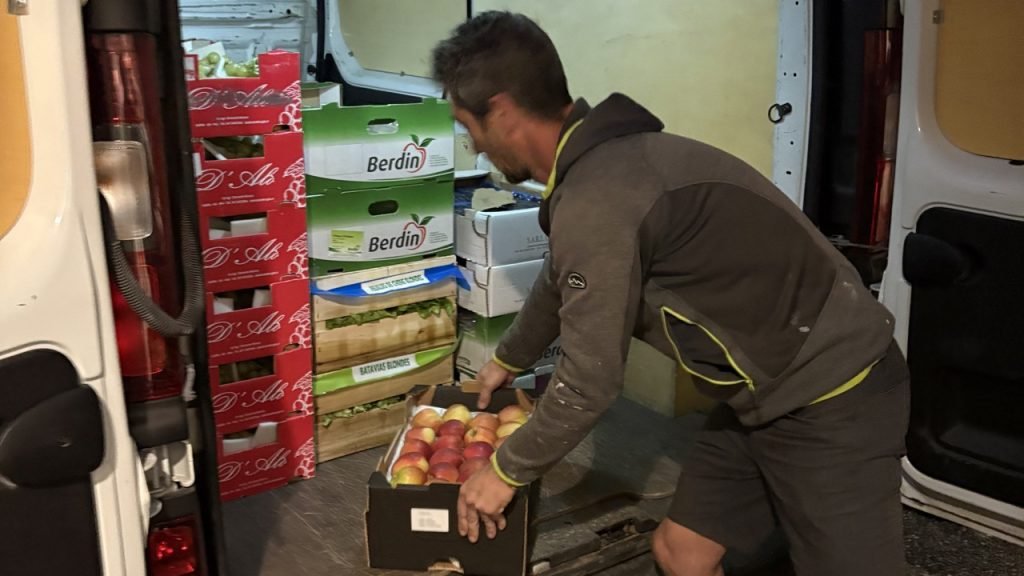
French school cafeterias have undergone significant changes in recent years, particularly with the introduction of the EGalim law in 2018 and subsequent legislation. These reforms are designed to improve food quality, support more sustainable agriculture, and reduce the environmental impact of public food services.
The legislation focuses on three main priorities:
- Supporting farmers and agricultural producers: Encouraging fairer relationships between producers and buyers and more responsible purchasing practices.
- Improving the quality of food served in public institutions: Including schools, hospitals, and nursing homes, with greater emphasis on organic and sustainably produced ingredients.
- Reducing food waste and environmental impact: Through more sustainable purchasing, waste prevention, and better management of resources.
For French elementary school cafeterias, one of the most important requirements is that food purchases must include:
- At least 50% sustainable and quality-certified products.
- At least 20% organic products, included within that 50%.
These percentages are calculated by the annual value of food purchases, rather than the number of organic ingredients on an individual lunch tray.
There are also specific requirements for meat and fish, with at least 60% of purchases in these categories required to meet recognized quality and sustainability criteria.
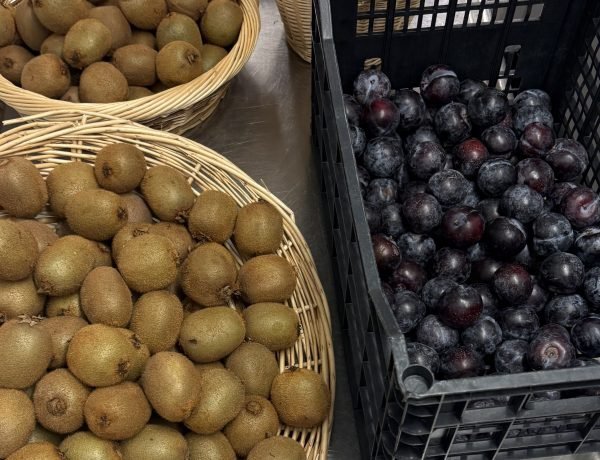
One distinction worth making is that local and organic aren’t the same thing. A product grown nearby doesn’t automatically qualify under EGalim, although many municipalities actively work with regional farmers and producers.
In the school kitchens I’ve visited, I’ve seen how these priorities translate into everyday decisions: organic vegetables, locally sourced dairy products, seasonal fruit, and more attention to where ingredients come from.
Families can often see some of this information directly on school menus, where organic products, quality labels such as Label Rouge, and local sourcing may be identified.
Of course, not every municipality has reached the same level of progress. Some have gone well beyond the national requirements, while others are still working toward them.
But the direction is clear: greater attention to food quality, sustainability, and transparency in the meals served to French children.
If you’d like to understand the nutritional requirements behind these menus, I explain them in French School Lunch: Official Nutrition Guidelines Explained.
Vegetarian Meals: Now Required
Since November 2019, French elementary school cafeterias have been required to offer at least one vegetarian meal per week.
This doesn’t mean children are choosing between a meat-based and vegetarian menu. In most schools, the vegetarian meal is simply the menu served to everyone that day.
These meals might include lentils, chickpeas, beans, eggs, cheese, or vegetable-based dishes. The idea is to introduce more variety while reducing reliance on meat and fish.
Some municipalities have gone further, offering vegetarian meals more frequently.
It’s another example of how French school lunches continue to evolve, balancing nutrition, environmental concerns, and changing attitudes toward food.
Tackling Food Waste in French Elementary Schools
Food waste is a major issue in France, and school cafeterias are an important part of the effort to reduce it.
Over the years, I’ve watched French elementary school cafeterias introduce practical measures to prevent food from ending up in the trash.
In some schools, cafeteria staff ask children how hungry they are before serving their main course. Children are encouraged to take portions they can finish, while still being invited to taste unfamiliar foods.
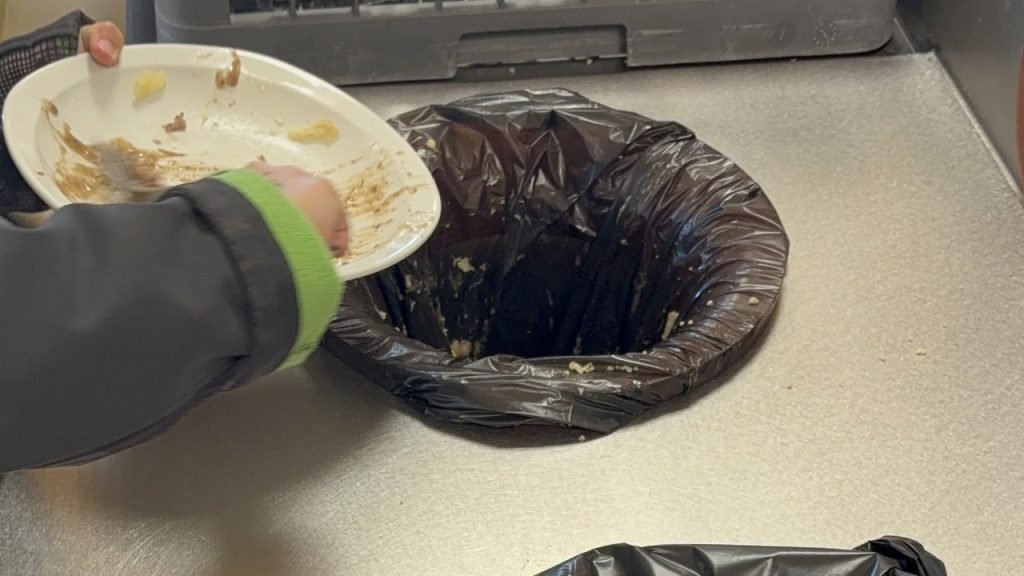
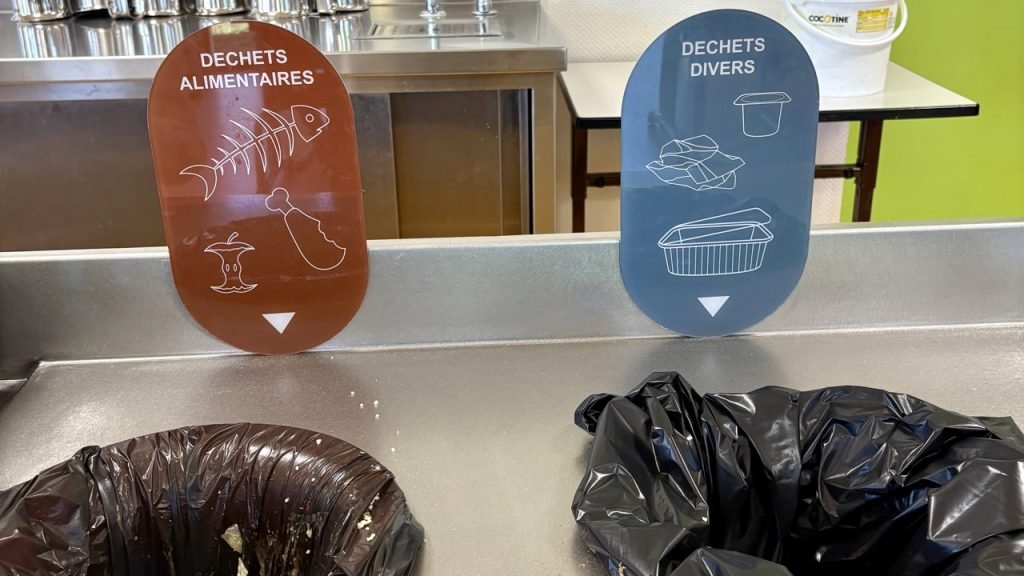
At the end of lunch, children may also participate in sorting their leftovers into separate bins, helping them understand just how much food gets thrown away.
These everyday practices are supported by national legislation, including France’s 2020 anti-waste law, known as the AGEC law (Loi Anti-Gaspillage pour une Économie Circulaire).
France has established ambitious food-waste reduction targets for collective catering, including school cafeterias. Public catering services are also required to take steps to measure and reduce food waste.
Some municipalities have introduced composting programs, food-waste weighing systems, and other initiatives to make children more aware of the environmental impact of what they eat.
What interests me most is how these lessons become part of the everyday lunch routine. Children aren’t simply told that wasting food is bad. They’re encouraged to think about portions, leftovers, and the resources that go into preparing a meal.
For a closer look at these initiatives, read How France Is Working to Eliminate Food Waste in School Cafeterias.
Why French School Lunches Matter: The Cultural Heart of French Food
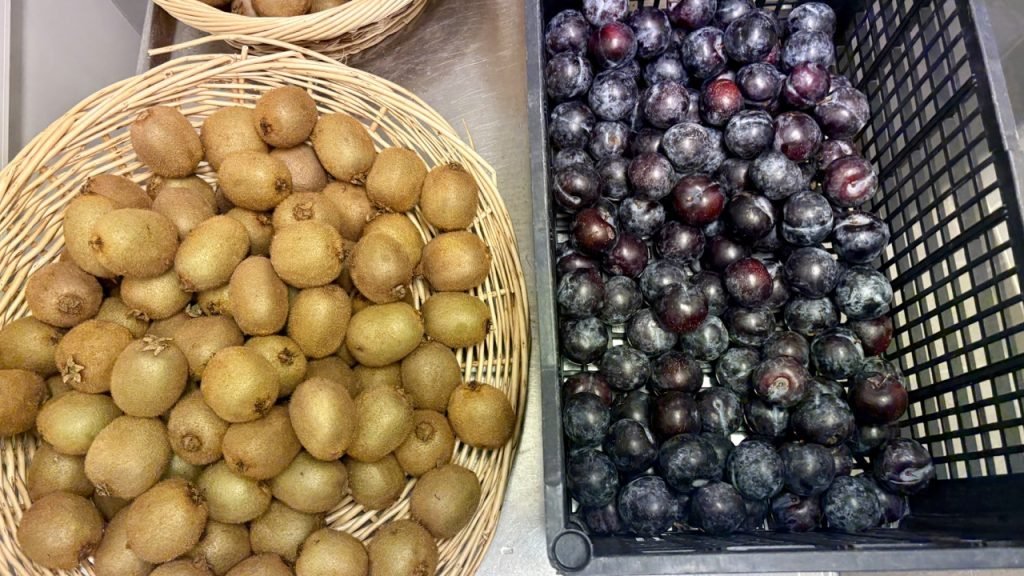
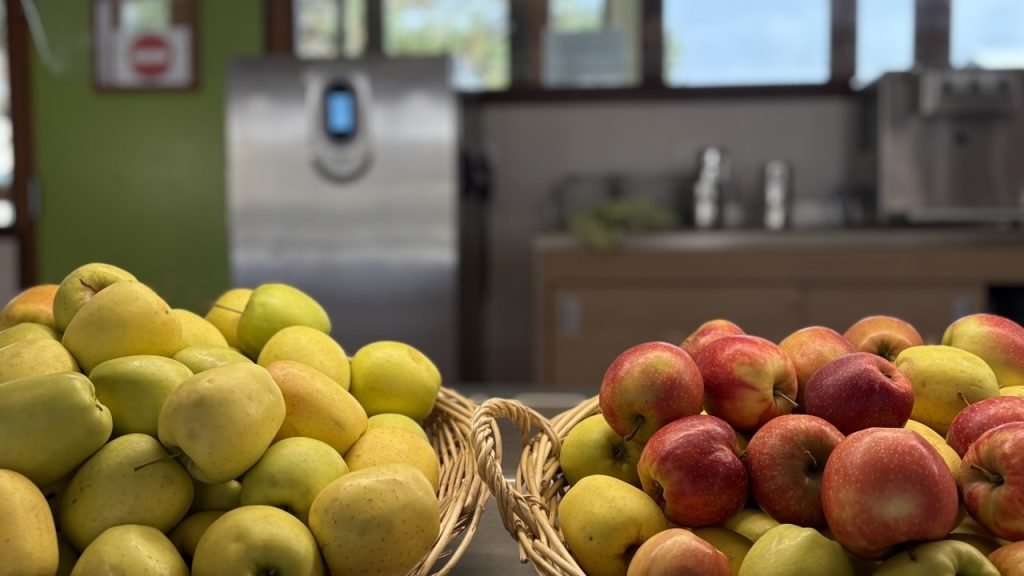
French food culture isn’t just about luxury or Michelin stars. It’s also about simple, good-quality ingredients prepared with care. And French elementary school lunches often reflect this: the local apple, the homemade chocolate cake, the cheese from a farm one village away.
Fresh bread isn’t pretentious — it’s normal.
And fait maison (homemade) isn’t just a marketing phrase. It’s something many French parents and municipalities increasingly expect from their school cafeterias.
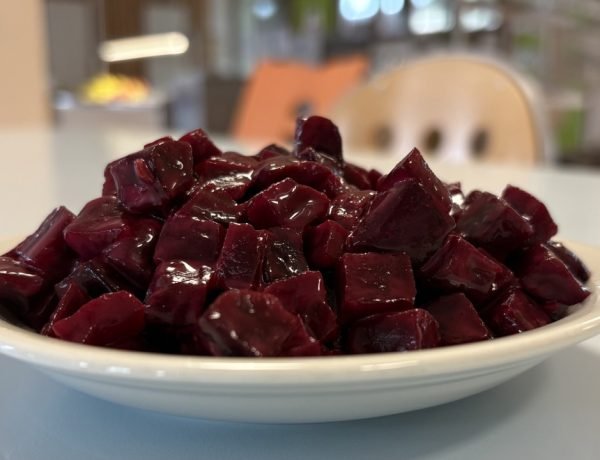
Over the years, I’ve watched children eat everything from beet salad and vegetable soup to mussels and fish. These aren’t necessarily dishes that many American parents would expect to find on an elementary school lunch menu.
And yes, French children can be picky eaters, too. I’ve seen plenty of children turn down vegetables or leave something on their plates.
But what interests me is how regularly they’re exposed to different foods.
Vegetables appear again and again, prepared in different ways. The menu changes throughout the month. Children sit together and watch their classmates eat the same dishes.
And in many French families, children grow up eating much of the same food as adults rather than having an entirely separate children’s menu.
Over time, this repeated exposure can help unfamiliar foods become more familiar.
I explore this approach in more detail in Why French Kids Aren’t Picky Eaters.
And these habits can begin well before elementary school. To see how even the youngest children are introduced to different foods, read How French Toddlers Learn to Eat Everything.
Every October, France celebrates La Semaine du Goût, a national week dedicated to discovering and appreciating different tastes. But encouraging children to explore food is part of a much broader tradition that extends from the family table to the school cafeteria.
What’s Next for French School Lunches?
French school lunches attract attention around the world, but here in France, the conversation about improving them never really stops.
Parents, municipalities, chefs, nutrition professionals, and policymakers continue to debate how to make school meals better: more organic ingredients, stronger relationships with local farmers, less food waste, and more opportunities to teach children about food and where it comes from.
Some municipalities are already moving toward predominantly organic and locally sourced menus. Others are working to improve their kitchens, reduce waste, or make school meals more affordable for families.
There’s still plenty of room for improvement, and progress varies considerably from one community to another.
But after more than a decade of documenting French elementary school lunches, what continues to strike me is how seriously the subject is taken.
Because what children eat at school touches so much more than nutrition. It involves education, health, agriculture, equality, the environment, and the eating habits children carry into adulthood.
And the same philosophy extends beyond the cafeteria. For a broader look at the everyday habits that shape French wellbeing, explore The French Approach to Wellbeing.
It’s not just lunch.
It’s a reflection of what we value — in France and everywhere.
I also share behind-the-scenes photos and videos from French elementary school kitchens and cafeterias on Instagram, where you can see what children are actually eating.
And if you’re looking for ideas to improve school lunches in your own community, I’ve put together 8 Practical Tips to Improve School Lunches in Your Community.
Explore Real French Elementary School Lunch Menus
Curious about what French children actually eat at school?
I’ve documented real French elementary school lunch menus from different years and seasons. These examples offer a closer look at the variety of dishes served, from everyday lunches to special holiday meals.
Regular French School Lunch Menus
- French School Lunch Menu (2026)
- Paris School Lunch Menus (2026)
- French School Lunch Menu (2025)
- French School Lunch Menu (2022)
French Christmas School Lunch Menus
More From France
If you’re curious about how France nurtures healthier habits — from school lunches to everyday food, movement, and wellbeing — I share practical tips and stories each month. Sign up for the free newsletter below and receive my guide, The French Guide to Everyday Wellbeing, straight to your inbox. Merci!
Come see it for yourself!
Follow along on Instagram and TikTok for real footage from inside French school cafeterias and kitchens, plus everyday life in France.