
In the French elementary schools I’ve visited, children typically spend around 40 minutes eating lunch, followed by another 40–50 minutes playing outside. It’s a substantial midday break, especially compared with countries where children may have only 20 or 30 minutes to eat.
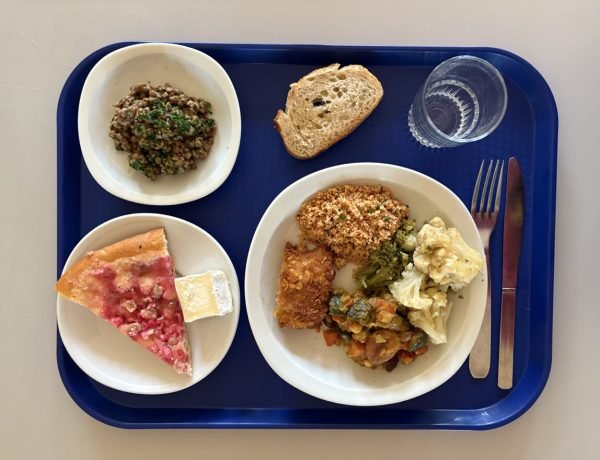
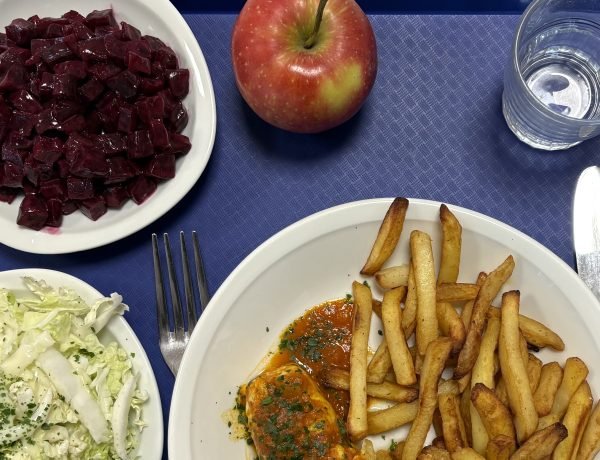
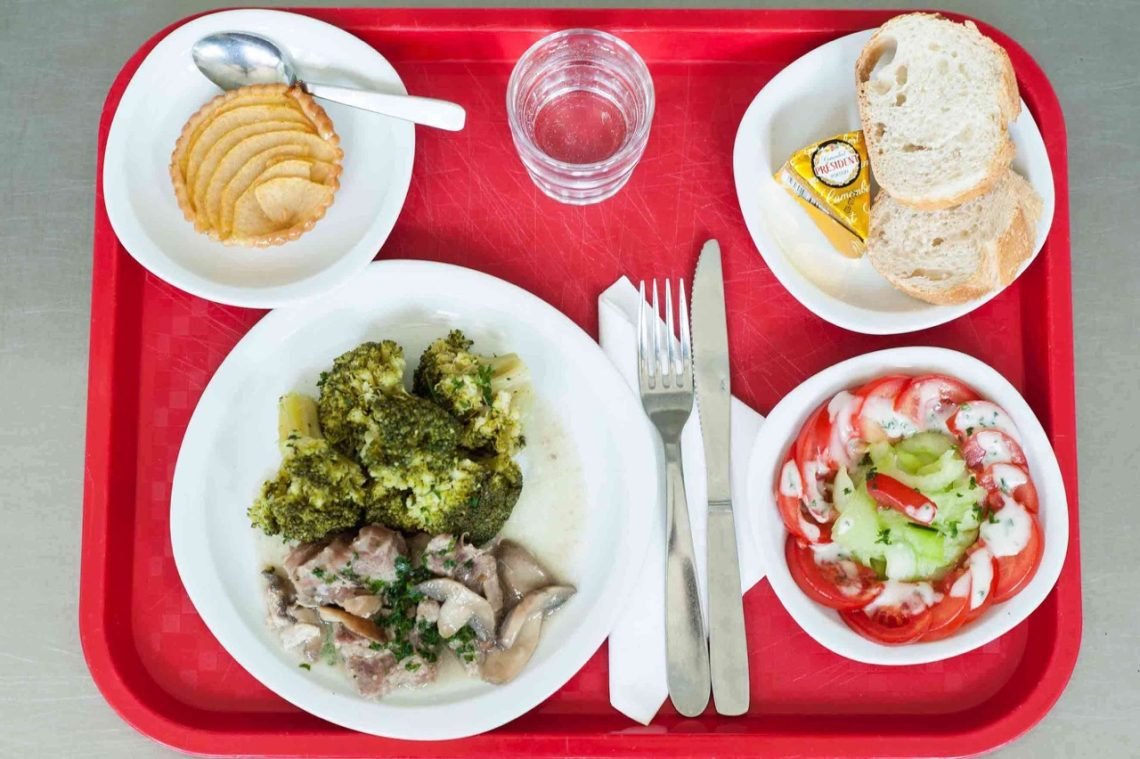
Part of that time is devoted to the traditional French school lunch: a sit-down, multi-course meal with a starter, main course, cheese or another dairy product, and dessert.
But here’s what I’ve learned after years of observing French elementary school cafeterias: the lunch break is about much more than the food.
It’s also about teaching children how to eat, socialize, discover new tastes, and take a genuine break from their academic day.
Here are five reasons I believe the French school lunch experience matters.
For a complete overview of the system, including how meals are organized, prepared, and served, read my French School Lunches: How They Work Today guide.
1. Eating Together Is a French Cultural Habit
One of the most important wellbeing habits I’ve observed in France is simply this: sitting down to eat a proper meal at a table.
In the elementary school cafeterias I visit, children sit at small tables of four to eight and eat from the same daily menu, with appropriate accommodations for dietary and medical needs.
The meal is served in courses, which naturally encourages children to slow down.
They’re not unwrapping packed lunches or eating quickly before running outside to play. They’re practicing the rhythm and pleasure of a shared meal — something deeply rooted in French culture.
And this habit begins early.
Children learn that eating isn’t simply about satisfying hunger. It’s also about taking time, enjoying food, and being together.
They’re also introduced to the importance of reducing food waste. I’ve written more about this in How France Is Working to Eliminate Food Waste in School Cafeterias.
Join my free monthly newsletter
for everyday French life, simple habits & sustainable wellbeing.
And get The French Guide to Everyday Wellbeing straight to your inbox!
2. Food Is Part of Education
French school lunches aren’t simply a break from learning. They’re also an opportunity to teach children about food.
A French government text published in 2001 emphasized the educational role of school meals:
“One can often neglect or forget the educational aspect of the meal… Children learn eating habits at an early age. It is therefore important to start nutrition education while behaviors and attitudes have not already been established.”
The same document highlighted the importance of helping children:
- Recognize different food groups
- Develop their sense of taste
- Make thoughtful food choices
- Understand the relationship between food and health
In other words, the school cafeteria is also a classroom — one where children learn through everyday experience.
I’ve seen this firsthand in the elementary school kitchens and cafeterias I’ve visited over the years.
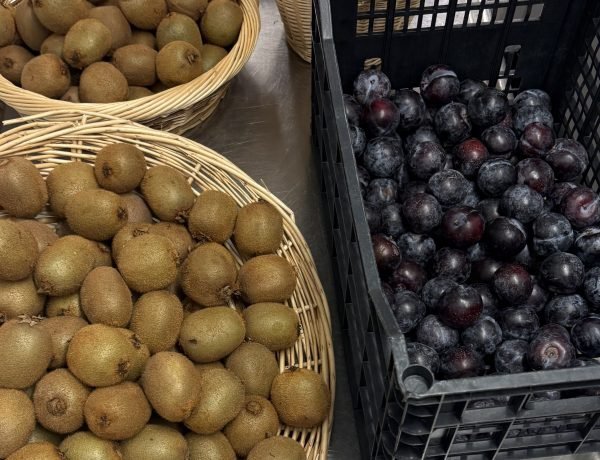
Children are regularly introduced to different vegetables, flavors, and preparations. They may not like everything they’re served, but they have opportunities to discover foods they might never encounter at home.
And this education can begin long before elementary school.
When my daughter attended daycare near Lake Annecy, I interviewed the director about how toddlers were introduced to different foods. You can read what I learned in Why French Kids Eat Everything: 5 Lessons From Daycare.
France also has national nutritional requirements for school meals, including rules intended to encourage variety and balanced menus. I explain these in French School Lunch Nutritional Guidelines Explained.
3. Lunchtime Teaches Children to Socialize
The French view mealtimes as an opportunity to eat well and connect with others. The two go together.
The same 2001 government text describes the social importance of school meals:
“Lunchtime is not only the intake of calories. It is also a moment when students… can relax and exchange socially with one another… Eating is a privileged moment of discovery and must remain a pleasurable moment.”
This is something I’ve noticed repeatedly when observing French elementary school lunches.
Children sit together, talk, share the experience of eating the same menu, and learn how to behave around a table.
They’re developing social habits as well as eating habits.
Of course, not every lunch is perfectly calm. These are children, after all! But the underlying expectation is that mealtime should be enjoyable, social, and unhurried.
And that is a lesson that can stay with them long after elementary school.
Working with a French elementary school chef, I also created a downloadable guide featuring some of the best-loved recipes served in French school cafeterias. You can explore the French School Lunch Recipe Guide here.
4. A Necessary Pause in the School Day
French elementary school days can be long and structured, with substantial time devoted to academic subjects.
The midday break gives children an opportunity to step away from the classroom, enjoy a proper meal, and spend time outdoors.
In the schools I’ve observed, lunch is followed by a generous period of recess.
Children can run, play, talk with friends, and return to their afternoon lessons after a change of pace.
I think this is one of the most overlooked aspects of the French school lunch system.
When people see my videos of multi-course meals, they often focus on what’s on the plate.
But the time surrounding the meal matters too.
The French midday break recognizes that children need opportunities to rest, move, and socialize during the school day.
It’s not simply about feeding them before the next lesson.
5. Giving Children Access to Balanced Meals
One of the most important principles behind French school lunches is the idea that children should have access to balanced meals, regardless of their family’s circumstances.
France has national nutritional standards for school meals, and public elementary school cafeterias are expected to follow a common framework.
There are also national rules governing food sourcing.
Under France’s EGAlim framework, public collective catering is generally required to purchase at least 50% sustainable and quality products, including at least 20% organic products, measured by purchase value.
But this doesn’t mean that every French elementary school lunch looks the same.
Municipalities are responsible for organizing public elementary school catering, and there can be considerable differences in budgets, kitchens, suppliers, staffing, and the way meals are prepared.
Some schools have their own kitchens. Others receive meals from central kitchens. And some municipalities contract with private catering companies.
I’ve written about these differences in Do All French Elementary School Lunches Look This Good?.
Nor does every child necessarily eat in the school cafeteria. School meals are generally optional, and access and pricing arrangements can vary.
Still, the broader ambition is important: to provide children with nutritious, varied meals and opportunities to discover different foods.
And those meals can introduce children to an impressive range of flavors.
For an example, have a look at this typical French elementary school lunch menu.
For a behind-the-scenes look at how these meals are cooked and prepared, visit Inside a French School Cafeteria Kitchen.
Why the French School Lunch Break Matters
After spending so many years inside French elementary school kitchens and cafeterias, I’ve come to believe that the most interesting part of the system isn’t necessarily the food itself.
It’s what happens around the food.
Children learn to sit together, discover new tastes, take their time, and enjoy a genuine pause in the school day.
The lunch break becomes an opportunity to practice habits that extend well beyond the cafeteria.
Of course, the French system isn’t perfect. Quality varies, budgets are tight, and the people preparing and serving hundreds of meals every day face plenty of challenges.
But I think there’s something valuable in the underlying philosophy.
Feeding children is important. Teaching them how to eat, enjoy food, and share a meal is important too.
And that’s why I believe French school lunches deserve attention for reasons that go far beyond what’s on the plate.
FAQ: French Elementary School Lunches
How long is lunch in a French elementary school?
The length of the midday break varies by school and municipality.
In the elementary schools I’ve observed, children typically spend around 40 minutes eating, followed by another 40–50 minutes of outdoor recess.
The overall midday break may also include time for children to move between the classroom, cafeteria, and playground.
Why do French elementary schools have long lunch breaks?
The midday break allows children time to eat a sit-down meal, socialize with classmates, and play outside before returning to lessons.
School lunches are also seen as opportunities for food education, including discovering different flavors and learning everyday eating habits.
Do French elementary schools serve four-course lunches?
French elementary school meals are often organized around several courses, such as a starter, main dish, dairy course, and dessert.
However, the exact menu structure can vary. Not every meal necessarily includes four separate courses.
Are French school lunches the same everywhere?
No. Although national nutritional requirements provide a common framework, municipalities organize their own public elementary school catering.
Some schools cook on-site, others receive meals from central kitchens, and some use private catering companies. Menus, sourcing, and preparation methods can vary.
Are French elementary school lunches free?
Not necessarily. In many municipalities, families pay for school lunches, often according to household income.
Some municipalities offer reduced-price or subsidized meals, and certain national programs help eligible communities provide affordable school lunches.
More From France
If you’re curious about how France nurtures healthier habits — from school lunches to everyday food, movement, and wellbeing — I share practical tips and stories each month. Sign up for the free newsletter below and receive my guide, The French Guide to Everyday Wellbeing, straight to your inbox. Merci!
Come see it for yourself!
Follow along on Instagram and TikTok for real footage from inside French school cafeterias and kitchens, plus everyday life in France.