
Originally published November 29, 2025. Last updated November 12, 2026.
A Note Before We Begin
This story began with my very first visit to a French school cafeteria kitchen back in 2013 — but it didn’t end there.
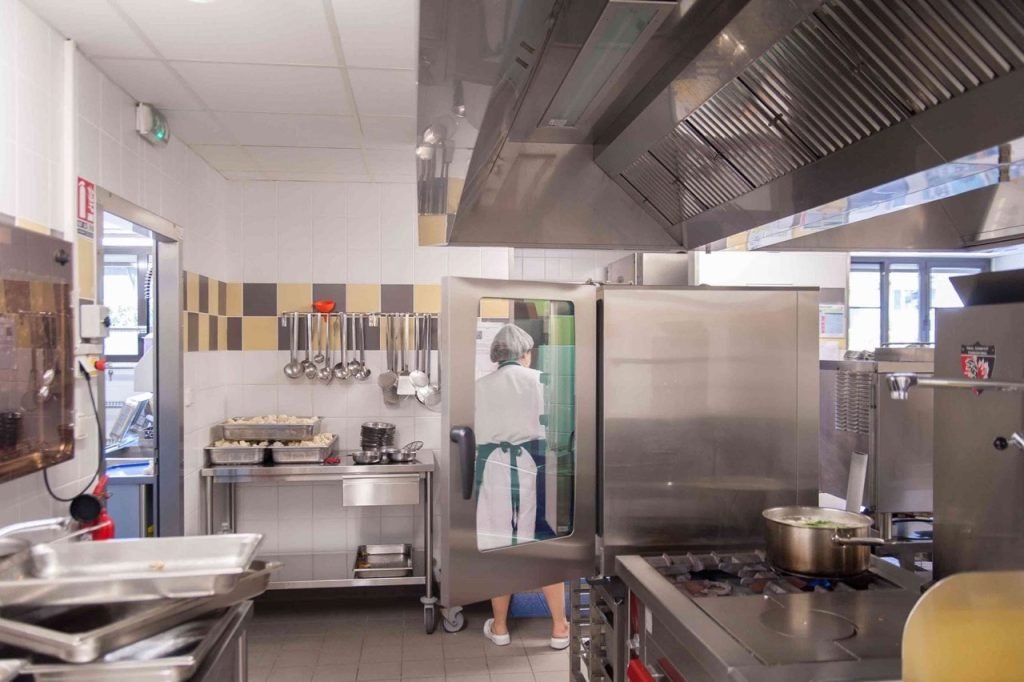
Since that morning, I’ve returned many times, photographing food preparation, observing lunch service, interviewing staff, and spending three full working days alongside the kitchen team, from early-morning prep through late-afternoon cleanup.
What follows brings together more than a decade of visits to show what really happens behind the scenes: the people, the routines, the ingredients, and the daily work involved in preparing hundreds of lunches for French children.
It’s a side of French school lunch that most families never get to see.
Walking Into the French School Cafeteria Kitchen at Dawn
I remember arriving at 6:45 a.m. on my first visit, shuffling through the cold, dark morning toward the back door of the school. It felt impossibly early to be cooking lunch.
Inside, Cathy — the head chef — greeted me with a warm smile. Only months from retirement, she still moved with the ease of someone who knew every pot, every drawer, and every rhythm by heart.
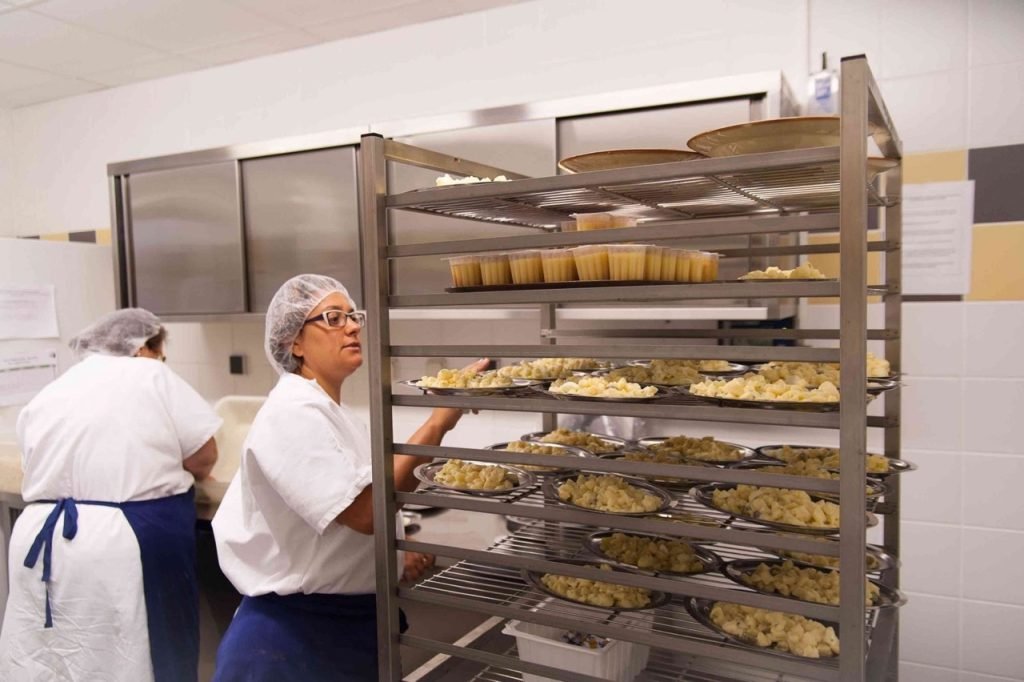
Every morning, she and her two assistants arrived before sunrise to prepare mostly homemade lunches for more than 500 children:
- Elementary school students (1st–5th grade)
- Preschoolers (ages 3–5)
- Daycare children (ages 0–3)
By noon, France’s unofficial national lunch hour, hundreds of children would begin arriving for their meals. Older students in one room, younger children in another — each buzzing with its own energy.
What struck me early on was how normal all this felt to the staff.
I was wide-eyed, photographing every detail and asking endless questions.
They were amused — not by the work, but by my fascination with it.
To them, this was simply the daily rhythm of feeding children well.
To me, it felt extraordinary.
For a complete overview of how the French school lunch system works — from menus and nutrition standards to the cultural traditions behind it — read French School Lunches: How They Work Today.
The Soup (and the Smell of Real Ingredients)
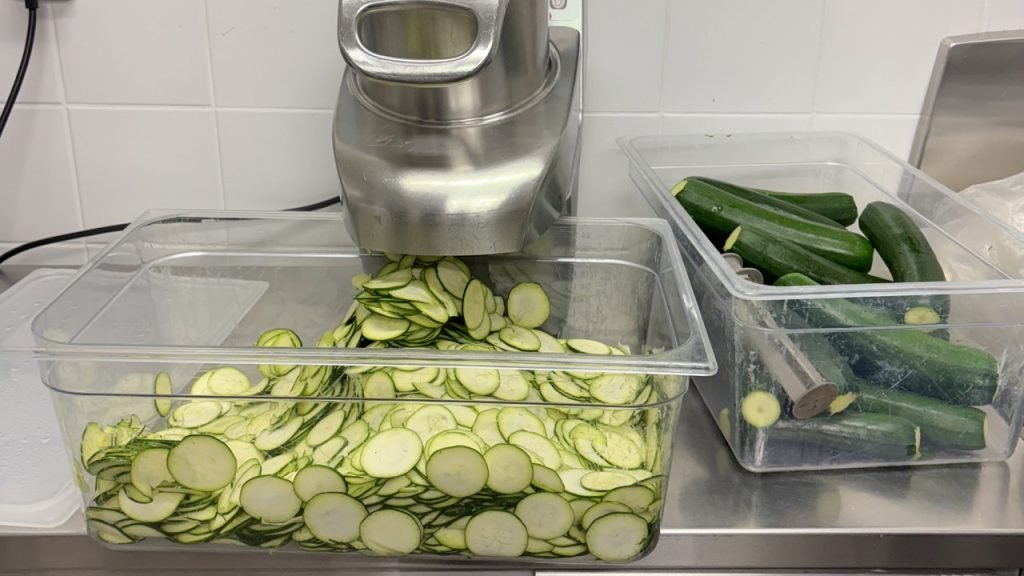
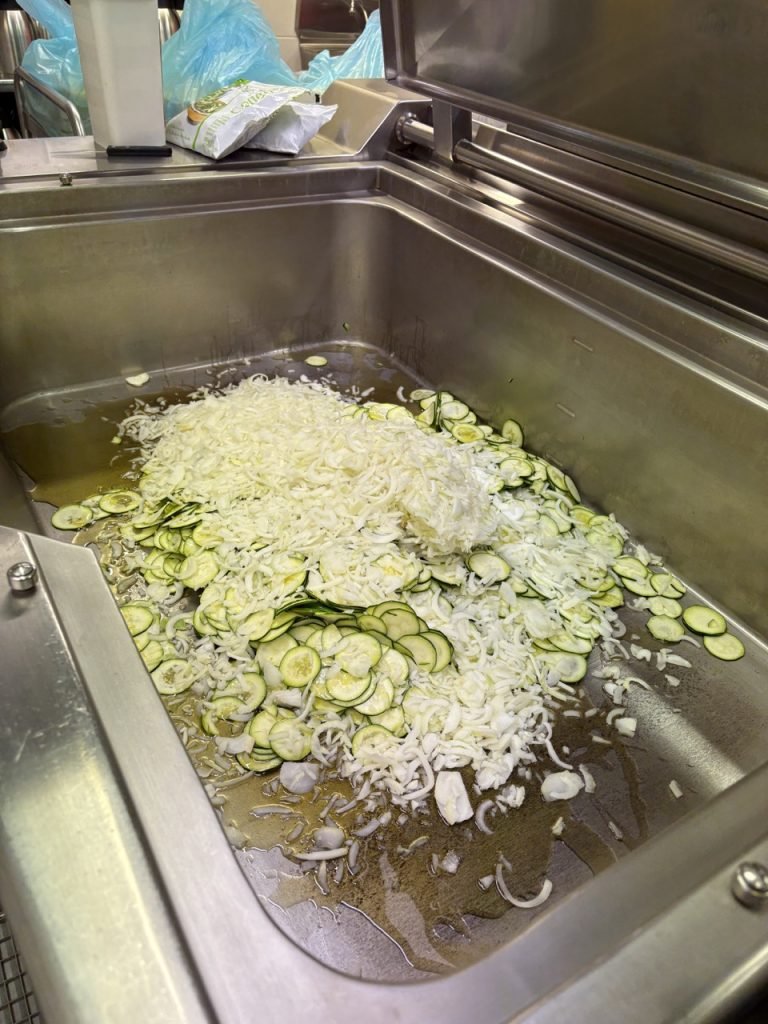
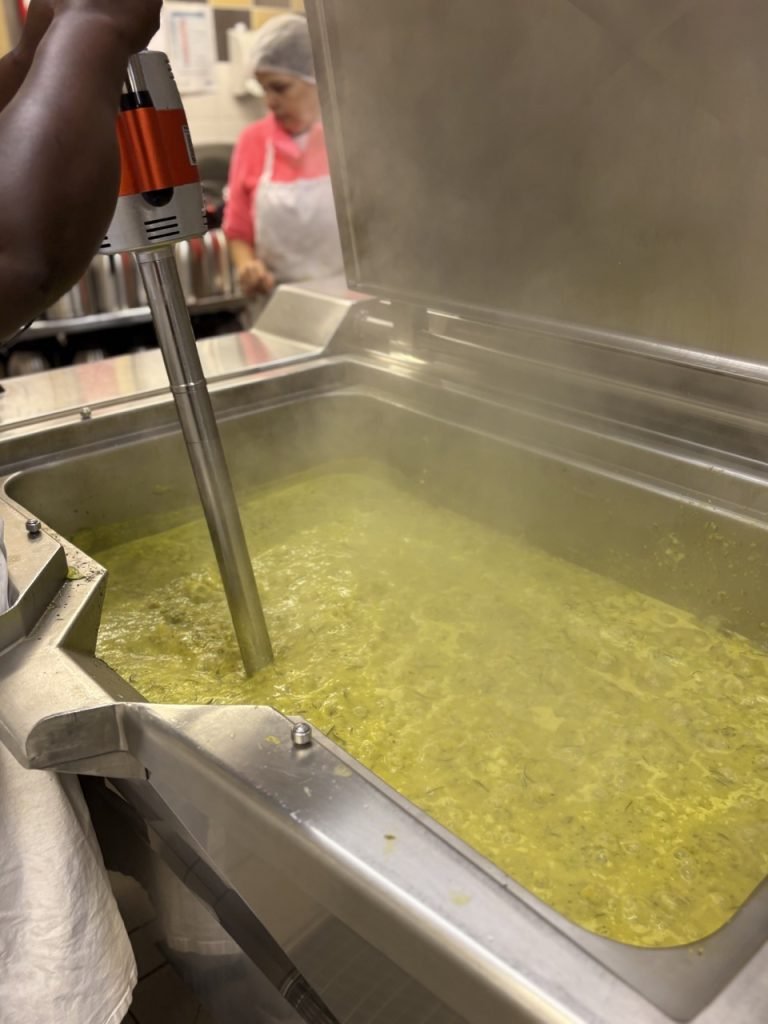
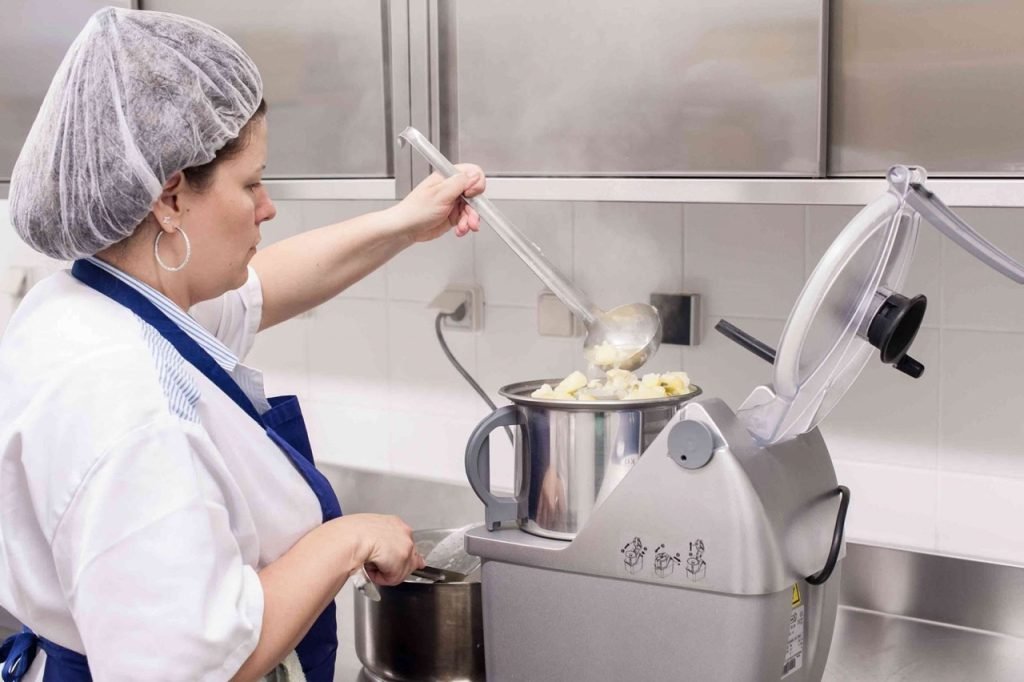
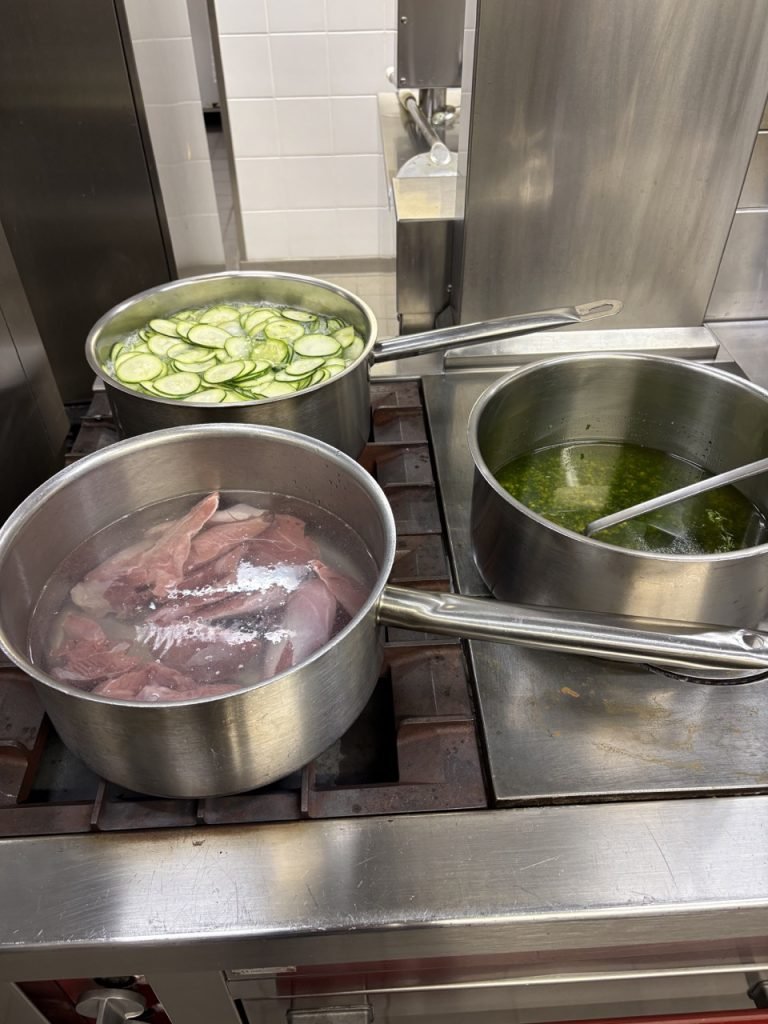
One morning, the kitchen assistants were preparing a huge batch of homemade zucchini soup. One fed zucchini through an industrial mandoline, sending perfect shreds into a giant tilting pot.
Another sautéed onions and garlic in olive oil, adding coriander, water, and spices that made the entire French school cafeteria kitchen smell like someone’s home.
The soup would be served to the elementary school students and delivered to the preschool and daycare children as well.
Even today, it still strikes me that some of the youngest children in France are introduced to real, freshly prepared food from their earliest years.
It shapes something.
Zucchini soup remains a favorite in the school kitchen I’ve followed over the years. You can see how it’s prepared in The Zucchini Soup French Children Eat at School.
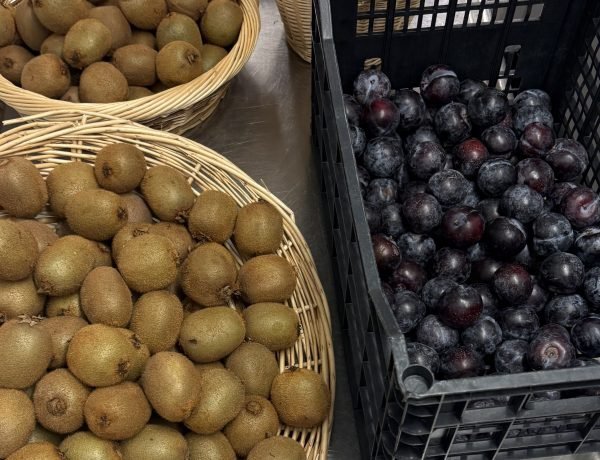
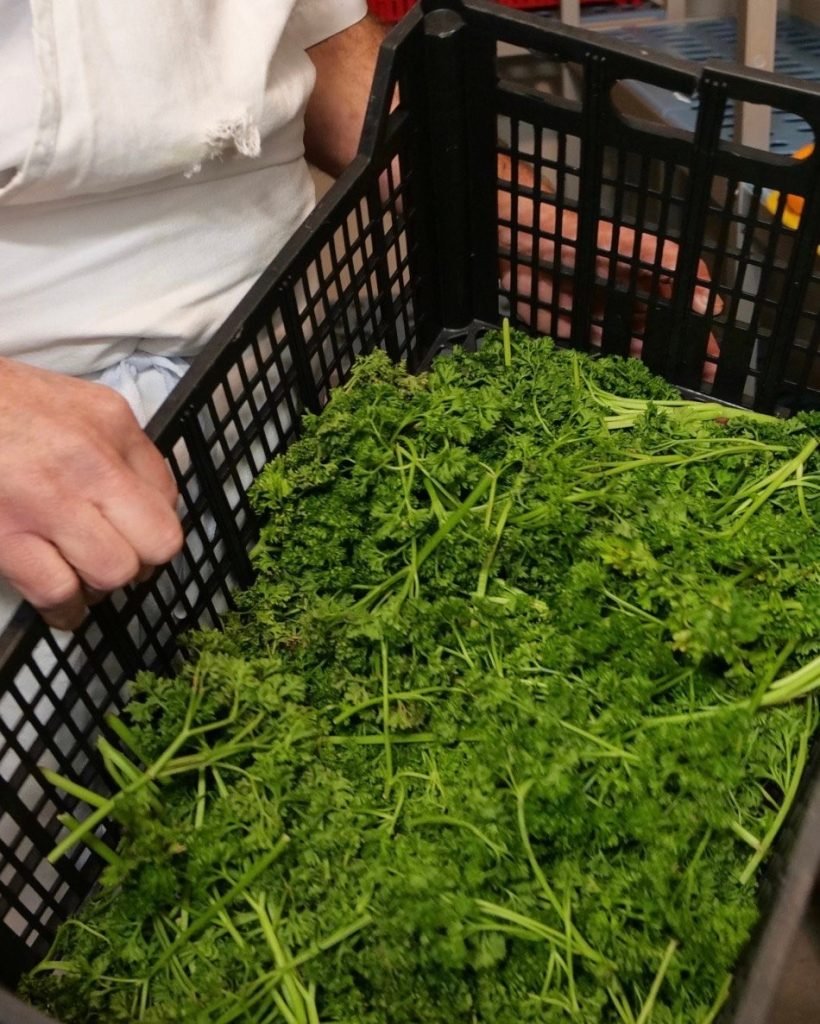
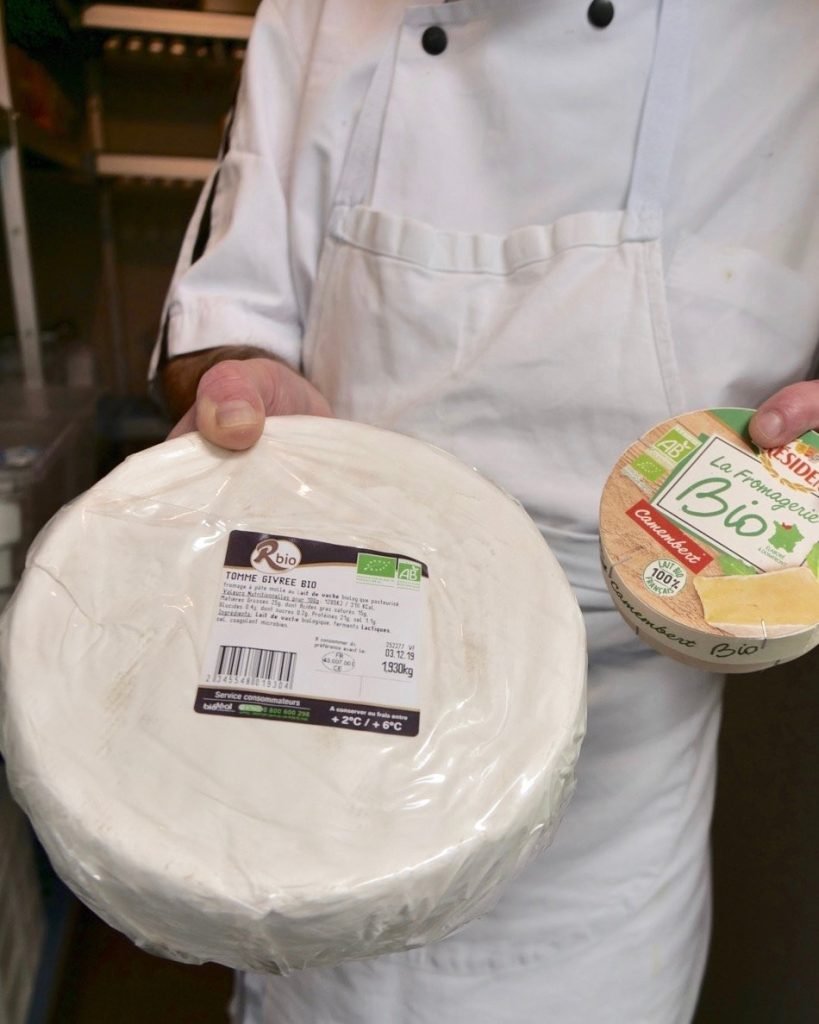
The Inventory (and France’s Organic + Local Requirements)
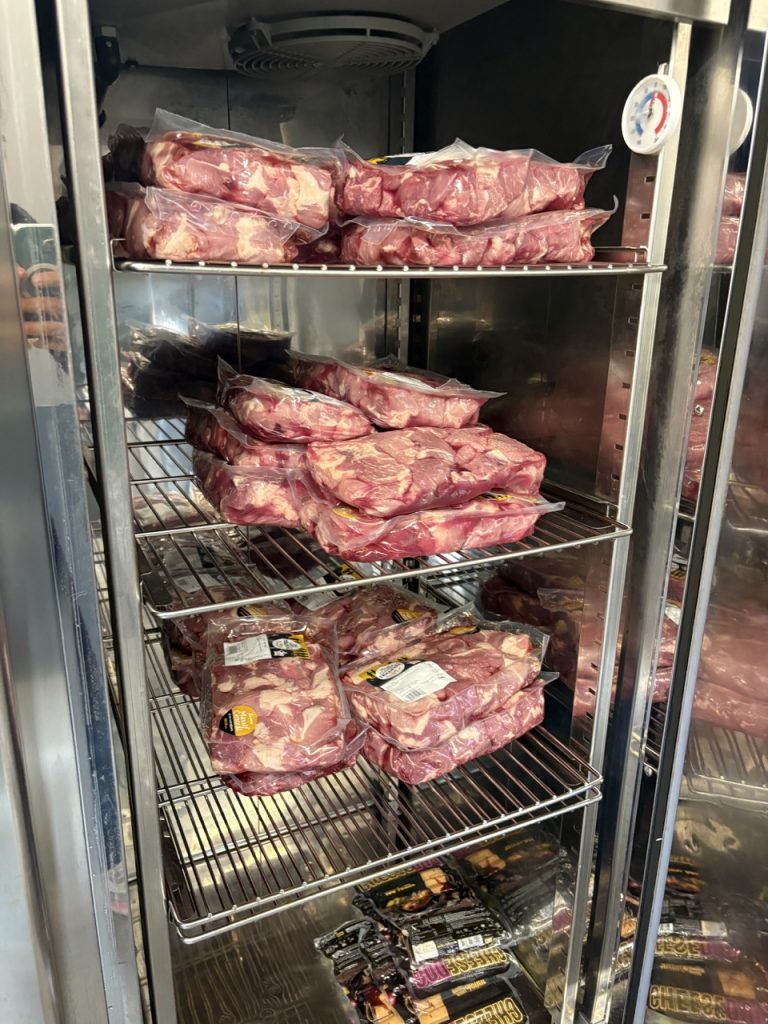
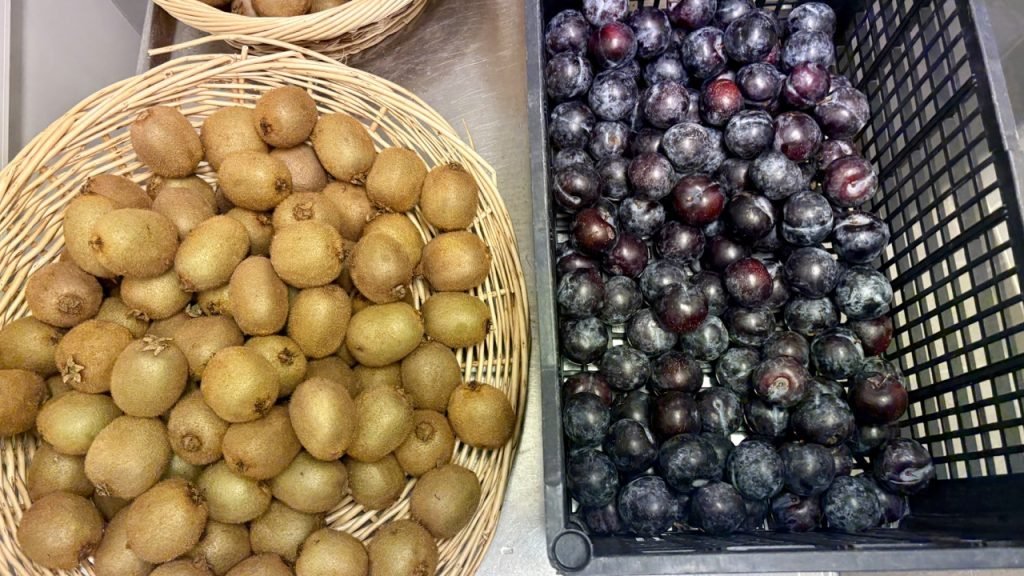
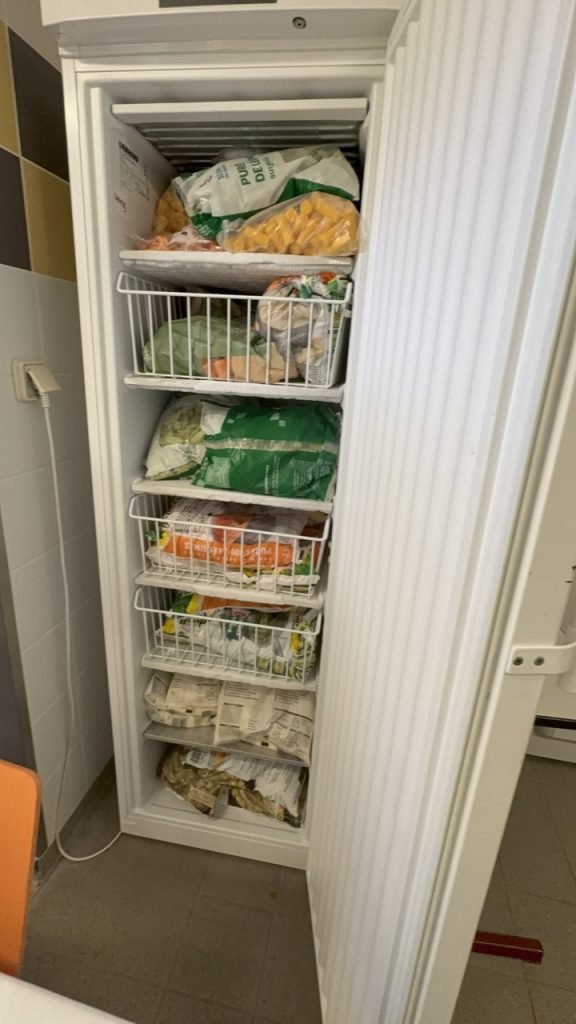
While the soup simmered, Cathy moved through the pantry and walk-in refrigerator with her clipboard.
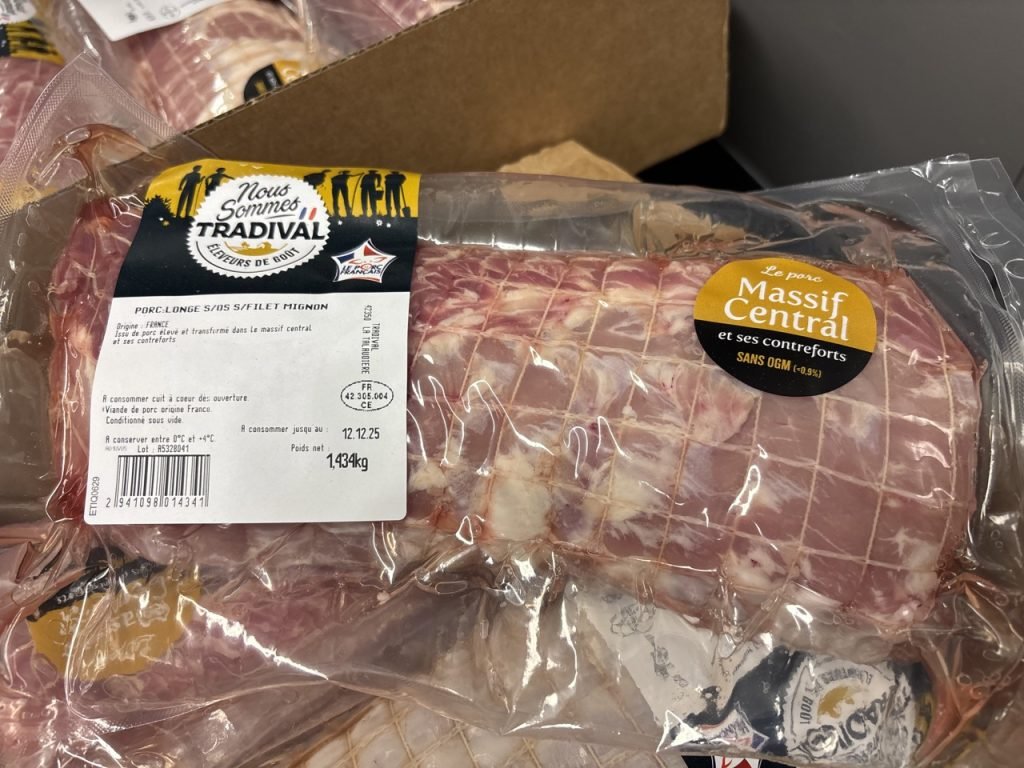
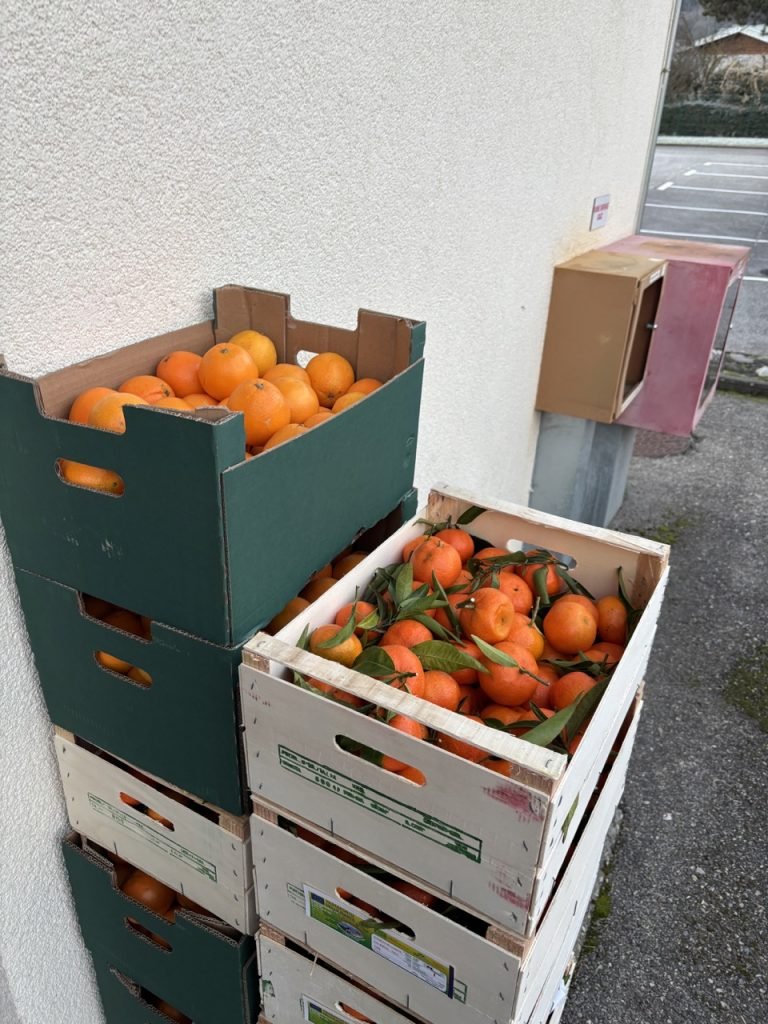
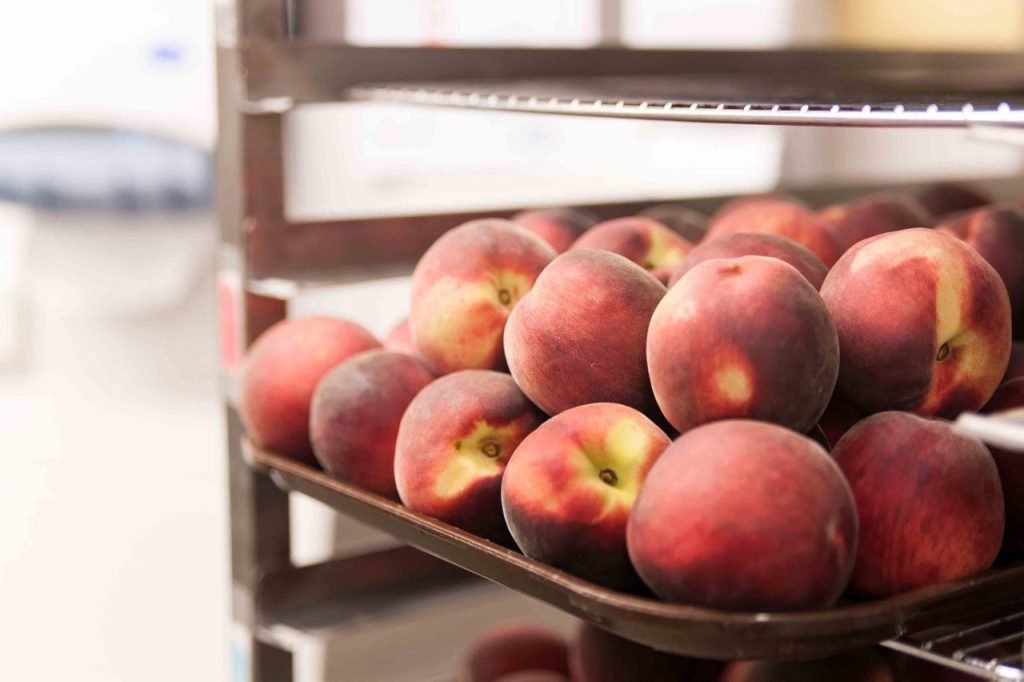
Over the years, France has introduced increasingly ambitious requirements for the quality of food served in public school cafeterias. Under the EGAlim law, at least 50% of annual food purchases must qualify as sustainable or quality products, including a minimum of 20% organic food. Locally sourced ingredients are also encouraged, although being local alone doesn’t automatically qualify a product under the law.
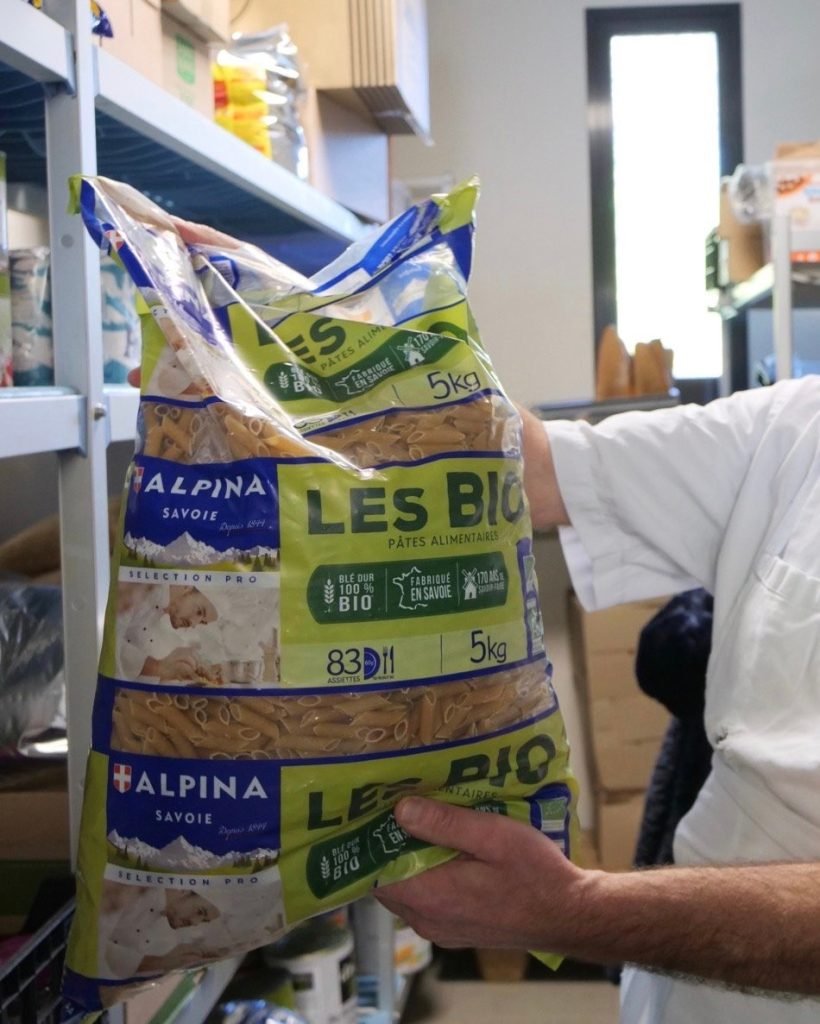
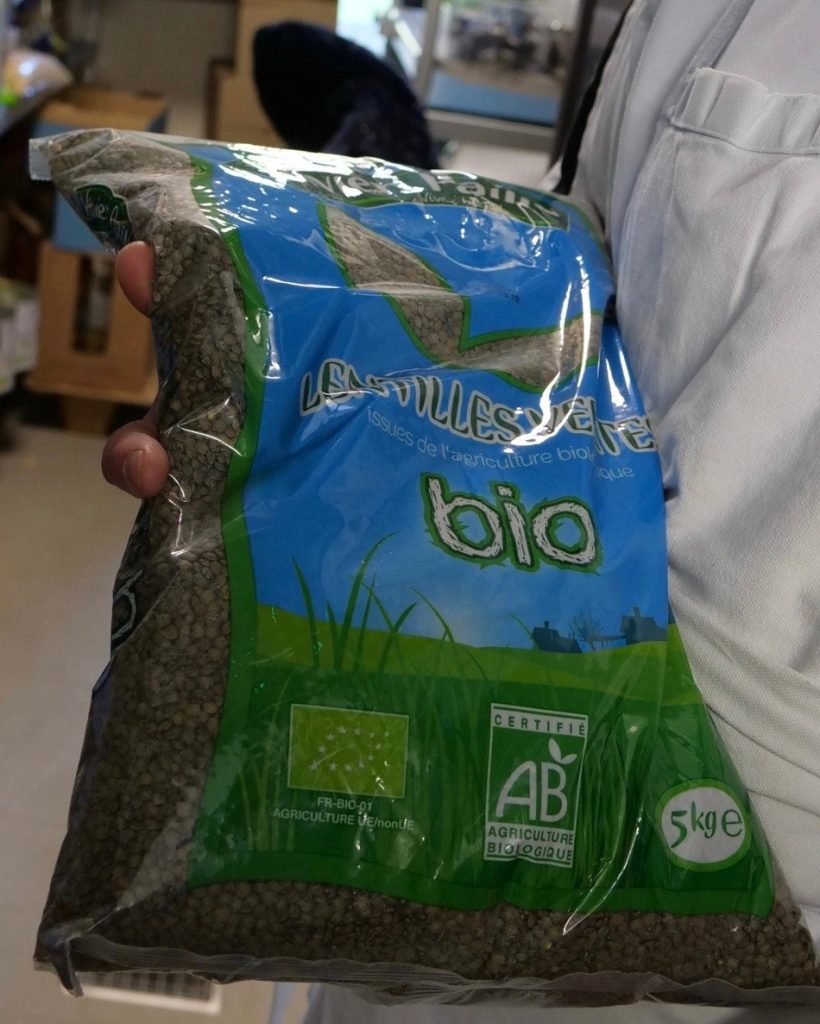
Inside the kitchen, Cathy showed me some of the staples:
- Local cheeses
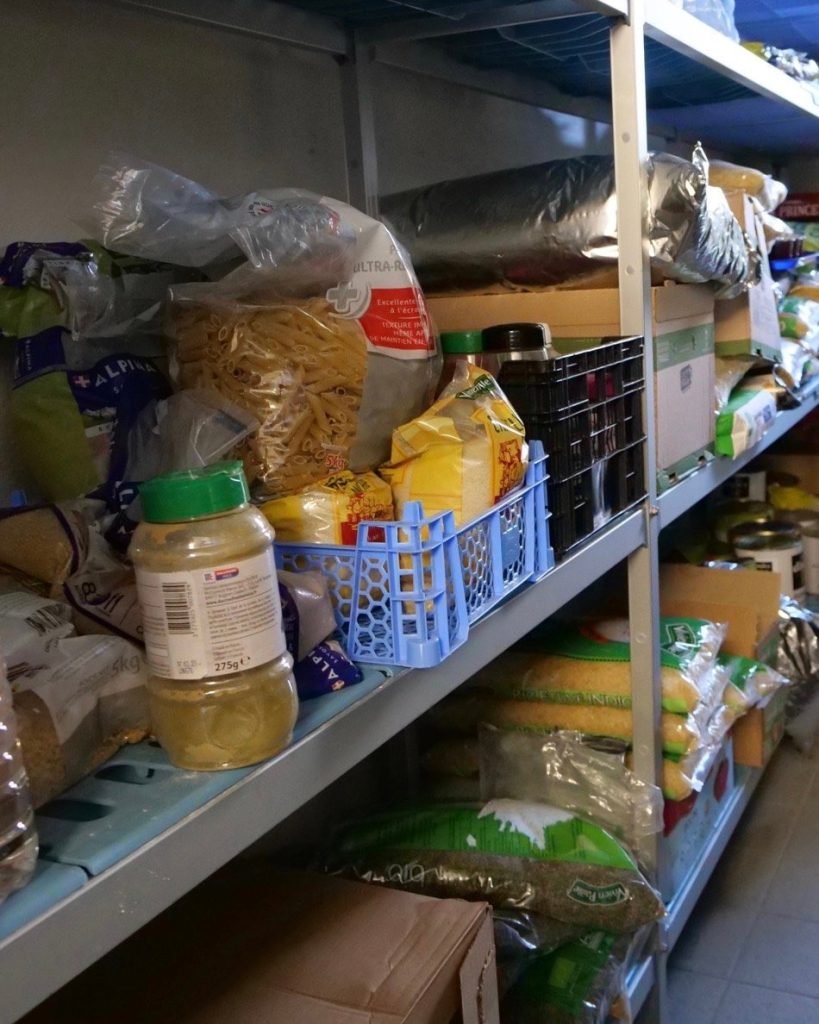
- Organic lentils
- Organic pasta
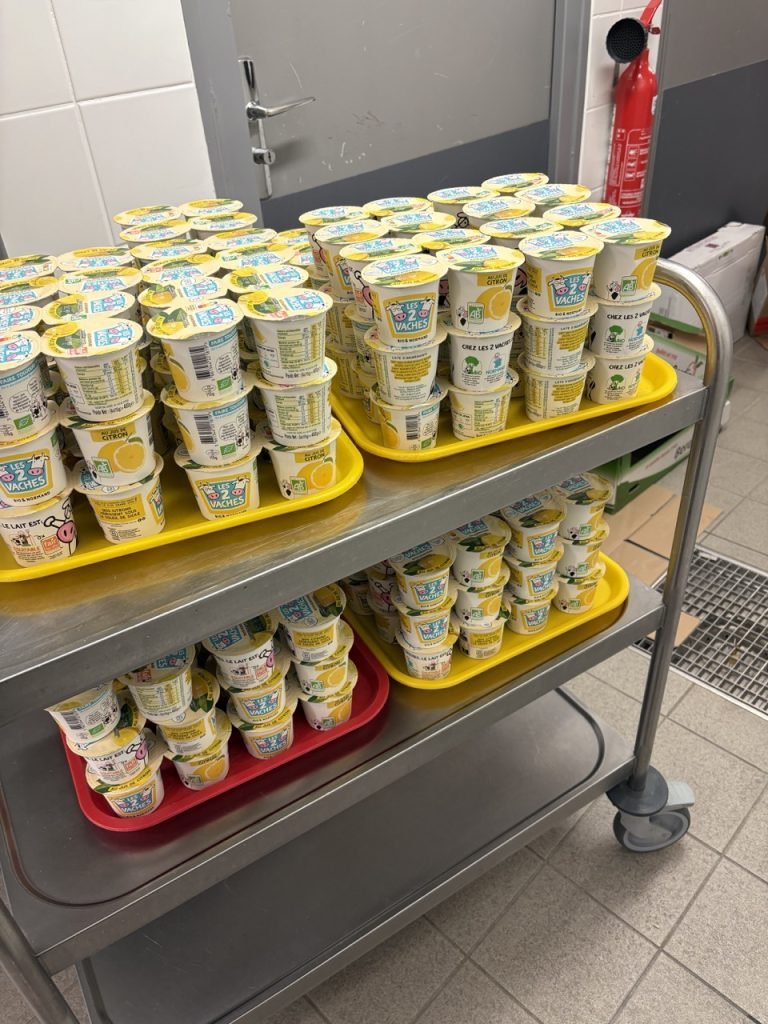
- An array of organic yogurts
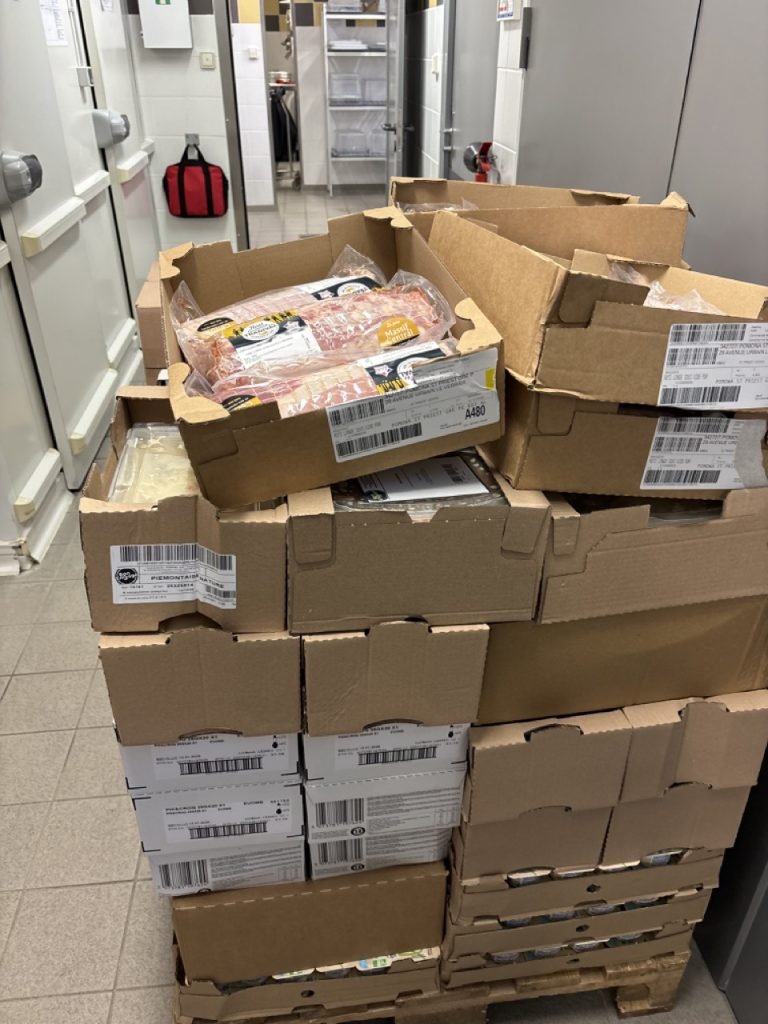
Deliveries followed a predictable weekly rhythm: vegetables, dairy, dry goods, and meat typically arrived once a week — sometimes on different days depending on the supplier.
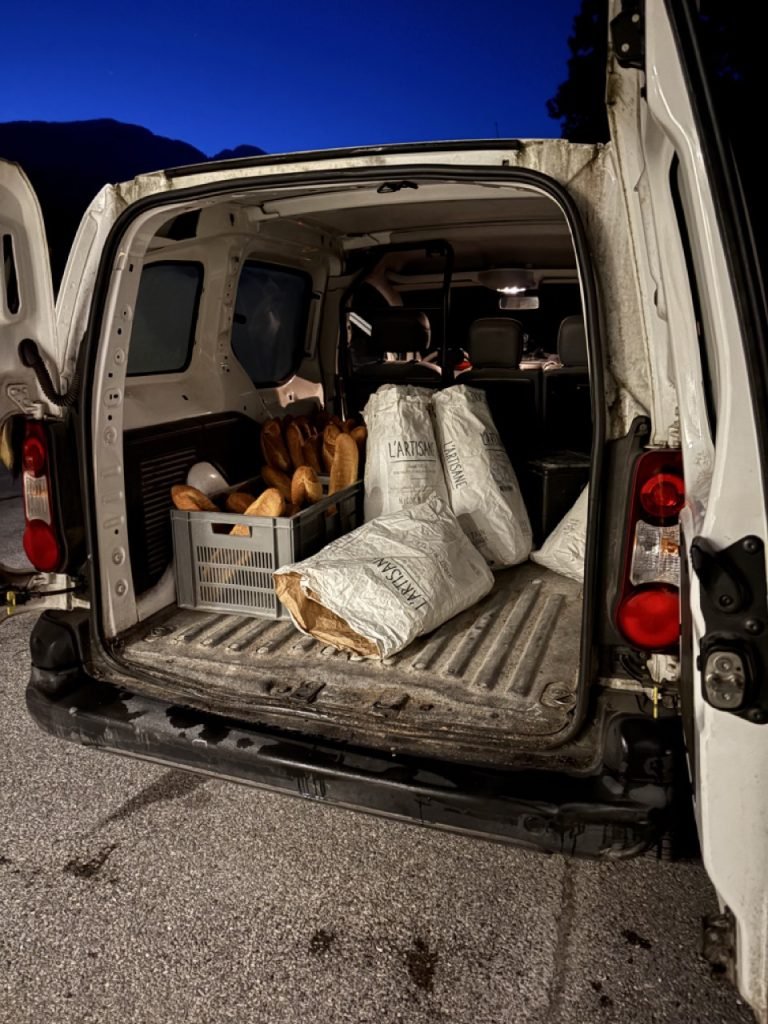
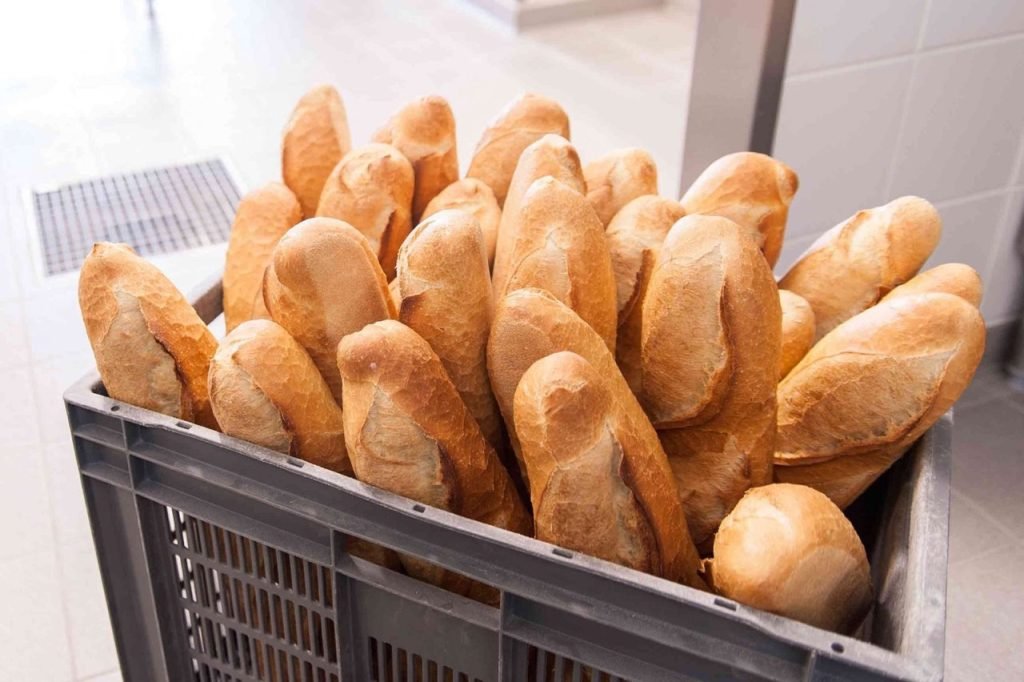
Only the bread was delivered daily, always fresh from the bakery down the street.
By mid-morning, crates of produce and dairy were stacked neatly in the walk-in fridge, sacks of lentils and pasta lined the pantry shelves, and the team had already mapped out what they needed for the days ahead.
It was a quiet, efficient system — nothing more than the kitchen needed, nothing less.
If you want to understand the nutrition rules French school kitchens must follow, I break them down in French School Lunch: Official Nutrition Guidelines Explained.
Join my free monthly newsletter
for everyday French life, simple habits & sustainable wellbeing.
And get The French Guide to Everyday Wellbeing straight to your inbox!
Preparing the Rest of the Meal
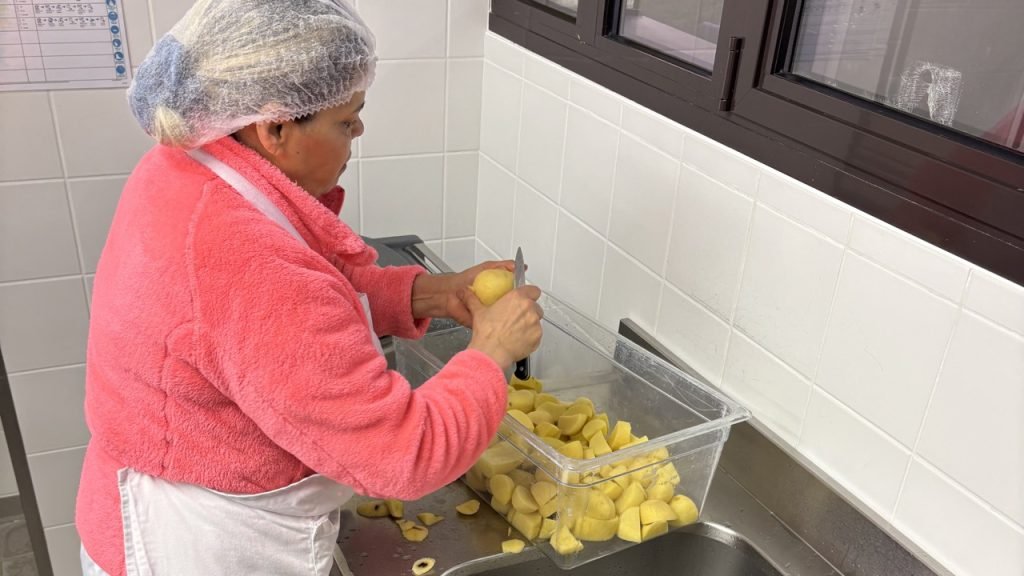
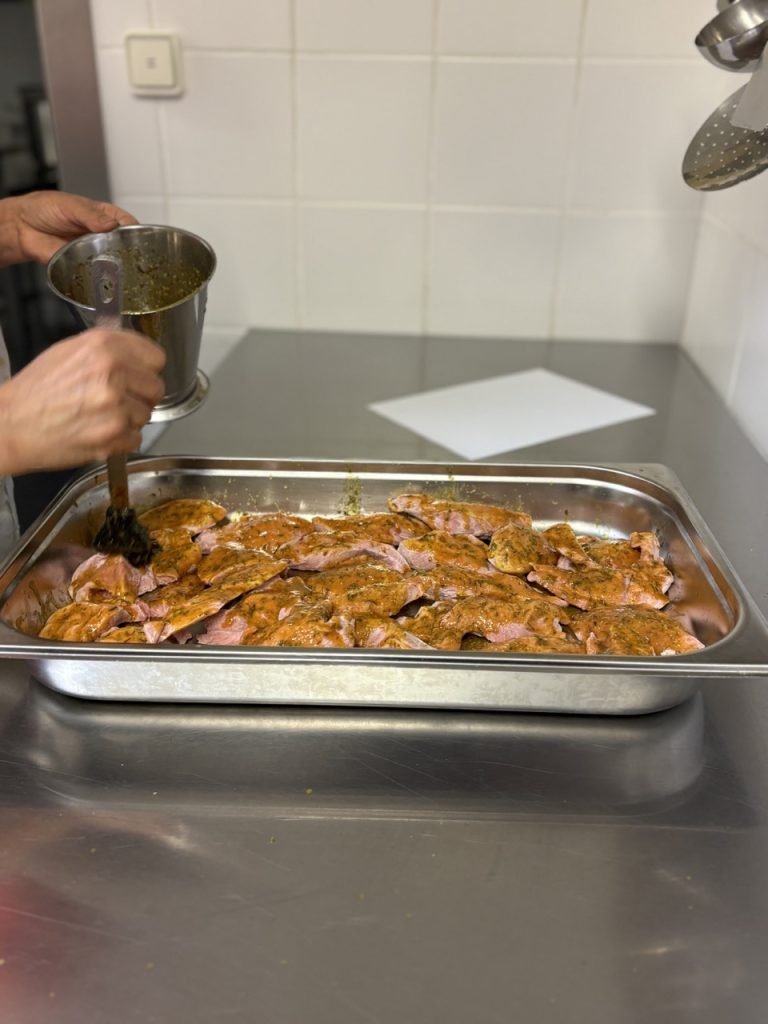
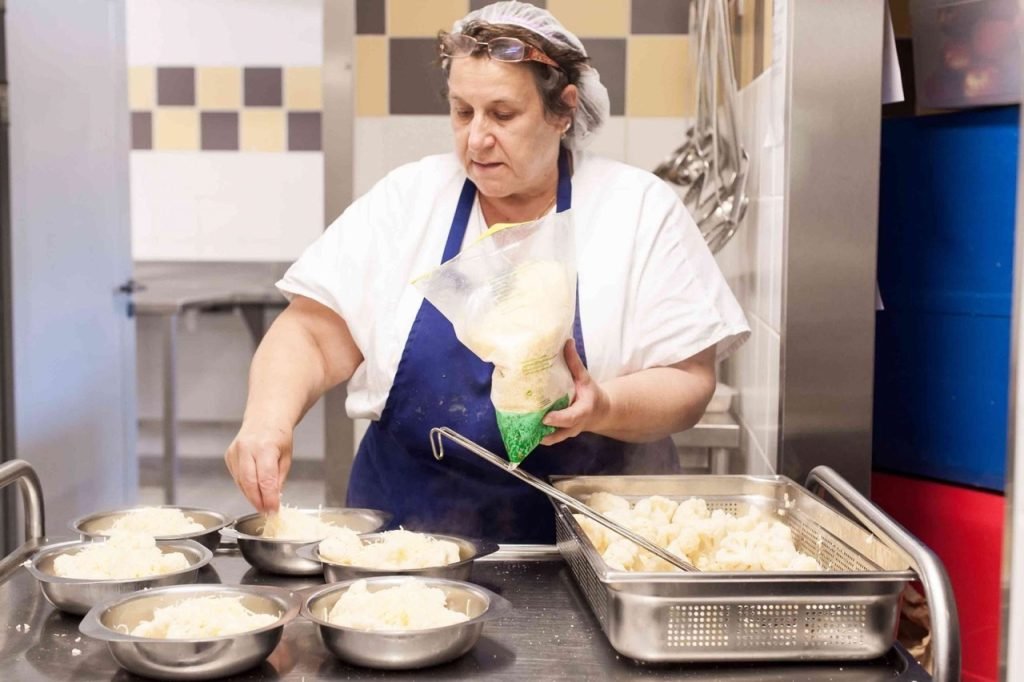
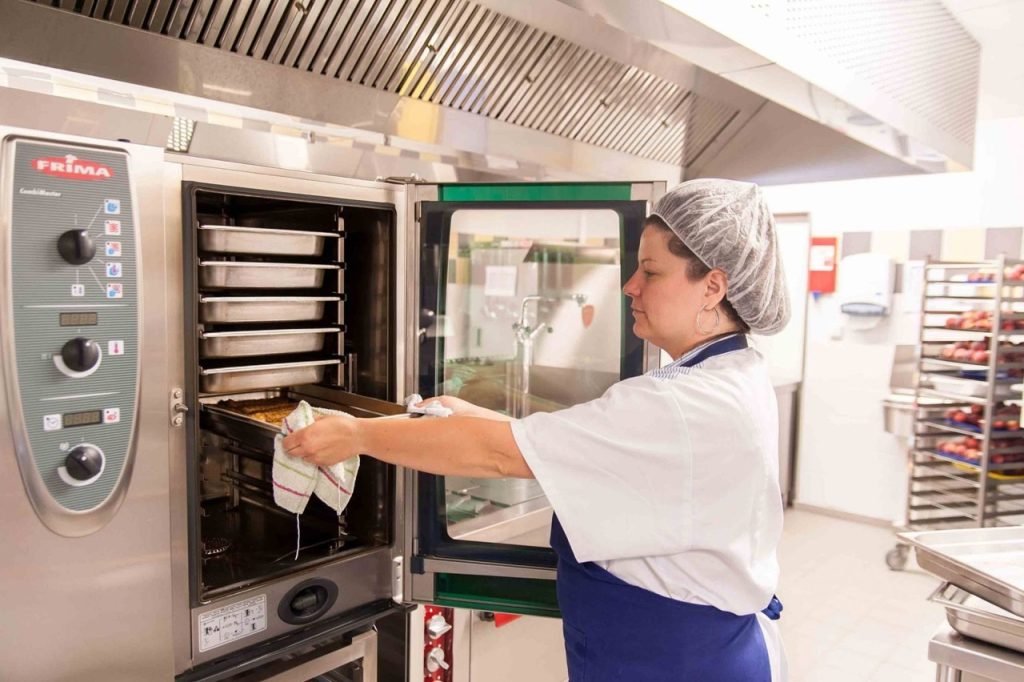
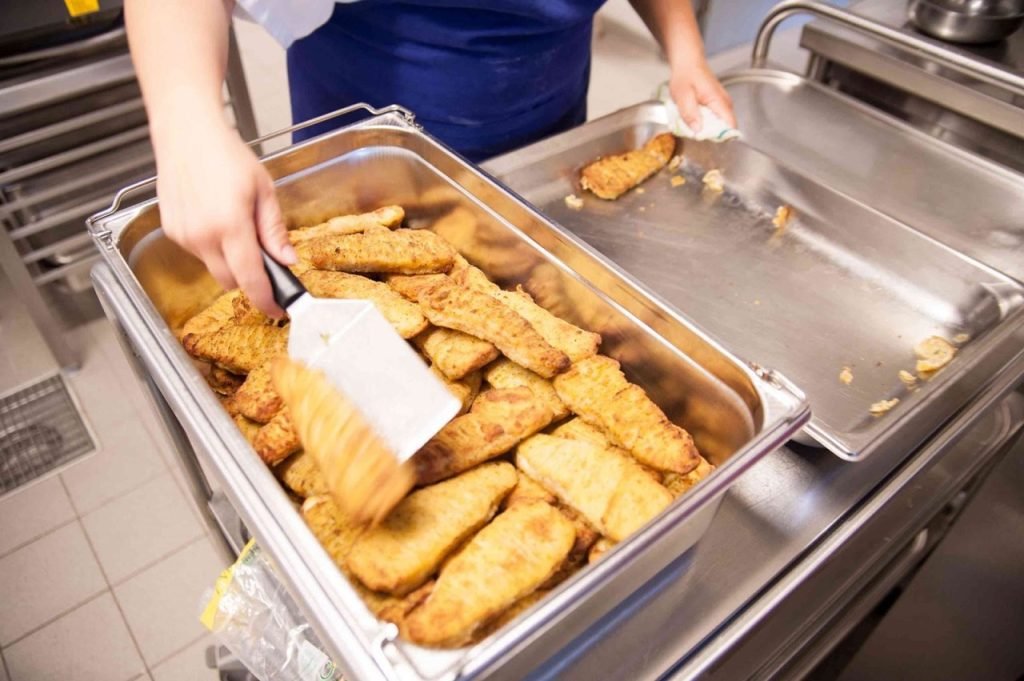
With the soup underway, one assistant began preparing fish for the enormous steamer cabinet.
Fresh baguettes were cut into smaller pieces, ready for the children.
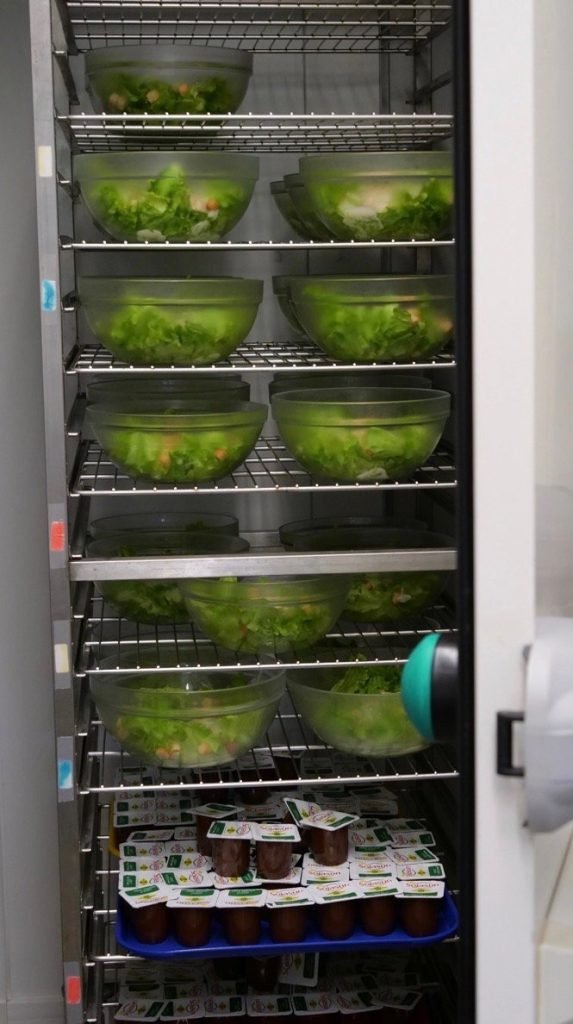
Babybel cheeses and organic apples were lined up for dessert — completing the day’s four-part meal.
Nothing gourmet.
Nothing flashy.
Just simple, recognizable food prepared with intention.
And these are the kinds of dishes that children eat every day in French elementary schools.
Working with a French school chef, I’ve created a downloadable collection of some of the best-loved recipes served in French school cafeterias. You can find them in my French School Lunch Recipe Guide.
Of course, preparing hundreds of meals also means thinking carefully about portions and leftovers. I’ve written about How France Is Working to Eliminate Food Waste in School Cafeterias, including the practical steps kitchens take to reduce waste.
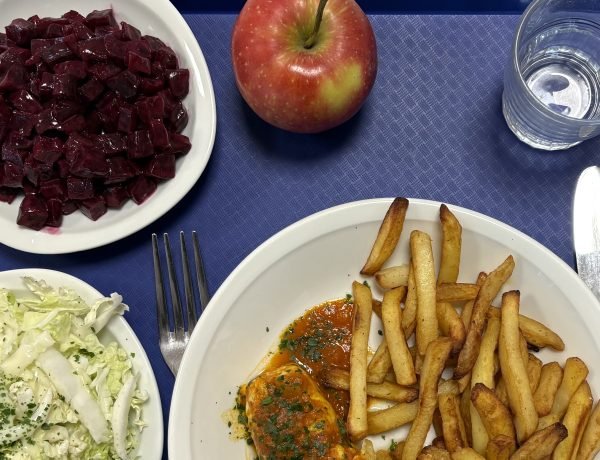
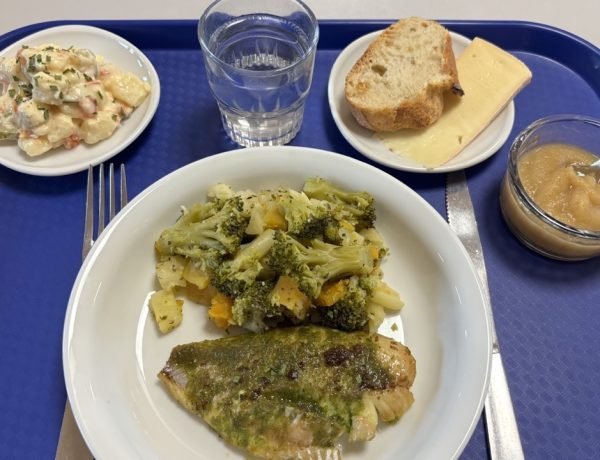
And if you’re curious about what children actually eat over an entire week, take a look at my French School Lunch Menu in 2026, featuring real meals served at a French elementary school.
The Staff Meal (Always Seated)
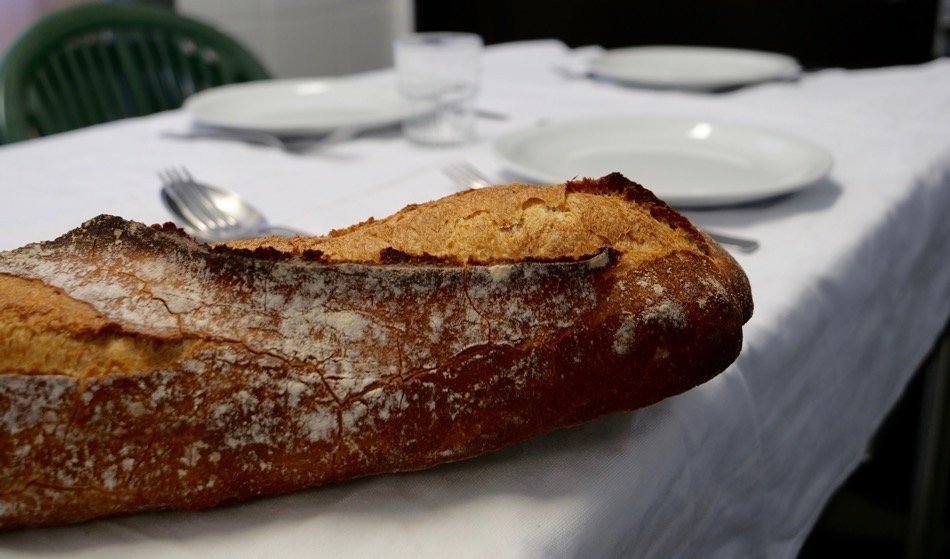
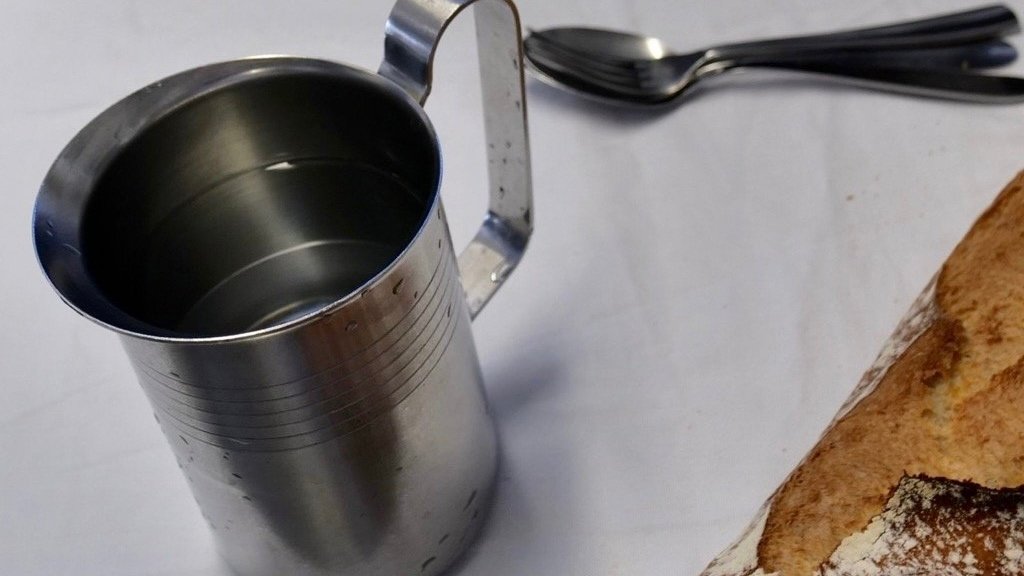
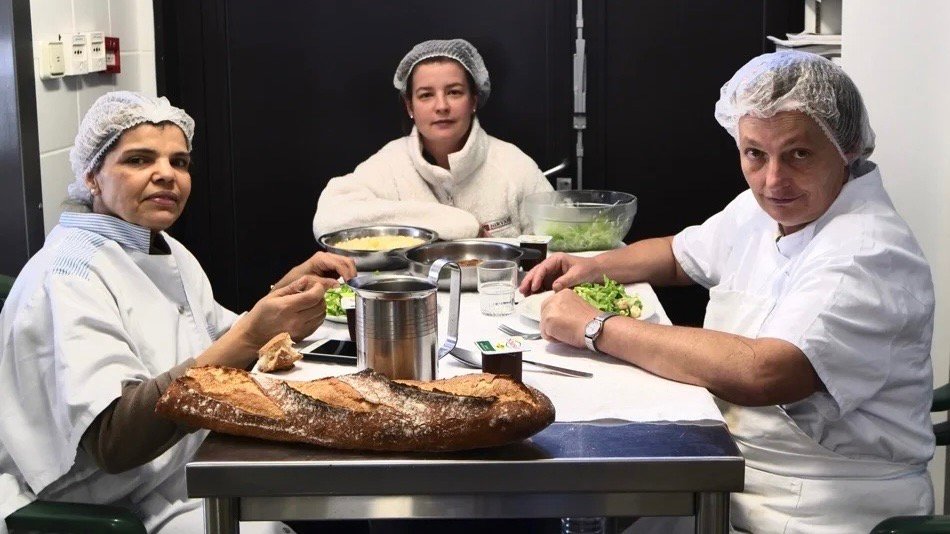
Before the students arrived, the kitchen team sat down for their own lunch — with a tablecloth and a baguette, even when they were rushed.
It’s a small detail, but one that has stayed with me over the years.
It reflects something I’ve observed again and again in France: even during a busy working day, sitting down to eat is considered an important part of the daily routine.
The Afternoon Rhythm: Cleanup, Planning, and Ordering
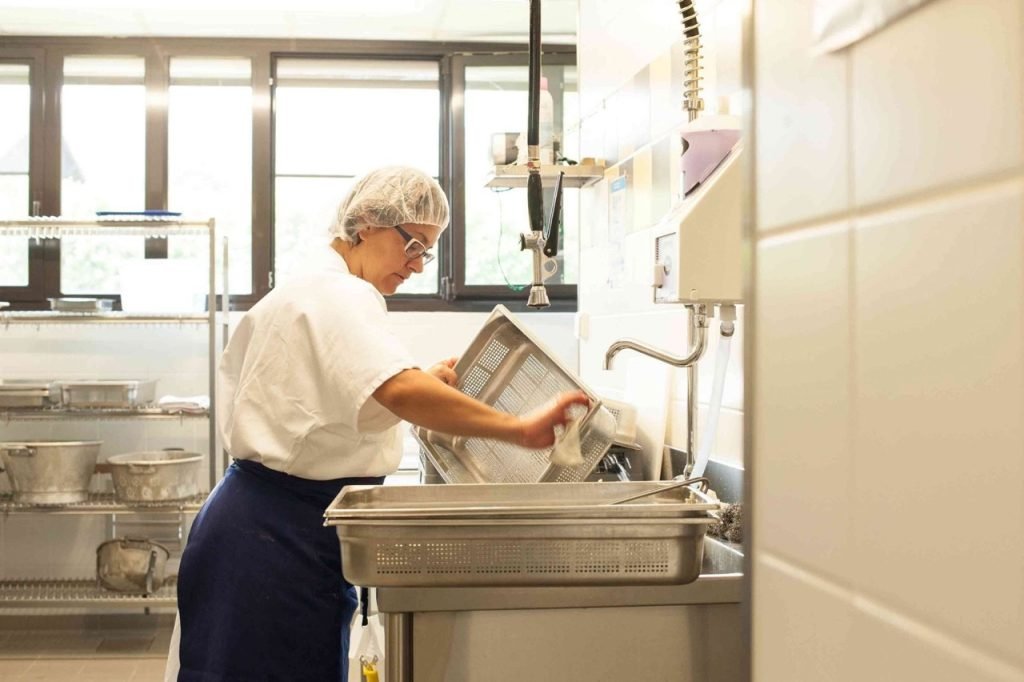
Cleanup begins the moment the first class starts eating and continues long after the last children have finished their lunches.
But the workday doesn’t end there. The kitchen team also:
- Reviews what children ate
- Refines monthly menus
- Places orders
- Contacts local suppliers
- Prepares for the next day
Their day typically ends around 5:00 p.m.
School lunch may last 40 minutes — but producing it takes ten hours.
To see what this work looks like across an entire day, read A Day in the Life of a French School Chef.
A Note About Central Kitchens
Not all schools in France have on-site kitchens like the one I’ve visited over the years.
In many towns and cities, a central kitchen prepares meals for several schools, which are then delivered to individual cafeterias for lunch service.
These kitchens operate on a much larger scale, but they must still follow the same national food quality and nutritional requirements, including the EGAlim rules on sustainable and organic food purchases.
Whether meals are prepared on-site or delivered from a central kitchen, the objective remains the same: providing children with balanced, nutritious lunches and time to sit down and enjoy them.
What I Learned After a Decade Inside the Kitchen
Stepping into that first French school cafeteria kitchen in 2013 changed me.
But it’s the many visits since — and the long days spent alongside the staff — that have taught me the most.
The kitchen team was always slightly amused by how fascinated I was — the photographs, the questions, the note-taking. For them, nothing was extraordinary. But witnessing their everyday routines revealed something important about French school lunch culture.
It isn’t just the food.
It’s the people. The routines. The early-morning preparation. The daily intention behind feeding children well.
These behind-the-scenes moments have helped me understand how the habits surrounding school lunch can shape children’s relationship with food.
And they’ve reminded me of something important: the habits surrounding a meal matter just as much as the meal itself.
For those interested in bringing some of these ideas to their own schools, I’ve put together 8 Practical Tips to Improve School Lunches in Your Community.
More From France
So, if you’re curious about how France nurtures healthy habits – from school lunch traditions to everyday food, movement and lifestyle – I share practical tips, stories and plenty of insider photos and videos from my corner of France. You can sign up below. Merci!
Come see it for yourself!
Follow along on Instagram and TikTok for real footage from inside French school cafeterias and kitchens, plus everyday life in France.