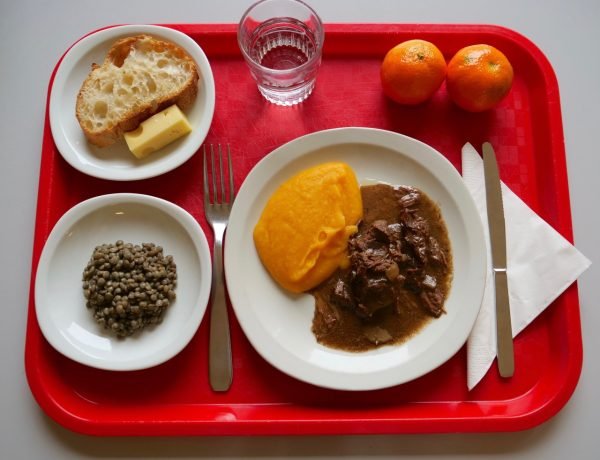
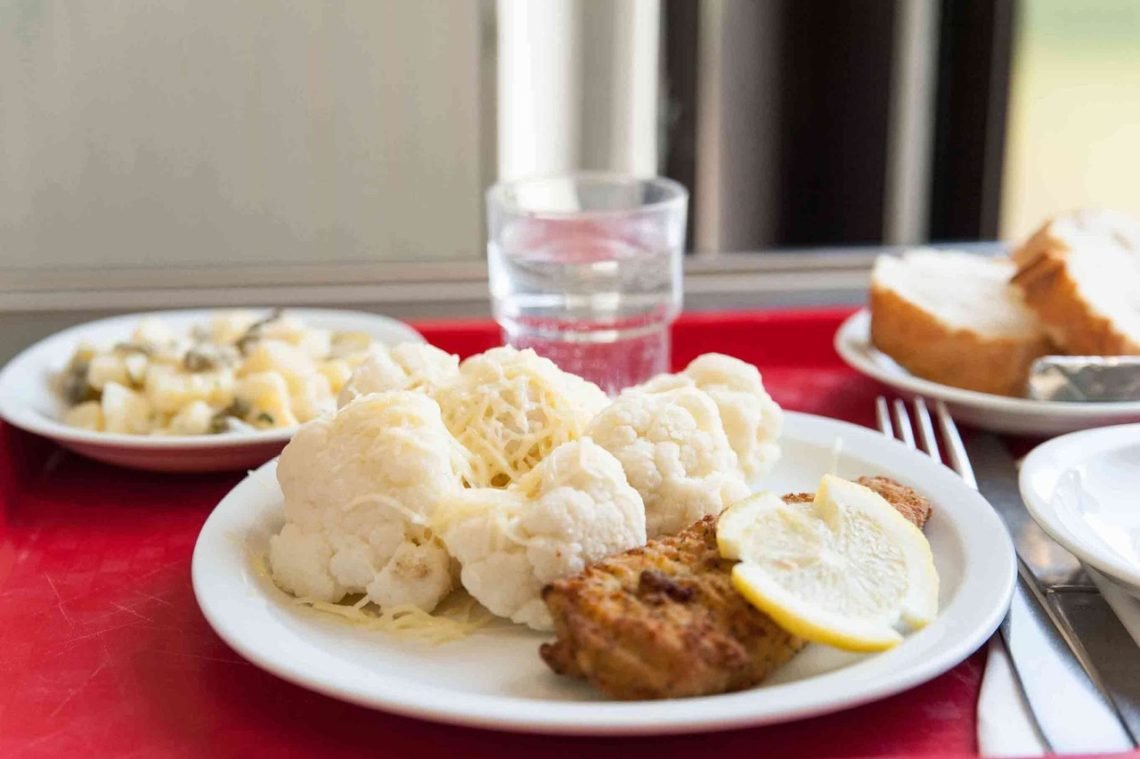

When my kids first started school in France, I remember being shocked by the lunch menus. Not because French school lunches were unusual — but because they were so normal. Real food. Variety. Actual vegetables. Cheese chosen for its calcium content, not just convenience. And always an effort to balance pleasure and health.
Over the years I learned that none of this happens by chance. French school lunches follow detailed national nutritional guidelines designed to ensure that children are offered varied, balanced meals throughout the school year.
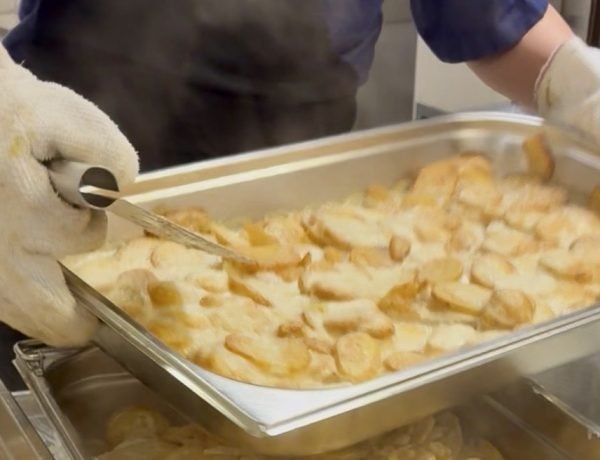
And having spent time inside French school cafeterias and kitchens, I’ve come to appreciate just how much planning goes into putting those meals on the table.
For a complete overview of how the French school lunch system works, start with → French School Lunches: How They Work Today.
Here’s a closer look at what those guidelines include.
To see how these guidelines translate into actual meals, take a look at a typical week of French school lunches in 2026.
Join my free monthly newsletter
for everyday French life, simple habits & sustainable wellbeing.
And get The French Guide to Everyday Wellbeing straight to your inbox!
Basic French Nutritional Guidelines for School Lunches
France’s national school-lunch nutritional standards are set out in regulations introduced in 2011. They establish both what must be included in a meal and how frequently certain types of food must be served.
The basic requirements are surprisingly specific:
- Every school lunch must include a main dish, a side dish, a dairy product, and a starter and/or dessert.
- Menu variety is assessed over 20 consecutive meals, with minimum and maximum frequencies for different food categories.
- Portions must be adapted to the children’s ages and the type of dish being served.
- Water must be freely available without restriction.
- Bread must be freely available.
- Salt and sauces such as mayonnaise, vinaigrette and ketchup cannot be freely accessible and are served according to the dish.
These rules apply nationally, although the actual menus are planned and organized locally. In public primary schools, municipalities are responsible for school catering and menu composition.
What I find particularly interesting is that the guidelines don’t simply tell schools to serve healthy food. They define what a balanced series of meals should look like.
And that brings us to the really fascinating part.
French School Lunch Requirements Over 20 Meals
Rather than judging each lunch in isolation, France looks at the nutritional balance of 20 consecutive school meals.
That means a particular food doesn’t necessarily have to appear every day. Instead, schools must meet specific minimum or maximum frequencies over the 20-meal period.
Here is a simplified breakdown of the national requirements.
Vegetables, Fruit and Fiber
Over 20 meals, schools must serve:
- At least 10 meals with raw vegetables or fresh fruit as a starter or accompaniment.
- At least 8 meals with raw fruit for dessert.
- 10 meals with cooked vegetables, excluding dried legumes, as the side dish.
- 10 meals with dried legumes, starchy foods or cereals as the side dish.
The idea is to provide a variety of vegetables, fruit and sources of fiber rather than relying on the same few accompaniments every day.
Cheese, Dairy and Calcium
Over 20 meals, schools must serve:
- At least 8 meals with cheese providing at least 150 mg of calcium per portion.
- At least 4 meals with cheese providing between 100 and 150 mg of calcium per portion.
- At least 6 meals with dairy products or milk-based desserts providing more than 100 mg of calcium and less than 5 g of fat per portion.
Yes, the calcium content of cheese really is written into French school-lunch regulations!
And if you’ve ever wondered why cheese appears so frequently on French school menus, this helps explain it. It isn’t simply a cultural tradition. Cheese is also one of the foods used to meet children’s calcium requirements.
Meat, Fish and Protein
Over 20 meals, schools must serve:
- At least 4 meals featuring non-minced beef, veal, lamb or butcher’s offal as the main protein.
- At least 4 meals featuring fish, or a fish-based preparation containing at least 70% fish and at least twice as much protein as fat.
- Fewer than 4 meals featuring a meat-, fish- or egg-based preparation containing less than 70% of those ingredients.
These rules are intended to help ensure adequate iron and other essential nutrient intake while limiting the reliance on dishes containing relatively small amounts of their principal protein ingredient.
Fried Foods, Fatty Dishes and Sugary Desserts
French school lunches are certainly not free of desserts, pastries or fried foods. Instead, the regulations limit how frequently certain foods can appear.
Over 20 meals, schools may serve:
- No more than 4 starters containing more than 15% fat.
- No more than 3 desserts containing more than 15% fat.
- No more than 4 fried or pre-fried main dishes or side dishes.
- No more than 2 main protein dishes containing as much fat as protein, or more.
- No more than 4 sugary desserts containing more than 20 g of simple sugars per portion and less than 15% fat.
This is an important distinction. French school lunches can include richer foods, but there are limits on how often particular categories are served.
For anyone who has seen chocolate mousse, cake or other desserts on a French school menu and wondered how they fit into a healthy eating system, this is part of the answer.
The regulations are designed to create balance across a series of meals, not eliminate pleasure from the menu.
For the full technical details, you can consult the official French school-meal nutritional regulations on Légifrance.
Working with a French school chef, I created a downloadable guide featuring some of the best-loved recipes served in French school cafeterias → Explore the French School Lunch Recipe Guide.
Are French School Lunches Required to Be Organic or Locally Sourced?
In addition to the nutritional standards, France has introduced separate requirements concerning the quality and sustainability of food purchased for public catering.
Under the EGAlim framework, school cafeterias in mainland France must aim for:
- At least 50% of annual food purchases, by value, to qualify as sustainable or quality products under the law.
- At least 20% of annual food purchases, by value, to be organic or in conversion to organic agriculture. This 20% counts toward the overall 50%.
An important detail: locally produced food doesn’t automatically count toward the 50% requirement. It must also meet one of the qualifying legal criteria.
These are purchasing requirements, not a rule that exactly half of every individual lunch plate must be organic or sustainably produced.
And the targets don’t mean that every cafeteria has already achieved them. Implementation varies between schools and municipalities.
It’s another example of how the French school-lunch system goes beyond deciding what children should eat. It also addresses how the food is produced and purchased.
For more information, the French Ministry of Agriculture explains these requirements through its ma cantine platform.
Cultural Norms Behind These Guidelines
Even within all these regulations, French food culture shines through.
- Bread, cheese and dairy remain part of everyday school meals.
- Moderation is built into the system. Sweet or fried foods are permitted, but their frequency is controlled.
- Variety is a priority, with menus planned to include different vegetables, fruits, proteins and accompaniments over time.
And variety is something I’ve noticed repeatedly in the French schools I’ve visited.
Children encounter foods they might not necessarily eat at home, whether that’s a particular vegetable, a lentil dish, an unfamiliar cheese or a different preparation of fish.
Of course, that doesn’t mean every French child enthusiastically eats everything on the plate! But being offered different foods regularly gives children opportunities to become familiar with new tastes and textures.
I’ve explored this relationship between food, familiarity and tasting in more detail in Why French Kids Aren’t Picky Eaters.
There is also much more to a French school lunch than its nutritional content.
Reducing food waste has become an important part of school catering, and I’ve written about the initiatives being introduced in French cafeterias → How France Is Working to Eliminate Food Waste in School Cafeterias.
And school lunches also teach children habits that have little to do with vitamins or calcium: sitting together, sharing a meal, trying unfamiliar foods and learning how to behave at the table.
You can read more about that here → 5 Reasons French School Lunches Are Important (And It’s Not the Food).
Why French School Lunch Guidelines Matter
After more than two decades of living in France, and now having spent time inside the cafeterias themselves, I think what impresses me most is how much thought goes into an ordinary school lunch.
There are nutritional requirements, sourcing rules, budget constraints and hundreds of meals to prepare. And somehow, within all of that, there is still room for good food and pleasure.
Not every cafeteria is perfect, and not every child eats everything they’re served. But the underlying idea is one I appreciate enormously: a school lunch should nourish children, introduce them to different foods and be a proper meal worth sitting down for.
More From France
If you’re curious about how France nurtures healthier habits — from school lunches to everyday food, movement, and wellbeing — I share practical tips and stories each month. Sign up for the free newsletter below and receive my guide, The French Guide to Everyday Wellbeing, straight to your inbox. Merci!
Come see it for yourself!
Follow along on Instagram and TikTok for real footage from inside French school cafeterias and kitchens, plus everyday life in France.