
I’ve lived in France for more than two decades now, and the French healthy eating habits I stumbled into all those years ago still shape my daily life. Some of the habits we’ve adopted as a family, others… well, only some of the time. But even applying a few has allowed us to enjoy really good food while maintaining a sense of balance and wellbeing that I never quite managed in my twenties back in the U.S.
What continues to surprise me is how uncomplicated French eating habits are. There are no “programs,” no color-coded containers, and very little of the all-or-nothing thinking that so often surrounds healthy eating. Everyday meals tend to be simple and rooted in real, recognizable ingredients. There’s certainly growing interest in eating less meat and more plant-based food in France, but bread, cheese, chocolate and dessert are still very much part of everyday life.
And these habits aren’t reserved for one demographic. They’re part of the rhythm of life in France — in Parisian apartments, in tiny Alpine villages like mine, in families with toddlers and families with teenagers.
If you’re curious about adopting a few French healthy eating habits in your own home, start with the ones that feel easy or natural. If something feels too rigid or complicated, skip it. To me, that’s one of the most useful lessons France has to offer: healthy eating has to be sustainable enough to become part of ordinary life.
For an overview of everyday French wellbeing habits, start with → The French Approach To Wellbeing.
Join my free monthly newsletter
for everyday French life, simple habits & sustainable wellbeing.
And get The French Guide to Everyday Wellbeing straight to your inbox!
What Does a Typical French Diet Look Like?
There really isn’t one “French diet.” People eat differently depending on their age, family, region, schedule and preferences — just as they do anywhere else.
But there is a recognizable rhythm to everyday eating in France. Breakfast tends to be fairly light. Lunch is often a proper meal rather than something eaten quickly at a desk. Dinner is usually eaten at the table and, in many families, is simpler than lunch. Bread, vegetables, fruit, yogurt, cheese, meat, fish, eggs, lentils and other familiar ingredients all have a place, as do chocolate, pastries and dessert.
What strikes me after living here for so long is that the balance happens over time. A rich restaurant meal doesn’t require a detox the following day. A croissant doesn’t ruin breakfast. Cheese isn’t automatically “bad” and salad isn’t automatically “good.” Food is food, and everyday habits do much of the work.
If you want to see what this looks like in real life, I asked five of my French friends to record everything they ate over several days → What French Women Eat In A Day.
For another glimpse into everyday eating in France, see What French Women Eat in a Day (2026), featuring more real-life meals and habits.
Meals Have a Rhythm
This is, for me, the holy grail of French eating habits — and one of the habits that has made the biggest difference to the way I eat.
French people certainly do snack, so I wouldn’t claim that nobody eats between meals. But there is much less of the constant grazing that I grew up with in the U.S. Eating tends to happen at recognizable times: breakfast, lunch and dinner, with an afternoon snack particularly common for children.
I’ve found that when I don’t nibble my way through the day, I actually arrive at meals hungry. Not starving, but ready to eat. And food simply tastes better when you’re hungry.
It also makes eating feel much more deliberate. Instead of food becoming something you pick at while standing in the kitchen or working at your computer, you sit down and have a meal. It’s an incredibly simple habit, but probably the French eating habit I value most.
Lunch Is Still an Important Meal
You’ve probably heard about leisurely two-hour French lunches. Those absolutely exist — but mostly on weekends, holidays, special occasions and the occasional long business lunch. On a normal weekday, things are considerably more practical.
What hasn’t disappeared, though, is the idea that lunch is a meal.
For many people, that means sitting down at a table rather than eating over a laptop. Lunch might include vegetables, a protein, bread or grains, followed by yogurt, cheese, fruit or a small dessert. What people eat varies enormously, of course, but lunch still occupies a real place in the day.
You see this particularly clearly in French schools. Children sit down for lunch and are served an actual meal, often consisting of several components or courses, rather than treating the middle of the day as a quick refueling stop.
Dinner at home can then be remarkably simple: soup and bread, an omelet and salad, leftovers, vegetables with fish, or something equally unfussy.
Everyday French Food Is Surprisingly Simple
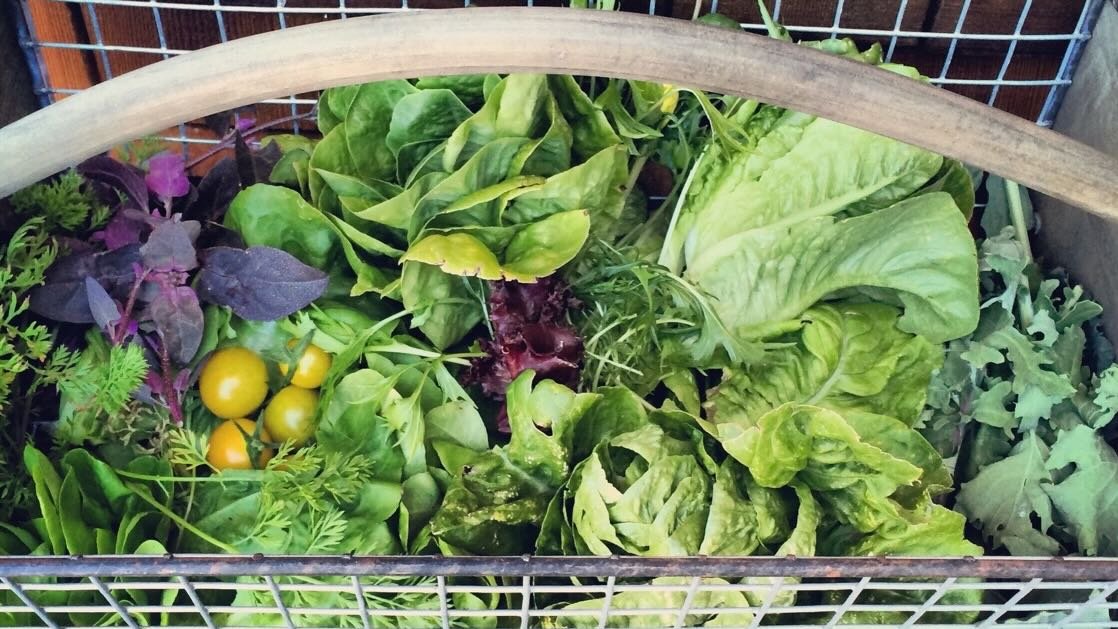
After more than two decades here, I think I’ve earned the right to generalize a little: French home cooking is often incredibly simple. Real, recognizable ingredients, cooked in straightforward ways.
Think:
- an omelet with roast potatoes and green salad
- fish roasted on a tray with vegetables
- lentils with bacon and mâche
There’s nothing elaborate about these meals. They’re just good ingredients prepared without much fuss. And this is something I’ve come to appreciate more and more about eating in France: healthy food doesn’t have to look particularly “healthy.”
There’s room for butter, bread, cheese and cream alongside vegetables, lentils, fish and fruit. Rather than individual foods being labelled good or bad, what seems to matter more is how everything fits together over days and weeks.
Even homemade desserts can be remarkably simple. My mother-in-law’s chocolate mousse? Two ingredients: eggs and dark chocolate. A fruit tart is essentially seasonal fruit, pastry, and a sprinkling of butter and sugar. Somehow, the simplicity makes it feel luxurious.
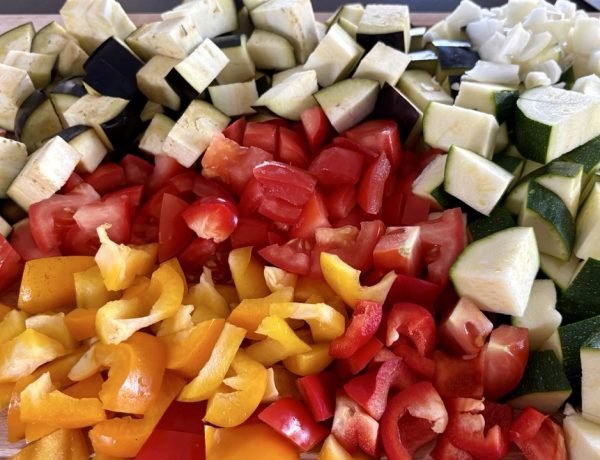
If you need something vegetable-packed after a weekend of overindulgence, try one of the most popular recipes on my site → French Detox Soup (My Mother-In-Law’s Secret Weapon).
Another wonderfully simple vegetable dish is my French aunt’s easy baked ratatouille.
And for more on an eating style that overlaps naturally with many French habits, read → Why French Women Love the Mediterranean Diet.
Paying Attention to How Food Feels
One of the first things I noticed in France was how attuned people seemed to be to how food made them feel. Rather than talking about “clean eating” or counting everything they’ve eaten, I often hear people talk about being bien (well), satisfaite (satisfied), or simply plus faim (no longer hungry).
Obviously, not every French person eats this way. But over the years I’ve noticed an ease around stopping when you’ve had enough — and choosing what comes next according to what you actually want.
A French friend might easily decline a second helping because she wants cheese or dessert. Someone else might skip dessert and have a coffee because she’s had enough. Neither decision needs to turn into a discussion about whether they’ve been “good” or “bad.”
That leaves room for pleasure without every meal needing to become an occasion for overindulgence. And for me, that combination — paying attention while still genuinely enjoying food — is one of the healthiest French habits of all.
Water Is the Everyday Drink
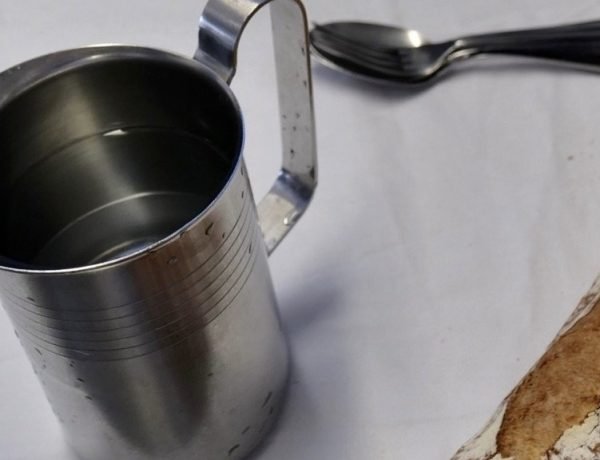
One of the simplest French eating habits is also one of the easiest to adopt: water is the everyday drink.
At lunch and dinner, water is almost always on the table. Adults may also have wine, particularly at a restaurant or over a leisurely meal, but soft drinks and fruit juices are generally treated more as occasional drinks than something automatically served with lunch or dinner.
In the French school cafeterias I visit, children drink water with their lunch. French school meal regulations require drinking water to be freely available, and there are no cartons of chocolate milk, juice or soft drinks lined up alongside the trays.
It’s such a small detail that you barely notice it — until you start thinking about how many meals a child eats at school over the course of a year.
For me, this is a perfect example of what I find so interesting about French healthy eating habits. There’s no complicated rule to follow and nothing special to buy. Water is simply the normal drink.
If you’re curious about what children are actually served alongside that water, you can see a real example here → French School Lunch Menus.
Pleasure Is Part of Healthy Eating
Perhaps the biggest difference I noticed when I first moved to France was that pleasure and healthy eating weren’t treated as opposites.
Bread can be part of lunch. Cheese can come after it. There might be chocolate with coffee or dessert after dinner. None of those foods automatically turns an otherwise balanced day into a “bad” one.
That doesn’t mean French people eat croissants, cheese and chocolate all day — despite what social media might have you believe. It means these foods have a place.
And when nothing is completely forbidden, there seems to be less reason to turn one treat into an entire day of overindulgence. You eat the pastry, enjoy it, and get on with your life.
This is probably the French habit that took me longest to understand. Healthy eating here often feels less like trying to eat perfectly and more like finding a way of eating well that still leaves plenty of room for pleasure.
Meals Are Meant to Be Meals
Another French habit I’ve come to appreciate is simply sitting down to eat.
Of course, French people occasionally eat on the run or have lunch in front of a computer. Real life happens here too. But there is still a strong idea that a meal deserves a table, a plate and a little time.
At home, that might mean everyone sitting down together for dinner, even if dinner itself is nothing more elaborate than soup, bread and cheese. At school, children sit together for lunch. And on weekends, meals can stretch considerably longer, particularly when friends or extended family are around.
I’ve come to think that this matters almost as much as what’s on the plate. Sitting down slows everything down. You notice the food, you talk to the people around you, and eating becomes an activity in itself rather than something you do while doing something else.
You certainly don’t need to recreate a two-hour French Sunday lunch every day. Simply sitting down for meals whenever you can is a good place to start.
How to Adopt French Eating Habits at Home
You don’t need to eat exactly like a French person to borrow some of the habits that make everyday eating here feel so uncomplicated.
Start with one or two. Sit down for lunch instead of eating at your desk. Drink water with meals. Cook something simple from ingredients you recognize. Stop eating when you’ve had enough — and enjoy the chocolate when you actually want the chocolate.
After more than two decades in France, that’s probably the lesson I’ve absorbed most: healthy eating doesn’t have to take over your life.
The habits that last are usually the ones simple enough to become ordinary.
More From France
If you’re curious about how France nurtures healthier habits — from school lunches to everyday food, movement, and wellbeing — I share practical tips and stories each month. Sign up for the free newsletter below and receive my guide, The French Guide to Everyday Wellbeing, straight to your inbox. Merci!
Come see it for yourself!
Follow along on Instagram and TikTok for real footage from inside French school cafeterias and kitchens, plus everyday life in France.