
Before moving to France more than two decades ago, I never thought much about water. I drank it here and there, usually when I remembered, but it wasn’t something I reached for automatically. Carrying around a water bottle? Yes. Drinking from it regularly? Not so much. Hydration was more of a conscious effort than a habit.
But when I arrived in France, one of my biggest cultural shocks wasn’t the food — it was the water. I noticed how often the French chose water as their everyday drink. Quietly, naturally, without drama, without giant tumblers of ice or oversized water bottles clanging around. Just… water.
And over time, simply living among the French reshaped the way I drink too.
For an overview of everyday French wellbeing habits, start with → The French Approach to Wellbeing.
Water Comes First
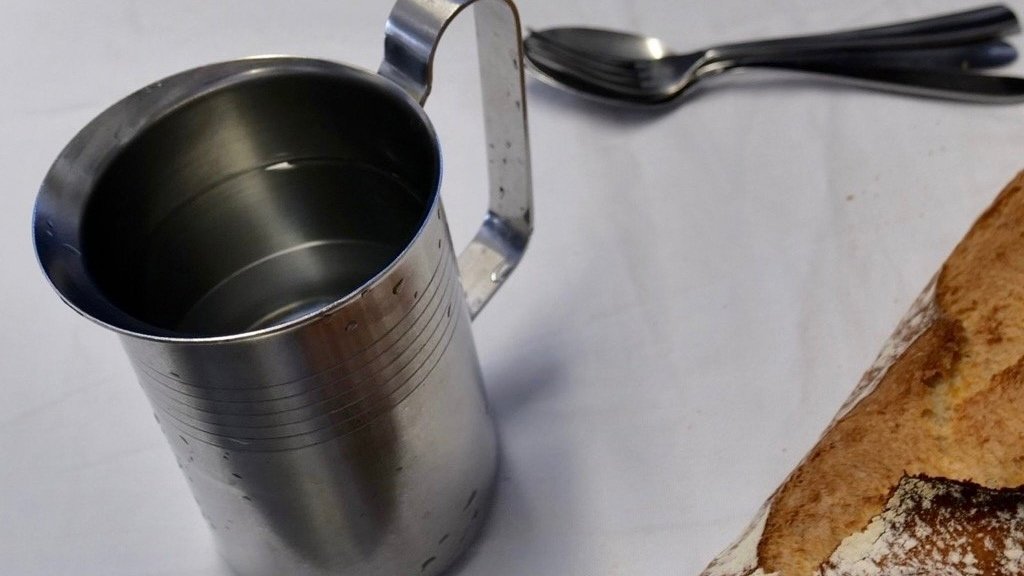
If you sit down for a meal in France, you will almost always find a carafe of water on the table, or at least the option of ordering one. Children drink water. Adults drink water. Even when wine is served, water usually has a place alongside it.
What you don’t see nearly as often as in the United States:
- Milk served with dinner
- Soda as the automatic mealtime drink
- Juice boxes alongside every children’s meal
- Oversized iced drinks
Of course, French people drink soft drinks, juice and plenty of other beverages. But what struck me when I first moved here was that water seemed to be the default rather than something you had to make a conscious effort to choose.
And the glasses? Often tiny by American standards. Rather than carrying enormous bottles around, I’ve noticed that many people simply refill their glasses throughout the day.
It’s a habit of ordinary, uncomplicated hydration — not a challenge to complete or a number to obsess over.
More eating and drinking habits are described here → French Healthy Eating Habits: What I Learned After 20+ Years Living in France.
Join my free monthly newsletter
for everyday French life, simple habits & sustainable wellbeing.
And get The French Guide to Everyday Wellbeing straight to your inbox!
At School: Water Is the Everyday Drink
One of the clearest examples of this habit is found in French school cafeterias.
Water is the standard drink served with school lunch.
No cartons of chocolate milk lined up beside the trays. No juice boxes handed out with every meal. No soft drink choices competing with the food.
Just water.
French school-meal regulations require drinking water to be freely available, and in the cafeterias I’ve visited, children drink water with their lunch as a matter of course.
It’s such a simple detail, but think about how many lunches a child eats at school over the years. Drinking water with a meal becomes completely ordinary.
And this is something I’ve come to appreciate about French school lunches in general: many of the habits children learn aren’t presented as lessons in healthy living. They’re simply part of the daily routine.
For a closer look at the rules behind these meals, read → French School Lunch: Official Nutrition Guidelines Explained.
Why Do the French Choose Water So Often?
1. Water Doesn’t Compete With Food
Food matters in France. Flavours matter. Enjoyment matters.
And one thing I’ve noticed over the years is that drinks are rarely expected to provide the entertainment at a meal. The food does that.
Water is refreshing, doesn’t overwhelm the taste of what you’re eating and goes with just about everything.
A glass of wine might accompany a special lunch or dinner, but for an ordinary weekday meal, water is often all that’s needed.
2. It Fits Naturally Into Mealtimes
French eating habits tend to revolve around recognizable meals rather than constant grazing throughout the day.
Water fits into that rhythm beautifully.
It’s what you put on the table when everyone sits down for lunch or dinner. Children become accustomed to it early, and adults don’t necessarily feel the need to choose something sweet every time they eat.
Replacing sugary drinks with water can also reduce added sugar intake, without requiring complicated changes to the rest of your diet.
It’s one of those small habits that can make a difference over time.
3. It’s an Everyday Habit, Not a Diet Strategy
I sometimes think this is what I appreciate most about the French approach to water.
There doesn’t have to be a special reason to drink it.
You don’t need a detox plan, a weight-loss program or a new wellness routine. Water is simply what you drink when you’re thirsty and what you serve with a meal.
Of course, drinking enough fluids is important for normal bodily functions, including temperature regulation and digestion. But water isn’t a magic solution for weight loss, and everyone’s hydration needs are different.
What I took from living in France was something much simpler: when water becomes your default drink, you don’t have to think about it nearly as much.
It’s part of a broader philosophy I’ve written about in The French Approach to Health: Why There Are No Hacks.
Meet some of my French friends and discover what they actually eat and drink over several days → What French Women Eat in a Day.
A Carafe of Water: A Little French Restaurant Habit
One of the first things visitors notice in French restaurants is the familiar carafe d’eau.
In France, you can ask for une carafe d’eau — a jug of tap water — when you’re eating in a restaurant. There’s no need to order bottled water simply because you’re dining out.
You’ll also see the following terms:
- Eau plate: Still water
- Eau gazeuse: Sparkling water
- Une carafe d’eau: A jug of tap water
It’s worth knowing that ordering eau plate from a restaurant’s bottled-water selection may result in a charge, whereas asking specifically for une carafe d’eau makes it clear that you want tap water.
And at home, putting a jug of water on the table is one of the easiest French habits to borrow.
Nothing fancy. Just water, ready for everyone.
How You Can Drink More Water (The French Way)
Here are eight simple, realistic ways to make water a more natural part of your day — inspired by life in France, not rigid rules.
1. Start Your Morning With Water
Before or alongside your morning coffee or tea, have a glass of water.
I sometimes like mine at room temperature or with a little lemon. There’s no special health advantage to lemon water, but if you enjoy it, why not?
2. Make Water Your Everyday Mealtime Drink
This one is huge.
Put a jug of water on the table at lunch and dinner. Make it the normal choice rather than something you have to remember.
If you’re accustomed to drinking soda or juice with meals, start by replacing just one of those drinks with water.
3. Use Your Water Bottle, Don’t Just Carry It
I used to be very good at carrying a water bottle around and considerably less good at actually drinking from it.
Now I make a point of drinking regularly throughout the morning.
I sometimes aim for a liter before noon, although that’s my personal routine, not a recommendation for everyone. The amount of fluid you need depends on your activity level, the weather, your health and other factors.
4. Have Water Available Between Meals
Instead of treating water as something you drink only when you’re exercising, make it easy to reach throughout the day.
Keep a glass near your desk, refill your bottle or pour yourself some water when you get home.
And if you’re hungry, eat! Not every craving is thirst in disguise.
5. Remember Water When You’re Traveling
Train, plane or automobile — I find that traveling is one of the easiest times to forget to drink.
Keeping water handy makes it much easier, particularly on long journeys or warm days.
6. Make It Easy for Your Family
Put your kids in charge of preparing a water pitcher for meals.
If plain water isn’t particularly appealing, try:
- Sparkling water
- Citrus slices
- Crushed ice
- Fresh mint
- Frozen berries
Anything that makes water a little more enjoyable.
7. Alternate Water With Wine or Cocktails
If you’re drinking alcohol, having water alongside it can help you pace yourself and stay hydrated.
It doesn’t cancel out alcohol’s effects, of course, but it’s a sensible habit.
And there’s nothing wrong with choosing water instead of alcohol altogether.
8. Create an Evening Ritual
I love a cup of herbal tea in the evening.
It’s a lovely way to wind down, particularly in winter, and it contributes to your daily fluid intake.
Of course, there’s no reason to use tea as a substitute for food if you’re genuinely hungry. For me, it’s simply an enjoyable evening habit.
And remember that food can contribute to hydration too, particularly fruit, vegetables and soups.
One of my favourites is this wonderfully simple vegetable soup → French Detox Soup.
The Bottom Line
Water is such a simple habit, but living in France taught me that small, consistent choices add up.
What I’ve always appreciated is that drinking water doesn’t need to become a personality, a 30-day challenge or another thing to track. It can simply become part of everyday life.
And once I started drinking water more regularly, without making such a production of it, I realized how much better that routine suited me.
Sometimes the simplest habits are the ones that stay with us the longest.
More From France
If you’re curious about how France nurtures healthier habits — from school lunches to everyday food, movement, and wellbeing — I share practical tips and stories each month. Sign up for the free newsletter below and receive my guide, The French Guide to Everyday Wellbeing, straight to your inbox. Merci!
Come see it for yourself!
Follow along on Instagram and TikTok for real footage from inside French school cafeterias and kitchens, plus everyday life in France.