
Originally published November 29, 2025. Last updated November 11, 2026.
My first years in France were a whirlwind — the kind of blur that comes from living in a new culture while raising tiny children. More than twenty-five years ago, my husband and I went from two fast-paced careers to suddenly becoming parents of two babies less than two years apart. Life was beautiful, messy, and exhausting. Once our youngest arrived a few years later, the pace only increased.
Before children, wellbeing meant choosing which restaurant to try when we both happened to land in Paris on the same evening. After children, wellbeing meant simply getting through the day: early mornings, stroller logistics across cobblestones, sleep deprivation, and feeding schedules. Eventually, when the fog lifted just enough, I realized I didn’t feel like myself — stretched thin, low on energy, running on adrenaline. I still had some lingering baby weight, but more than that, I felt off: depleted, puffy, and not quite in my own skin.
My Type A instinct was to do more: restrict my eating, wake before dawn to run laps around the Champ de Mars, push through fatigue. It didn’t help. It only made me more depleted.
Around that time, thanks to some well-connected Paris girlfriends, I ended up in the cabinet of a chic, very well-known nutritionist near Avenue Montaigne. This was long before wellness was something people discussed quite so openly. I had never been to a nutritionist in my life, and I was intimidated before I even walked through the door.
Dr. K was warm and charming… until I stepped behind a curtain so he could weigh and measure me. I still remember wishing I’d chosen my undergarments with more foresight. He asked about my routine: eating, sleep, exercise, stress. I told him how hard I was trying — the restrictive meals, the early morning runs, the constant feeling of not keeping up. And how baffling it was that French women looked effortlessly pulled together while still eating real food at actual restaurants.
He listened, smiled, and then said the most French sentence I had ever heard:
“Madame Plantier, you are trying too hard. There is nothing amusing about your path. You must include pleasure in your day, or you will give up.”
His “plan” was equally unremarkable: plenty of vegetables, enough protein, minimal processed food, a glass of wine if I wanted it, yogurt whenever I liked it, easy on the bread and cheese, and most importantly, enjoy meals out without guilt. And the next day?
Just return to balance. No drama.
Then he added one last instruction — the one that surprised me most: stop running and walk instead. Not power walking, not tracking steps — simply walking. The long, natural kind I’d begun to notice everywhere in France.
He told me to keep a detailed journal for two weeks and come back. During the first week, I stubbornly kept running at dawn. By the second week, I finally listened and switched to walking. I wrote everything down except the cocktail party, because nibbling endlessly is impossible to quantify.
When I returned, Dr. K barely glanced at the numbers before declaring, “You look wonderful. Continue like this.” And honestly, that was the end of my “wellness plan.”
Years later, I realized that meeting with Dr. K — and the decades of observation that followed — had introduced me to something essential about French wellbeing. His advice wasn’t magic. It wasn’t trendy. Nor was it glamorous. It was simply a different approach to living well:
Eat real food.
Indulge occasionally.
Move your body, but don’t punish it.
And bring pleasure into your day.
What struck me over time was that, in France, these habits weren’t necessarily part of a formal wellness plan. They were woven into everyday life — from the way children ate at the school cafeteria to the way adults structured their days.
Over the years, I’ve collected stories, noticed countless small rituals, and learned so much from my French girlfriends about how they eat, move, and care for themselves.
What follows is my understanding of the French wellbeing mindset, shaped by more than twenty-five years of living in France: everyday habits that make room for good food, movement, family, and pleasure, without demanding perfection.
Join my free monthly newsletter
for everyday French life, simple habits & sustainable wellbeing.
And get The French Guide to Everyday Wellbeing straight to your inbox!
A Note Before We Begin
None of what follows is exclusive to France. And certainly not everyone in France lives this way.
What interests me is how certain habits — sitting down for meals, walking regularly, enjoying good food without guilt, and making time for family — are woven into everyday French culture.
After more than twenty-five years of living here, I’ve come to see French wellbeing less as a collection of rules and more as a mindset. One that values consistency over perfection, pleasure over restriction, and everyday routines over dramatic lifestyle changes.
And the encouraging part? You don’t have to live in France to adopt any of it.
For a closer look at the eating habits I’ve learned over the years, read French Healthy Eating Habits: What I Know After 20+ Years in France.
I also explore why sustainable habits matter more than quick fixes in The French Approach to Health: Why There Are No Hacks.
PART ONE — FOOD: The French Way of Eating Well
1. The French Mindset Toward Food
The first pillar of French wellbeing starts with how people think about food. One of the first things I noticed in France was how relaxed many people seemed around eating. There were fewer forbidden foods, dramatic elimination plans, or conversations about what people should and shouldn’t eat.
Food was food — real, pleasurable, and part of life.
That doesn’t mean the French don’t care about what they eat. Quite the opposite. Food quality matters enormously. Highly processed or industrially produced foods often receive a dismissive “C’est pas bon” — not necessarily because they taste bad, but because the quality simply isn’t there.
And when you consider how central the baguette is to everyday French life, the idea of eliminating carbohydrates altogether seems rather out of place. Chocolate, desserts, and full-fat cheeses? They belong here, too. They’re part of ordinary eating rather than something reserved for a special occasion or a so-called cheat day.
But here’s something else I learned: moderation isn’t just about how often you eat something. It’s also about quantity.
Portions are often smaller than what I was accustomed to in the United States. Desserts don’t necessarily arrive in bowls the size of your face. A square of chocolate, a small slice of tart, or a scoop of yogurt with fruit can be enough to finish a meal.
Pleasure comes from enjoying what you’re eating, not necessarily from eating more of it.
That’s one of the most important lessons I’ve taken from the French approach to food: you can enjoy bread, cheese, chocolate, and dessert without making every meal an exercise in restriction or indulgence.
I also explore how Mediterranean eating has influenced my own approach to food in Why French Women Love the Mediterranean Diet.
2. Rhythm and Structure
One of the things I’ve come to appreciate most about French food culture is its rhythm. Meals happen at fairly predictable times. Snacking between meals is less common. Lunch is a real meal, not something grabbed between appointments. And even a quick meal is often eaten sitting down.
It’s a structure that has become one of my favorite aspects of French wellbeing.
Even the clock reinforces this rhythm. If you ever find yourself on a TGV at noon, you’ll hear the soft chorus of crinkling paper as people pull out their little pique-nique lunches. It’s midi in France — lunchtime.
And at 4:00 or 4:30, children pour out of school into the arms of parents and grandparents, ready for goûter, the traditional afternoon snack. Another name for it is quatre-heures — literally “four o’clock” — because that’s when it happens. To this day, the afternoon goûter feels like an unwritten national rule.
You can see how central lunch is when you spot a menu ouvrier (workers’ menu) chalked on a sidewalk board. Even construction workers — though yes, some eat a sandwich on-site — will often head to a simple restaurant for a proper sit-down meal before returning to work.
It’s not just about food. It’s about taking a real pause in the day.
There is before lunch and after lunch. Two distinct chapters.
The flip side? Outside the big cities, some shops and even post offices still close for a long lunch break. It can be maddeningly impractical (I’ve been caught out more than once). But you take the good with the bad.
Once you adapt, this structure doesn’t feel restrictive. It feels grounding. And the longer I’ve lived here, the more I’ve come to appreciate how a predictable rhythm around food can bring a little more balance to everyday life.
3. What They Actually Eat (In Broad Strokes)
In my experience, everyday French meals tend to revolve around real food — vegetables, soups, salads, fresh bread, cheese, simple desserts, and some kind of protein. Nothing particularly complicated. Just variety, balance, and pleasure.
A friend of mine can turn a handful of leftover vegetables, a knob of butter, and some herbs into a soup that tastes like pure comfort. Another will pull out leftover eggs, vegetables, and cheese and make a simple omelette for dinner — maybe with some baby potatoes roasted in the oven. Satisfying but not heavy.
The magic isn’t in the recipes. It’s in the ease. The confidence. The lack of fuss.
And above all, it’s in using real ingredients — basic foods prepared simply.
For a closer look at what this means in everyday life, I also share What French Women Actually Eat in a Day in 2026.
And one of my favorite examples of simple French home cooking is French Detox Soup (My French Mother-in-Law’s Recipe) — a comforting seasonal soup made with everyday ingredients.
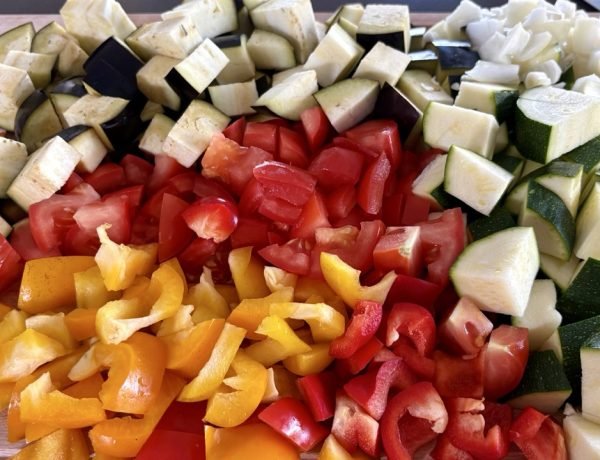
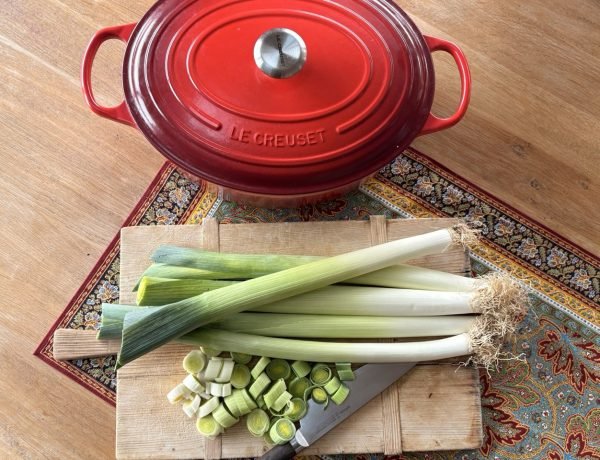
For more examples of simple French home cooking, try My Aunt’s Easy Ratatouille or French Leek Soup for Weight Loss — two traditional recipes built around everyday vegetables.
4. The Atmosphere Around Food
One of the things I’ve noticed about eating in France is the importance placed on the meal itself. Even a quick salad is often eaten sitting down, with a napkin and a small sense of pause, rather than standing up or doing three other things at once.
A friend once told me, “If you don’t have time to sit, you don’t have time to eat,” and she said it so matter-of-factly that it stuck with me.
In France, creating a moment around food — even a small one — feels like a form of respect for the day. Respect for the food. Respect for the people around you.
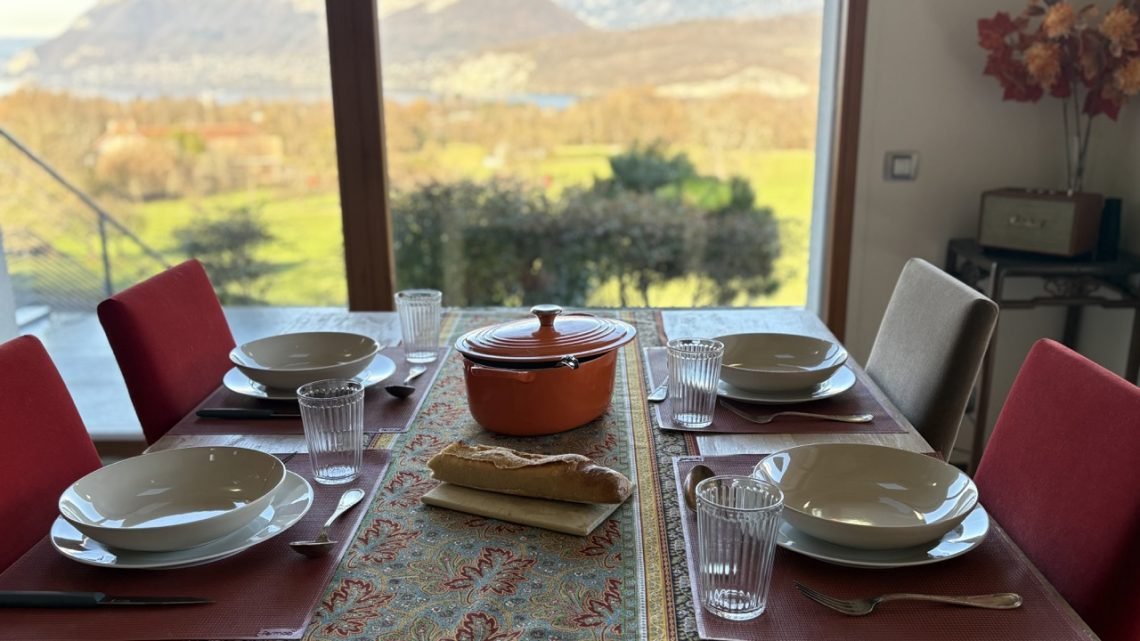
Eating together is a moment partagé — a shared moment. And that sense of sharing is an important part of French food culture. It’s not just about what’s on the plate. It’s about the setting, the conversation, the atmosphere, and the pleasure of being together.
For me, this is another essential part of French wellbeing. Eating well isn’t simply about ingredients or nutrition. It’s also about making time to enjoy the experience.
And these habits begin early. Even in French daycare, young children are introduced to different tastes and learn to sit together for meals. I’ve written about this in How French Toddlers Learn to Eat Everything.
PART TWO – MOVEMENT: The French Approach to Staying Active
1. Movement as Lifestyle
In France, movement is often woven into everyday life: walking to do errands, taking the stairs without thinking, strolling after meals, cycling to work, or going to the market on foot. Of course, this varies enormously depending on where people live, but what has always struck me is how much physical activity can happen without anyone calling it exercise.
After food, movement is the second pillar of French wellbeing.
Now that I live near Annecy, where outdoor sports are practically a regional identity, that everyday movement often extends into the weekends: hiking or skiing in the mountains, long bike rides, or leisurely e-bike loops around the lake. What strikes me is how naturally movement fits into daily life, but also how deliberately people make time for it on weekends.
And Paris is no exception. Walk along the car-free left bank between the Musée d’Orsay and Pont de l’Alma, or wander through the Bois de Boulogne on a Saturday or Sunday morning, and you’ll see joggers, fast walkers, cyclists, yogis, and even Zumba groups.
There is absolutely room for planned exercise.
But equally important — maybe even more important — are the small, consistent movements of everyday life.
One of my girlfriends wears heels most days — real heels — and still walks everywhere in Paris. “Habitude,” she shrugs. Habit. No drama. No athletic wear. Not even tracking apps. She seems fit as a fiddle, and aside from one Pilates class a week, her go-to is simply walking through her day.
It’s not exercise; it’s life.
I’ve also written about what a decade of swimming in Lake Annecy’s cold water taught me in What I’ve Learned From Ten Years of Cold Water Swimming.
2. Fitness at Any Age
One of the things I particularly appreciate about living in France is seeing how physical activity remains part of people’s lives as they get older.
I know women in their sixties who hike every weekend and neighbors who swim regularly. And here in Annecy, where outdoor sports are practically a regional identity, it’s completely normal to see older adults enjoying many of the same activities as younger generations: hiking, Nordic walking, skiing, swimming, rowing, cycling, and plenty of tennis.
Whatever the sport, the generations blend.
And my ninety-plus-year-old neighbor? He still has a regular Friday tennis date with his pals.
It’s a wonderful reminder that staying active doesn’t necessarily mean following a complicated fitness program. Sometimes it’s simply about continuing to do the things you enjoy, year after year.
3. The French Attitude Toward Fitness
Just as with food, one of the things I’ve observed about the French approach to movement is that it doesn’t have to involve deprivation or punishment. Exercise isn’t necessarily about forcing your body into a particular shape or making up for what you ate the night before.
It’s about finding something you enjoy.
Pleasure comes first. And when you enjoy an activity, you’re more likely to keep doing it.
Whether it’s walking, swimming, cycling, hiking, or playing tennis with friends, movement becomes easier to maintain when it fits naturally into your life.
It’s a lesson that takes me right back to Dr. K’s advice all those years ago: stop trying so hard and find pleasure in the process.
For me, that’s one of the most valuable aspects of the French wellbeing mindset. Consistency matters far more than a burst of intensity followed by giving up.
PART THREE — FAMILY: How French Households Build Wellbeing
1. The Family Meal
Family meals are an important part of everyday French life. Not necessarily fancy. Not complicated. Just sitting down together, sharing real food, and taking time to enjoy it.
Of course, life gets busier once children reach middle school and high school (and the cultural differences between France and other countries around extracurricular activities, sports, and school schedules could be an entire article on its own).
Some weeknights aren’t perfect. But come the weekend — at lunch, at dinner, often both — gathering around the table remains an important family ritual.
And one thing that has always struck me about family meals in France is how rarely I’ve encountered parents preparing entirely separate dinners for picky children.
French children are generally introduced to a wide variety of foods from an early age, and in many households, they eat much of what the adults eat.
There is less of the short-order cooking that I remember from elsewhere:
“Can I have pizza, but no tomato sauce?”
“He doesn’t eat vegetables.”
And my personal favorite, spoken with equal parts horror and fascination:
“She only eats pasta plain with a tiny bit of butter, no oil, no sauce.”
Of course, French children have preferences, too. Some are picky eaters, and family meals aren’t always peaceful. But the expectation I’ve encountered is that everyone comes to the table to share the same meal, even if they don’t love every dish.
Meals are meant to be a shared pleasure and a shared moment — not a battle.
Another habit I’ve noticed is how commonly water is served to children at family meals, rather than juice or soda. If you’re curious about this particular French habit, I explain it in Why the French Choose Water (And How It Can Transform Your Health).
For me, these simple family rituals are an often-overlooked part of French wellbeing. They create opportunities to connect, talk, and enjoy food together, day after day.
2. Teaching Children to Love Real Food
French children are introduced to a wide variety of foods from an early age: tasting things at the market, cooking with parents, and eating proper meals at school.
After more than a decade of spending time inside French elementary school kitchens and cafeterias, I’ve seen firsthand how seriously food education is taken.
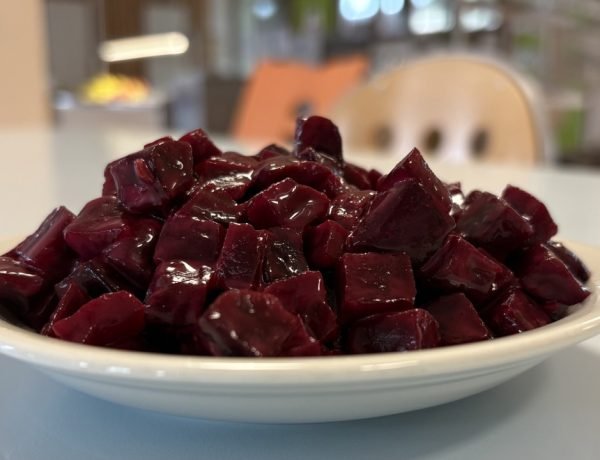
It’s not unusual for elementary schools to serve mussels, beet salad, or fish brandade. Children are exposed to different ingredients, flavors, and textures early and often.
They aren’t expected to love everything. But they are encouraged to taste unfamiliar foods, sometimes repeatedly, before deciding whether they like them.
And because many French families serve the same meal to children and adults, this exposure continues at home. There’s often less distinction between “adult food” and “children’s food.”
There is simply food — and an emphasis on choosing good-quality ingredients whenever possible.
A friend’s son once proudly explained to me which cheese he liked and why.
He was six.
That kind of confidence around food has always fascinated me. It’s not necessarily something children are born with. It’s something that can be encouraged through experience, curiosity, and repeated exposure.
And food education doesn’t have to begin at school. Inviting children into the kitchen is another wonderful way to introduce new ingredients, encourage curiosity, and make cooking part of family life. I share more ideas in Cooking With Children.
For a closer look at how these habits are reinforced at school, I’ve documented the French elementary school lunch system in French School Lunches: How They Work Today (Menus, Quality, Culture & Regulation).
3. A Note About Electronics
Teenagers in France are teenagers everywhere — let’s not be naïve. But one thing I’ve consistently noticed here is how often phones and other screens take a back seat during meals.
I won’t pretend that electronics never appear at the table. Of course they do. But because mealtimes and conversation are such an important part of French family life, there’s often an expectation that everyone puts their devices aside.
You notice it in cafés and restaurants, too. I still find it refreshing to see people sitting together, talking and enjoying their meals rather than looking at their phones.
It doesn’t happen everywhere, and certainly not all the time. But the cultural emphasis on sharing a meal is something I’ve come to appreciate.
In France, the table still holds a special place: a moment shared, voices exchanged, food enjoyed together.
A Way of Living, Not a System
After more than twenty-five years in France, one thing has become clear to me: wellbeing doesn’t have to be about perfection, discipline, or rigid lifestyle rules.
And it certainly isn’t about following some idealized French way of life.
What I’ve observed here is something much simpler. Real food, enjoyed without unnecessary guilt. Movement woven into everyday routines. Meals shared with family and friends. And making room for pleasure, even in the smallest moments.
In many ways, it’s the same advice Dr. K gave me all those years ago. Stop trying so hard. Find a little more enjoyment in everyday life.
That philosophy extends beyond food and movement. I’ve also written about Simplifying Life the French Way and why doing less can sometimes make everyday life feel better.
For women, making time for themselves is another important part of the conversation, which I explore in 10 Ways French Women Practice Self-Care.
And I’ve often wondered whether these everyday habits contribute to the way many French women approach growing older. I explore that question in How French Women Age Naturally and Well.
But here’s what I find most encouraging about the French wellbeing mindset: none of these habits requires living in France.
You don’t have to move to Paris or Annecy to sit down for meals, walk more often, enjoy good food, or make time for the people you love.
You can borrow the habits that appeal to you and adapt them to your own life, gradually and without pressure.
I’ve brought many of these ideas together in my free French Guide to Everyday Wellbeing, with simple, practical ways to introduce a little more balance and pleasure into your daily routines. You can receive it by signing up for my newsletter.
Perhaps that’s the most valuable lesson I’ve learned from living in France.
Wellbeing doesn’t have to be another item on the to-do list.
It can be part of everyday life.
And it can start right where you are.
More From France
If you’re curious about how France nurtures healthier habits — from school lunches to everyday food, movement, and wellbeing — I share practical tips and stories each month. Sign up for the free newsletter below and receive my guide, The French Guide to Everyday Wellbeing, straight to your inbox. Merci!
Come see it for yourself!
Follow along on Instagram and TikTok for real footage from inside French school cafeterias and kitchens, plus everyday life in France.