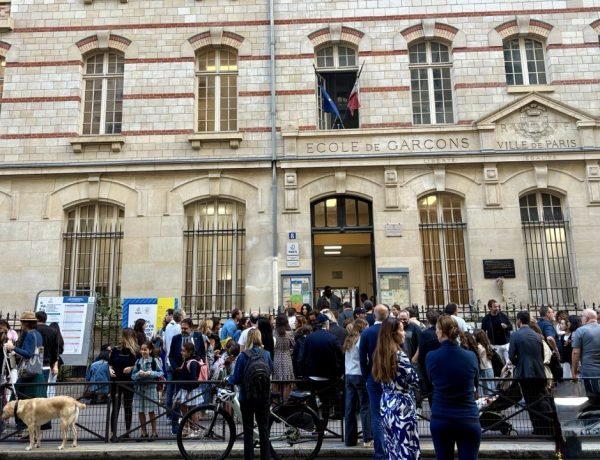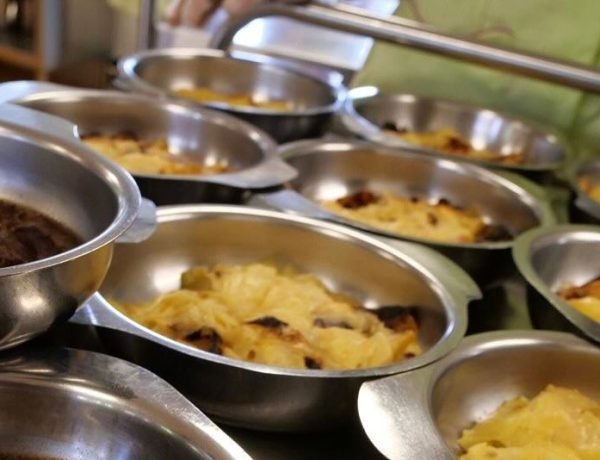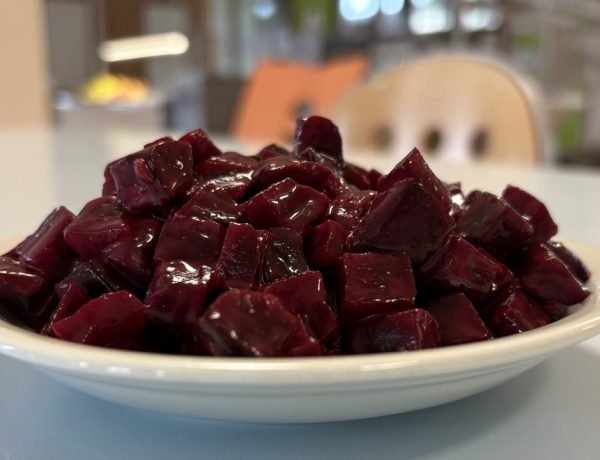
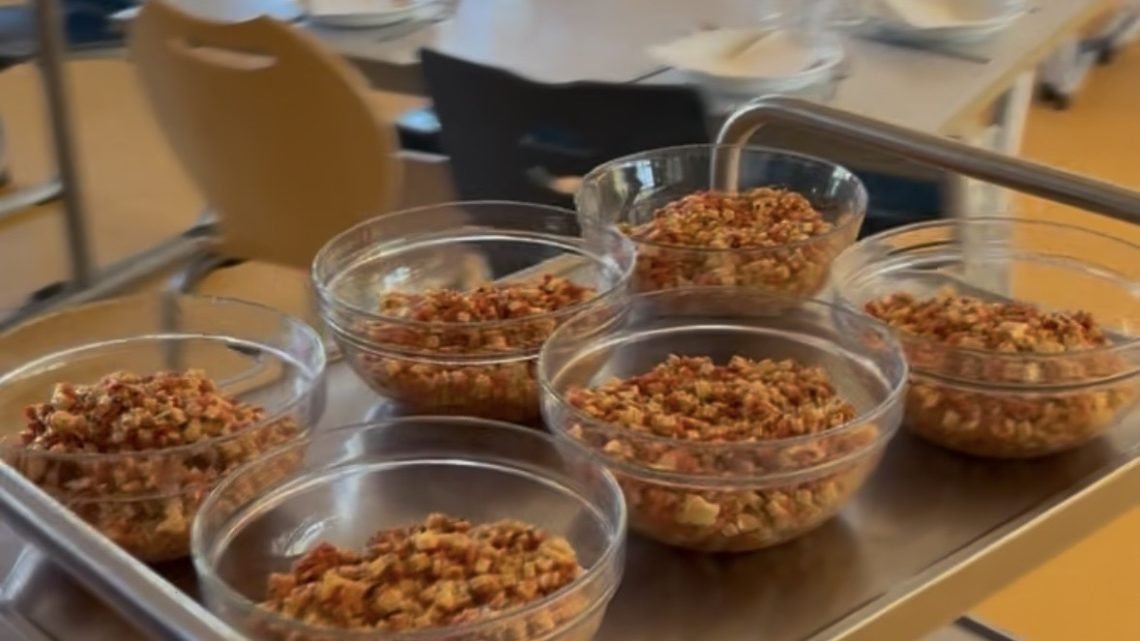

Over the years, I’ve spent countless hours inside French school kitchens and cafeterias, sometimes filming, sometimes observing, and occasionally even helping serve lunch when the kitchen staff are short-handed.
And there’s one thing I’ve heard over and over again.
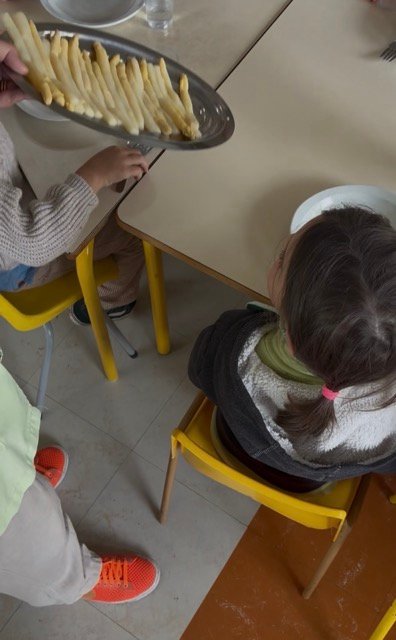
« Tu goûtes, et si tu aimes, tu reviens et je te ressers. »
“Try it, and if you like it, come back and I’ll give you some more.”
It’s a simple exchange between a school kitchen employee and a child who looks less than convinced by what’s being served. But to me, it says quite a lot about the French approach to food.
In France, children are encouraged to taste. That doesn’t mean they’re expected to like everything.
The idea begins early. When babies start eating solid foods, they’re introduced to a variety of vegetables and other ingredients. As they grow, an initial refusal doesn’t necessarily mean a food disappears from the menu forever. It may come back again and again, prepared in different ways, giving children opportunities to become familiar with it.
Of course, French children have their dislikes, just like children everywhere else. But there’s an important difference between I don’t like it and I’ve never tried it.
A no today isn’t necessarily a no forever.
And once a year, France dedicates an entire week to this idea. It’s called La Semaine du Goût — the Week of Taste.
→ To understand how the system works, read my complete guide to French school lunches.
What Is La Semaine du Goût?
Launched in 1990, La Semaine du Goût has grown into an annual national initiative supported by the French Ministry of Agriculture. Its 37th edition takes place October 12–18, 2026.
The objective is to encourage curiosity about food and introduce children and adults to different ingredients, flavors, culinary traditions and the people who produce what we eat.
One of its best-known activities is the Leçon de Goût, or taste lesson. Food professionals visit classrooms to share their knowledge with children. Other activities take place in markets, farms, shops, restaurants and community spaces.
The emphasis isn’t simply on what people should eat. It’s also on discovering how food tastes, where it comes from and how it’s prepared.
What’s Happening Across France This Week?
The 2026 program offers a glimpse of just how varied these activities can be.
In Paris’s 10th arrondissement, chefs are visiting school restaurants during the week, bringing professional culinary expertise into the places where children eat lunch.
Primary-school children in Bayonne are discovering the taste of chocolate, an ingredient closely associated with the city’s culinary heritage.
In Poitiers, schools are organizing activities introducing children to sourdough bread. Meanwhile, in Saint-Tropez, children are scheduled to visit school catering kitchens to discover what happens behind the scenes.
There are public events, too. A workshop at the Vieux-Port market in Marseilles explores different ways of using carrots while reducing food waste.
These are very different activities, but they share a common purpose: encouraging people to become more curious about food.
How Do You Teach a Child About Taste?
Some of the most interesting examples of French food education are surprisingly simple.
A teaching resource published by the French Ministry of Agriculture for elementary-school children suggests activities involving familiar ingredients such as zucchini, apricots and French cheeses.
Children can learn to identify foods, understand which fruits and vegetables are in season, and discover regional specialties on a map of France.
Teachers can also introduce real ingredients into the classroom, encouraging children to observe, touch, smell and taste them.
The idea is that food can be explored through more than its nutritional value. A vegetable has a name, a season, a place of origin, a texture and a flavor. Learning about these characteristics can make an unfamiliar ingredient less mysterious.
These are proposed educational activities, rather than lessons that every French school necessarily follows. But they illustrate the broader philosophy behind teaching children about taste.
I’ve written more about how repeated exposure and everyday eating habits can help explain why French children may be less picky about food.
Join my free monthly newsletter
for everyday French life, simple habits & sustainable wellbeing.
And get The French Guide to Everyday Wellbeing straight to your inbox!
And What About the Other 51 Weeks?
Long before children reach elementary school, this introduction to different foods can begin in daycare. I’ve written about how French toddlers learn to eat and the role of early exposure.
La Semaine du Goût puts a national spotlight on food education, but children encounter many of the same ideas throughout the school year.
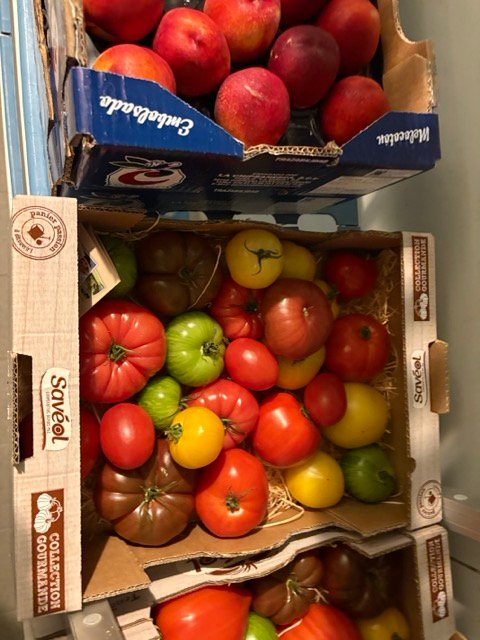
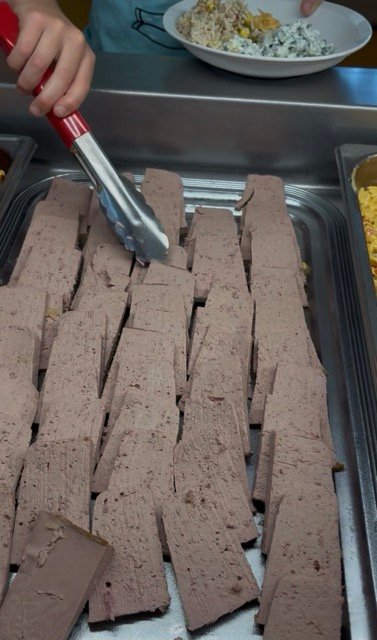
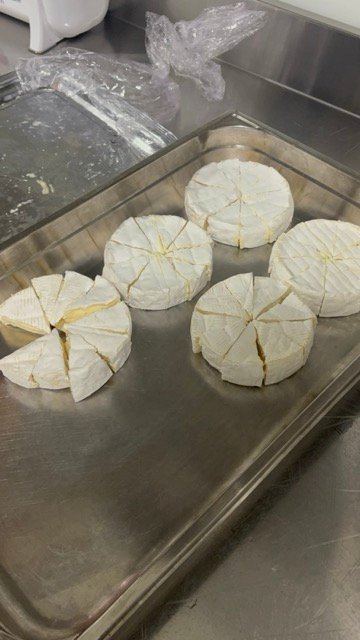
In French school cafeterias, children are regularly offered a variety of ingredients and dishes. Menus change with the seasons, and meals provide opportunities to encounter foods that may not be familiar at home.
Of course, that doesn’t mean every child happily eats everything on the plate. French children can be just as selective as children anywhere else.
What interests me is the opportunity for repeated exposure. A child might see a particular vegetable several times, encounter it prepared differently, or watch classmates eat it before deciding to try it.
Food education isn’t always a formal lesson. Sometimes it’s simply the opportunity to become familiar with something new.
As I’ve explored in What Do French Kids Really Learn at School Lunch?, the French school cafeteria is about much more than what’s on the plate.
Do French Kids Really Eat Everything?
One of my favorite books about French food culture is French Kids Eat Everything by Karen Le Billon. It’s a wonderful book, and while the title may be a slight exaggeration, I think it’s a well-deserved one.
Having spent years inside French school cafeterias, I can assure you that French children don’t actually eat everything. I’ve seen plenty of uneaten food returned to the kitchen.
But I’m continually surprised by just how adventurous some very young French eaters can be.
Recently, on a trip to Brittany, I was eating at a seaside restaurant when I noticed a young couple sitting with their child, who couldn’t have been more than two or three years old.
The parents were busy cracking open crabs, extracting the meat and eating oysters. And there was their little one, happily enjoying exactly the same meal, just in smaller quantities.
I wanted so badly to capture the moment on film. But I never film children’s faces out of respect for their privacy, and it would have been nearly impossible to show this little boy enjoying his crab and oysters without doing just that. Besides, it seemed a shame to intrude on such a lovely family moment. So I put my camera away and simply enjoyed watching.
I have no idea whether that child eats everything, or whether there are foods he refuses to touch at home. But watching him enjoy seafood alongside his parents reminded me of something I’ve observed again and again in France.
Children don’t have to like everything. But giving them opportunities to taste, to become familiar with different foods, and to share in the pleasures of eating can open up a whole world of possibilities.
And that, to me, is what La Semaine du Goût is really about.
Read More
What Happens When a Society Decides Feeding Children Well Matters?
French School Lunch Menus: A Typical Week in 2026
Cooking with Children: Why It Matters (and the Tools That Make It Easier)
More From France
If you’re curious about how France nurtures healthier habits — from school lunches to everyday food, movement, and wellbeing — I share practical tips and stories each month. Sign up for the free newsletter below and receive my guide, The French Guide to Everyday Wellbeing, straight to your inbox. Merci!
Come see it for yourself!
Follow along on Instagram and TikTok for real footage from inside French school cafeterias and kitchens, plus everyday life in France.
This article contains an affiliate link. If you make a purchase through it, I may earn a small commission at no additional cost to you.