
How much do French parents pay for school lunch?
Do all French schools offer the same lunch experience? One of the questions I receive most often is:
“How much do French parents pay for school lunch?”
After years of visiting French school cafeterias, I expected this to be an easy question to answer.
It wasn’t.
The reason is simple: there is no national price.
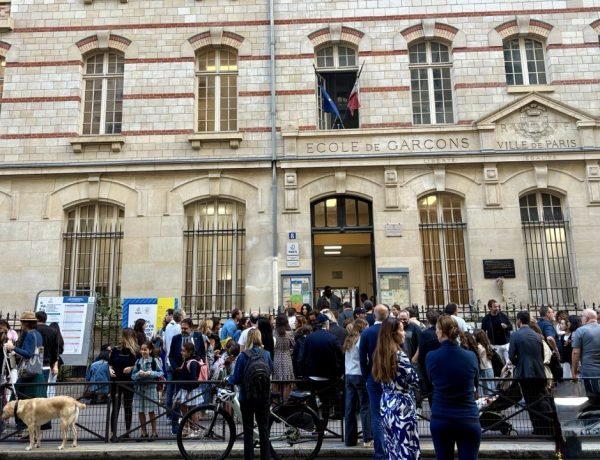
Unlike the nutritional standards for French school lunches, which are set nationally, lunch fees for public preschools and elementary schools are generally determined by the local municipality (mairie).
France has approximately 35,000 municipalities, each with its own budget, population, and local priorities. As a result, the amount parents pay for the exact same type of school lunch can vary considerably from one town to another.
For a complete overview of the French school lunch system, see → French School Lunches: How They Work Today.
Who decides how much parents pay?
Public preschools (écoles maternelles) and elementary schools (écoles élémentaires) generally fall under the responsibility of the municipality.
Among many other responsibilities, the municipality manages school lunch services and sets the fees families pay.
Some municipalities charge every family the same amount.
Others use income-based pricing, meaning two children sitting next to each other and eating exactly the same lunch may have parents paying different amounts based on household income.
This is why there is no single “French school lunch price.”
So what do families actually pay?
Because every municipality sets its own pricing policy, it is impossible to give one figure for the entire country.
In many municipalities, families pay a few euros per meal.
At our local school, for example, families currently pay €4.60 per lunch, regardless of household income.
Elsewhere, the price may be lower, higher, based on family income, or, in some municipalities, free for eligible families.
The €1 school lunch initiative
In 2019, the French government expanded the Cantine à 1 euro initiative to help eligible municipalities offer school lunches for €1 to lower-income families.
The program helps municipalities offset part of the cost while making school lunch more accessible.
Government documents describe school lunch as “an indispensable public service for families.”
Can school lunch be free?
Yes.
Some municipalities offer free lunches to the lowest-income households.
Others charge a symbolic amount.
Again, there is no single national policy because municipalities establish their own pricing systems.
Join my free monthly newsletter
for everyday French life, simple habits & sustainable wellbeing.
And get The French Guide to Everyday Wellbeing straight to your inbox!
Is the price parents pay the real cost of the meal?
This was one of the biggest surprises for me.
The first time I walked into a French school kitchen, I expected to see trays of prepared food being reheated.
Instead, I found cooks preparing fresh fish, steaming cauliflower, stirring large pots, and moving between industrial ovens and professional kitchen equipment. It was the first time I realized that school lunch wasn’t simply about serving food. It was an entire operation.
Before I began researching French school lunches, I assumed the price parents paid reflected the actual cost of preparing the meal.
In reality, the lunch itself is only one part of the equation.
Producing hundreds of meals every day requires much more than ingredients.
It also includes:
- trained kitchen staff
- commercial kitchen equipment
- utilities
- deliveries
- food safety procedures
- cleaning and sanitation
- maintenance
- administration
The amount parents pay is therefore often only a contribution toward the total cost of providing the service.
The municipality generally covers the remaining costs.
The work most parents never see
One thing I’ve come to appreciate is how much work happens behind the scenes before the first child even sits down to eat.
Every dish prepared is sampled and stored in case testing is ever needed following a suspected foodborne illness.
Kitchen staff carefully record food temperatures throughout the day to ensure meals are both safe and served at an appropriate temperature.
At the end of lunch, the kitchen is thoroughly cleaned and sanitized before the next day’s service begins.
I learned just how seriously this is taken after accidentally walking through part of the kitchen once it had already been sanitized. As I was leaving, I noticed the staff quietly cleaning the entire area again because I had walked through it. It was a small moment, but it gave me a new appreciation for the standards they work to maintain every day.
More than ingredients
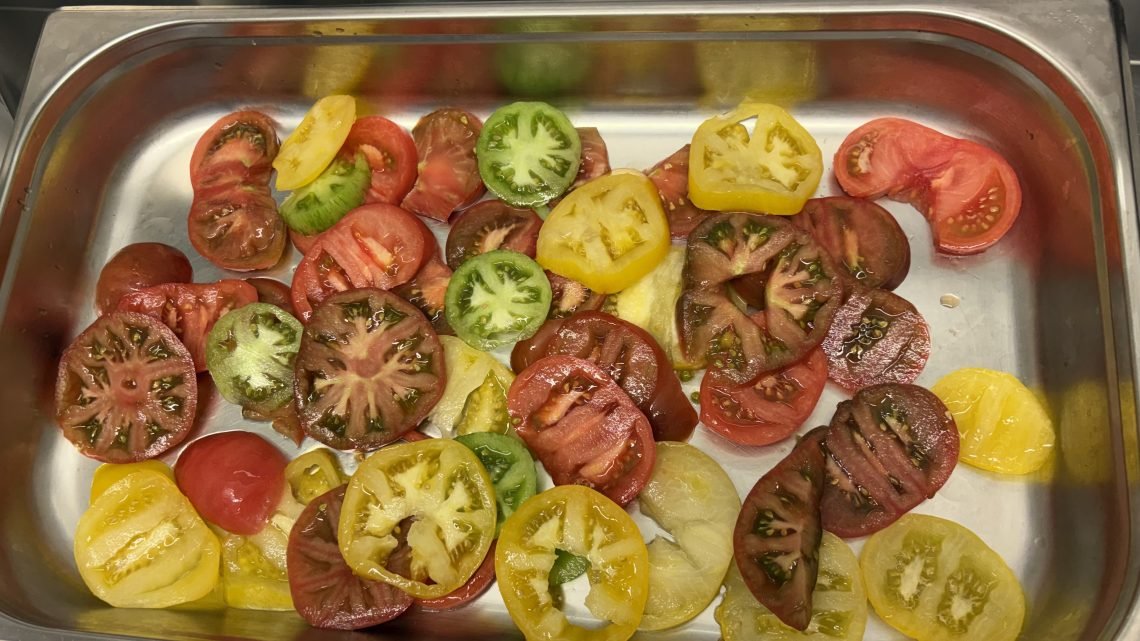
I still remember opening the door to a dedicated refrigerated room filled entirely with fresh fruit and vegetables waiting to be prepared.
Until then, I had never considered the infrastructure required simply to keep hundreds of children’s produce fresh every day.
It’s another reminder that the price parents pay covers far more than the food itself.
Small surprises
I once asked the school chef whether the children really liked soup.
I expected her to sigh and tell me it was one of the hardest dishes to serve.
Instead, she laughed.
“Soup is almost always a hit.”
After watching hundreds of school lunches over the years, I’ve learned that many of the assumptions we make about what children will and won’t eat don’t always hold true.
Do all French schools offer the same lunch experience?
Not exactly.
Public schools across France must follow national nutritional standards established by the French government, through regulations issued by the Ministry of Education and the Ministry of Agriculture.
However, municipalities have different budgets, facilities, kitchen staff, and resources.
Some invest heavily in scratch cooking, renovated kitchens, or educational food projects.
Others operate with fewer resources.
The nutritional standards are national.
The experience can still vary.
The bigger story
When I first started visiting French schools, I thought the story was the menu. How often children ate fish. Why they served beets. Why lunch lasted so long. Over time, I realized something else had captured my attention.
What impresses me most isn’t any single dish on the menu. It’s the entire system working together. For example:
Local deliveries arriving early in the morning.
Kitchen staff preparing hundreds of meals.
Cafeteria workers serving children.
Food safety procedures being followed.
Teachers and lunch supervisors helping children through the meal.
The amount parents pay is only one small part of a much bigger story.
So how much do French parents pay for school lunch? There isn’t one answer. The amount depends on where a family lives, the pricing policy adopted by its municipality, and, in many cases, the family’s income.
But after years of spending time in French school kitchens, I’ve learned that asking “How much does school lunch cost?” is really the beginning of a much more interesting conversation.
Read More
👉 What do French children really learn at lunch?
👉French school lunch nutritional guidelines explained
👉 A day in the life of a French school chef
👉 French school lunch menu in 2026
More From France
If you’re curious about how France nurtures healthier habits — from school lunches to everyday food, movement, and wellbeing — I share practical tips and stories each month. Sign up for the free newsletter below and receive my guide, The French Guide to Everyday Wellbeing, straight to your inbox. Merci!
Come see it for yourself!
Follow along on Instagram and TikTok for real footage from inside French school cafeterias and kitchens, plus everyday life in France.