
When my daughter was between eighteen months and three years old, she attended our local daycare a few half-days a week here in our small town near Lake Annecy. Some mornings I dropped her off early; other days I arrived just before lunch. Either way, I found myself lingering at the doorway, absorbing the scene in front of me.
Why do French kids seem to eat everything? It’s a question I’ve been asked many times over the years, and some of the answers became clear to me during those visits to my daughter’s daycare.
What I saw each time stopped me: tiny tables, tiny chairs, six to eight toddlers sitting together, and at least one or two adults helping — but not spoon-feeding or coaxing. The children ate off real trays or small plates and drank water from actual glass cups. They wore bibs, sat calmly, and focused on their food with a steadiness that always surprised me.
It was the calm more than anything. No chaos, no bribing, no “one more bite.” Just little children eating lunch together as if it were the most natural ritual in the world.
The journalist in me needed to understand how this peaceful mealtime “magic” worked — partly for an article forming in my mind, and partly because I was raising three young children of my own and dreaming of calmer meals at home.
So I set up a long conversation with the daycare director, Catherine Colin, who walked me through how French toddlers are introduced to different foods — long before they ever arrive at preschool or sit down to their first cantine scolaire lunch.
What she shared reshaped everything I thought I knew about feeding toddlers.
Her approach was surprisingly practical: introduce vegetables early, help children recognize different foods, involve them in cooking and gardening, and give them repeated opportunities to taste without pressure.
These five lessons offer plenty of ideas for parents dealing with picky eating at home.
For a complete overview of the French school lunch system, see French School Lunches: How They Work Today.
Why French Toddlers Learn to Enjoy Different Foods
Catherine began with a simple cultural truth: in France, vegetables are essential to cuisine, health, and daily life. They’re not hidden, not disguised, and not treated as something to negotiate.
Once you accept this starting point, she told me, the next step is helping children recognize foods — by sight, smell, texture, and taste.
Recognition → confidence.
Confidence → willingness to taste.
Tasting → liking.
Of course, not every child will like every food. But the idea is to make unfamiliar foods less intimidating by allowing children to encounter them again and again.
That progression guided much of what Catherine described.
These practices also reflect some of the French healthy eating habits I’ve observed after more than two decades living in France.
Here are the five lessons that stood out most.
1. Help Toddlers Recognize Different Foods
This was the first thing Catherine emphasized:
A child needs to know what they’re eating.
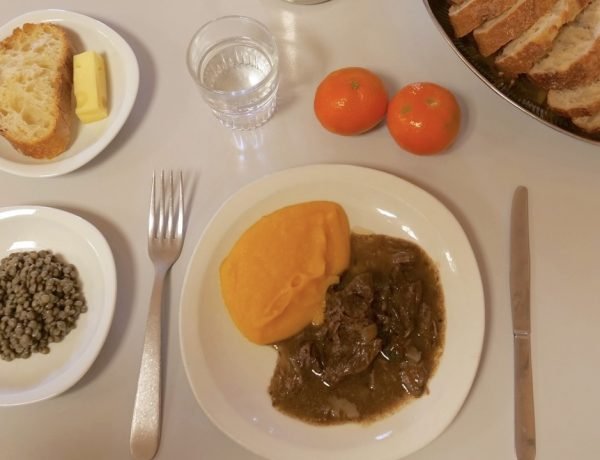
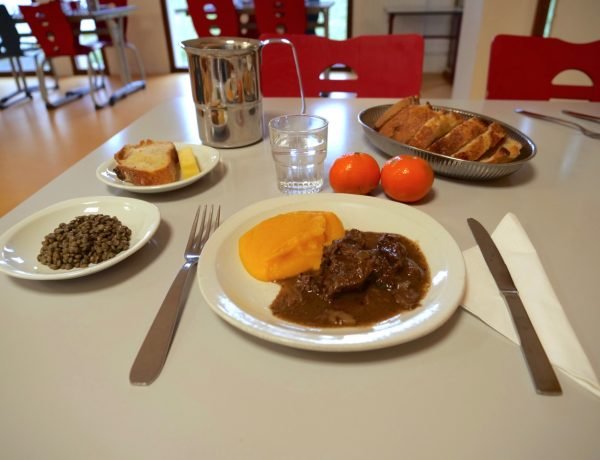
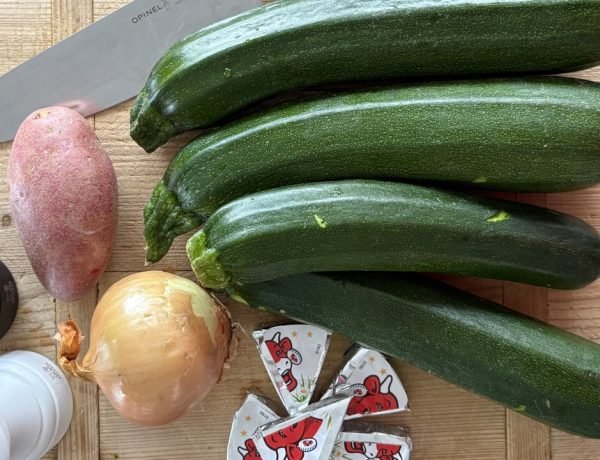
At the daycare, food was deliberately simple. Vegetables weren’t hidden in sauces or turned into cartoon shapes. Instead, toddlers saw foods exactly as they were: grated carrots, cooked green beans, slices of beetroot, steamed zucchini, small servings of fish or chicken.
Simple → visible → recognizable → acceptable.
I found this particularly interesting because it was so different from the idea of disguising vegetables to persuade children to eat them.
Catherine’s approach was to make vegetables familiar rather than mysterious.
It’s something I’ve also observed in French elementary school kitchens, where children are regularly served recognizable vegetables prepared in straightforward ways. You can see examples in my article Inside a French School Kitchen.
Join my free monthly newsletter
for everyday French life, simple habits & sustainable wellbeing.
And get The French Guide to Everyday Wellbeing straight to your inbox!
2. Let Toddlers Explore Foods at Their Own Pace
At the daycare, meals for children under three were typically served on a divided plate with small portions of:
- A starter
- A main dish
- A dairy item
- A dessert
What surprised me was that the toddlers could choose their own eating order.
Some began with dessert — and that was fine.
Rather than insisting that every child eat the starter before moving on to the main course, caregivers allowed them to explore the different foods on their plates.
The emphasis was on becoming familiar with a variety of tastes and textures, not on enforcing a particular order.
By the time children entered preschool, where courses were served one by one, they had already spent considerable time getting to know different foods.
3. Introduce Vegetables Through Gardening
Many French daycares and preschools include small gardens or containers with herbs. Children plant seeds, water them, and watch them grow. Later, they may harvest and taste what they’ve grown.
I love this idea because it introduces vegetables long before they arrive on a dinner plate.
A toddler who has helped grow a carrot may be more curious about tasting it.
And even if the child doesn’t want to eat it immediately, the carrot is no longer something completely unfamiliar.
It’s a quiet but powerful form of exposure.
4. Involve Toddlers in Simple Cooking Activities
I loved this part of the French approach.
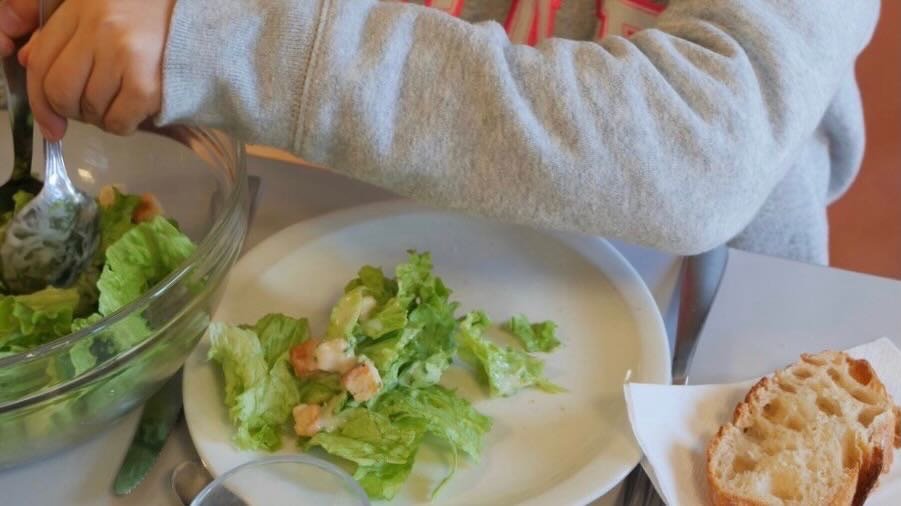
Even very young children can participate in food preparation, with appropriate supervision: washing lettuce, stirring ingredients, helping prepare fruit, shaping dough or exploring vegetables before they’re cooked.
Catherine explained how these activities helped children become comfortable with the foods they would eventually eat.
When children participate in preparing food, they develop a sense of familiarity and involvement.
And that can make them more willing to taste.
Cooking becomes another layer of recognition.
Years later, working with a French elementary school chef, I created a downloadable guide featuring some of the best-loved recipes served in French school cafeterias. You can explore the French School Lunch Recipe Guide here.
5. Make Food Familiar Through Everyday Play
In French early-childhood settings, food is also part of the daily environment.
Play kitchens, pretend food markets, wooden fruits and vegetables, and cooking role-play give children opportunities to explore food outside mealtimes.
Children “cook,” “serve,” and “taste” throughout the day in their pretend world.
So when a real vegetable appears on their plate, they may already recognize its shape, name or color.
What struck me was how naturally food education was woven into everyday activities.
It wasn’t confined to lunchtime.
The Real Secret: Repeated, Calm Exposure
One of the most important things Catherine explained was that children often need to encounter a new food repeatedly before becoming comfortable with it.
A refusal today doesn’t necessarily mean a child will dislike that food forever.
At the daycare, caregivers didn’t rush the process or label a food as disliked after one or two refusals.
The food simply returned another day, without making a drama out of it.
Repeated, calm exposure was the strategy.
After observing the daycare and talking with Catherine, I continued serving varied foods at home — but I adjusted my expectations.
I stopped assuming early refusals meant anything at all. I gave my children more time, more chances, more calm.
And in the end, it worked for our family. Their palates widened naturally, thanks to the combination of daycare, school meals, and what we served at home.
(Though yes — I waited a long time before offering real glass cups at home.)
The lessons didn’t end at daycare. Many of the same ideas about food, independence and eating together continued into elementary school. I’ve written more about this in 5 Reasons French School Lunches Are Important (It’s Not the Food).
Every October, France also celebrates La Semaine du Goût, a national week dedicated to discovering taste. But encouraging children to explore food is part of a much broader tradition.
What Parents Can Learn From French Daycare Meals
Looking back, what impressed me most wasn’t that every toddler ate every vegetable on their plate.
It was the atmosphere surrounding the meal.
The children sat together, ate recognizable foods, and were given time to become familiar with different tastes. The adults were present and attentive, but they weren’t constantly negotiating or persuading.
And food education happened throughout the day — in the garden, during cooking activities, and even through play.
For parents, I think there are some useful lessons here.
Offer children a variety of foods, even if they don’t immediately like them. Let them help prepare meals. Talk about vegetables, grow a few herbs together, and give unfamiliar foods another chance without turning dinner into a battle.
Of course, every child is different. Some are naturally adventurous eaters, while others need considerably more time and support.
And French children certainly don’t eat everything.
But what I learned from Catherine was that helping children develop a positive relationship with food is a gradual process.
It’s less about convincing them to eat a particular vegetable tonight and more about helping them feel comfortable with different foods over time.
FAQ: Why French Kids Eat Everything
Why do French kids seem to eat everything?
French children don’t literally eat everything, but many are introduced to a wide variety of foods from an early age. At the daycare I observed, recognizable vegetables, shared meals, cooking activities and repeated exposure were all part of helping toddlers become familiar with different tastes.
How do French daycares encourage toddlers to try vegetables?
At my daughter’s daycare, caregivers regularly offered vegetables without pressuring children to finish them. They also helped toddlers recognize foods through gardening, cooking activities and play.
Why do French toddlers drink from glass cups?
At the daycare I observed, toddlers used small glass cups during meals. It was part of encouraging independence and teaching children to handle everyday objects carefully, with adults nearby to help.
Not every French daycare necessarily uses glass cups.
Do French caregivers force children to eat vegetables?
Catherine described an approach based on offering foods repeatedly rather than forcing children to eat them. The emphasis was on familiarity, patience and a calm atmosphere.
Practices can vary between daycares and individual caregivers.
What happens when a French toddler refuses a food?
At Catherine’s daycare, a refusal wasn’t treated as a permanent dislike. The food could be offered again on another day, giving the child more opportunities to become familiar with it.
How can parents encourage picky toddlers to try new foods?
Start with small portions, offer unfamiliar foods alongside foods your child already enjoys, and allow repeated opportunities to explore different tastes without pressure.
Involving children in simple cooking activities, gardening and food-related play can also help make new foods feel familiar.
Is this the same approach used in French preschools and elementary school cafeterias?
There are similarities, particularly the emphasis on varied foods, shared meals and introducing children to different tastes.
However, preschool and elementary school lunches are generally more structured, with courses served separately. Practices also vary between schools and municipalities.
For many children, the early experiences they have at daycare and at home help prepare them for these later school meals.
More From France
If you’re curious about how France nurtures healthier habits — from school lunches to everyday food, movement, and wellbeing — I share practical tips and stories each month. Sign up for the free newsletter below and receive my guide, The French Guide to Everyday Wellbeing, straight to your inbox. Merci!
Come see it for yourself!
Follow along on Instagram and TikTok for real footage from inside French school cafeterias and kitchens, plus everyday life in France.