
France is a remarkably structured country.
The school year runs to a strict rhythm. The curriculum is national. School holidays are organized by zones. Meals tend to happen at predictable times. Work, school and family life are surrounded by calendars, rules, rituals and routines. Even eating has structure here—something I’ve spent years documenting through French school lunches.
And then comes August in France. Suddenly, some of that structure falls away.
The school kitchens go quiet. Paris empties of Parisians, while beaches, campsites, mountains and holiday towns fill up. Fermé pour congés annuels (“closed for annual holidays”) signs appear on shop doors. Emails take longer to be answered. Children stay up later. Meals get later too. Plans become less precise.
After months of structure, August in France feels like a collective release. Amazingly enough, much of the country seems to synchronize around the idea that, for a few weeks, life is simply going to move a little more slowly.
Of course, France doesn’t literally stop. Millions of people continue working, particularly in tourism, hospitality, healthcare, agriculture and all the other industries that keep the country running while everyone else is on holiday. Nor have French people discovered some magical formula for stress-free living.
But there is something fascinating about a culture that spends so much of the year operating within an enormous amount of structure—and then collectively gives itself permission to loosen some of it.
For an overview of everyday French wellbeing habits, start with → The French Approach To Wellbeing.
Join my free monthly newsletter
for everyday French life, simple habits & sustainable wellbeing.
And get The French Guide to Everyday Wellbeing straight to your inbox!
The Cities Empty and the Holiday Towns Fill Up
Paris empties of many of its residents in August, as do other large cities, while tourist destinations suddenly spring to life.
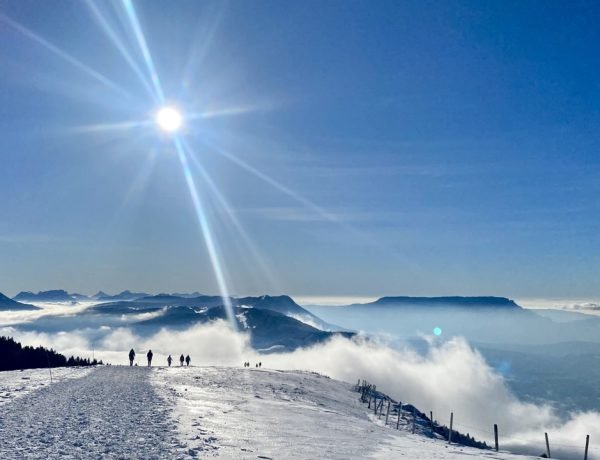
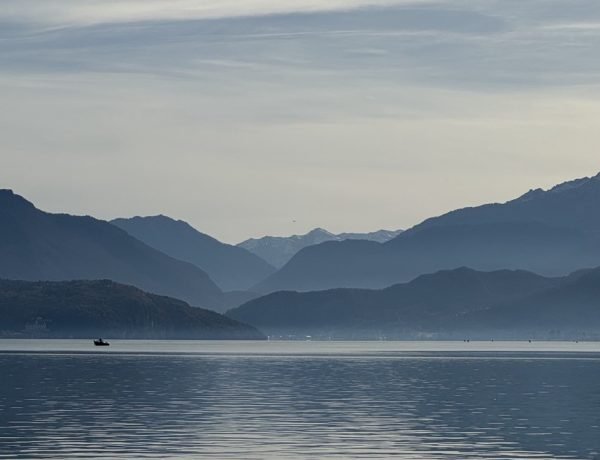
Here in Annecy, it’s impossible not to notice. The lake and mountains fill with visitors swimming, cycling, hiking, paddleboarding or simply enjoying being outside. The Mediterranean coast fills up, as do villages in Provence, Atlantic beaches, mountain resorts and countless smaller destinations around the country.
But I think it’s important to say that a French summer holiday isn’t necessarily the glamorous version we so often see online.
Not everyone rents a villa in Provence, spends a week in Cap Ferret or sails around the Mediterranean. A holiday might mean a campsite, a week staying with grandparents, visiting friends in another part of France, a few days at the beach, or simply staying home and taking day trips somewhere nearby.
August holidays mean different things to different people and different budgets. The important part isn’t necessarily where you go. It’s that you’re off. It’s as much about a change in attitude as it is about temporarily relocating somewhere else.
Fermé Pour Congés Annuels
This one took me years to get used to. Local businesses simply close for weeks at a time—even in the middle of the summer tourist season. Hairdressers close. Boulangeries close. Clothing shops close. Restaurants close. Small businesses stick handwritten notices on the door explaining that they’ll be back at the end of August—or sometimes September.
Yes, even the baker may go on holiday.
When I first moved to France, I found this slightly maddening. Surely someone should be there?
Now my attitude is completely different. In August, I approach a small business, discover that it’s open and think: excellent!
The same attitude extends surprisingly far into professional life. Emails can wait longer. Decisions get pushed into September. Even at fairly senior levels of business, there is an understanding that August in France probably isn’t going to be the most productive month of the year.
Everyone knows September is coming.
Children Get a Break Too
Having raised three children largely in the French school system, I can assure you: there is a lot of structure during the year.
If you know, you know.
The school day is full of rituals and routines, and even school lunch—the world I know particularly well—is highly structured.
Then suddenly, all of it disappears.
Of course, children may spend a week or two at camp. French camps can be relatively affordable, whether they’re day camps, overnight colonies de vacances or specialized sports camps. Many children also spend time with grandparents, particularly while their parents are still working.
But children are also allowed simply to be on holiday. They swim. They stay outside. They hang around. They spend time with cousins and grandparents. They go to bed later.
And they profitent.
Profite!
This may be one of my favorite French one-word sentences.
Profite! doesn’t translate perfectly. “Enjoy!” comes close, but it’s also make the most of it, take advantage of this moment, don’t let it pass you by.
The longer I’ve lived in France, the more I’ve noticed that this attitude isn’t limited to August.
And it doesn’t have to be elaborate.
A beautiful summer evening doesn’t require a perfectly styled table, an elaborate dinner and a spectacular setting. It might mean a simple table on the beach, a piece of fresh fish, some good olives and a cold glass of rosé.
That’s enough.
In fact, some of my favorite moments in France have been remarkably uncomplicated. A swim followed by an apéro—drinks and something small to eat before dinner. Tomatoes and bread for lunch. Sitting outside longer than planned because the evening is beautiful.
There is a willingness to take pleasure in what is available right now, rather than constantly saving enjoyment for some bigger, better or more elaborate future occasion.
August in France simply turns the volume up on it.
Nothing Needs to Be Too Perfect
There’s another part of French summer that I’ve always loved: very little seems overly staged.
People still make an effort. The table is pretty. Someone has put on a nice linen dress for dinner. The food looks beautiful. But rarely does any of it feel as though everyone has spent hours trying to make it look effortless.
An apéro might simply be a bowl of good olives, some cherry tomatoes and a bottle of rosé. Dinner might be grilled fish and a tomato salad. The table might have a pretty cloth and a few flowers cut from the garden, but nobody seems particularly concerned that everything matches.
The same goes for getting dressed. People look nice, certainly, but summer seems to come with permission to do a little less. Hair that has dried naturally, a simple dress, sandals, perhaps a little makeup—or none at all. The goal doesn’t seem to be looking as though you’ve spent the afternoon preparing to enjoy the evening.
I feel that’s part of profiter too. If enjoying something requires an enormous amount of preparation, perfection and performance, you’ve somehow made enjoying yourself into another job.
French summer, at its best, feels like the opposite of that. Make it nice. Make an effort. But then sit down and enjoy it.
Life Moves Outside
French people love eating outside, and summer takes this to another level.
If you come from a family like my husband’s, eating outdoors is practically a moral imperative. Skies that any rational person would interpret as a clear warning to set the table indoors are apparently no deterrent whatsoever. Don’t get me started on the number of dinners I’ve helped move inside halfway through because it has started raining.
Meals move outdoors, but so does much of life. People walk, swim, cycle and hike. Terraces fill up. Children play outside later because the sun doesn’t disappear until well into the evening.
Lunch can become an afternoon activity. Apéro can go on much longer than originally intended. Dinner starts later. There is simply less urgency to move on to the next thing.
Summer Food Gets Ridiculously Simple
This is probably one of my favorite things about August in France. The markets do most of the work for you.
Tomatoes are so good that they can practically become a course in their own right. Slice a sun-ripened tomato from the garden or local market, drizzle it with good olive oil, add fleur de sel and put some fresh bread next to it. Done.
Melons appear everywhere—as starters, desserts and snacks. When my children were little, I would chop one into rough cubes, stick a few toothpicks in them and leave the bowl on the table. I still occasionally do this now that they’re older. Usually it’s gone within minutes.
Peaches, nectarines and apricots barely need to become dessert because they already are dessert. Put them in a bowl, slice them onto a platter, or turn them into a simple tart or clafoutis if you’re feeling ambitious.
Ratatouille suddenly makes perfect sense. Eat it warm, at room temperature or cold the following day. Crudités, cold lentil or tabbouleh salads, grilled fish or meat, courgettes, herbs and whatever looked best at the market fill in the rest.
It took me a long time to stop overthinking summer meals. My friend, chef and art de table queen Laura Calder has told me for years that if you start with really good ingredients, you don’t have to do very much to them. August in France may be the best evidence that she’s right.
And none of this means French people spend August pursuing nutritional perfection. There is ice cream. There is rosé (I call it “French iced tea” because it’s everywhere). There are chips, restaurant meals and enormous apéros.
Nobody seems to be embarking on a wellness program. It’s simply summer.
Maybe That’s the Point
By September, France will click back into gear.
Children will return to school. The kitchens I visit will start cooking again. Businesses will reopen. Emails will be answered. Schedules will fill up.
Perhaps that’s partly why August in France works. It’s temporary.
For a few weeks, there’s a little more room for the things that can so easily get pushed aside during the rest of the year. And enjoying them doesn’t require an elaborate holiday, a perfectly set table or some distant future when everything is finally in place.
It can be much simpler.
Eat dinner later. Stay at the table longer. Buy the peaches because they’re perfect right now. Go swimming. Let the children stay up. Take the bike ride. Sit on the terrace. Close the laptop.
September will come soon enough.
For now, I’m happy to profiter and let August be August.
Read More
👉 What French Women Eat In A Day
👉 The French Approach To Health: Why There Are No Hacks
👉 Why French Women Love The Mediterranean Diet
More From France
If you’re curious about how France nurtures healthier habits — from school lunches to everyday food, movement, and wellbeing — I share practical tips and stories each month. Sign up for the free newsletter below and receive my guide, The French Guide to Everyday Wellbeing, straight to your inbox. Merci!
Come see it for yourself!
Follow along on Instagram and TikTok for real footage from inside French school cafeterias and kitchens, plus everyday life in France.