
Earlier this week, I wrote about France’s proposed ban on added sugars in foods marketed to babies and toddlers. As I was researching and writing that article, I found myself coming back to a question I’ve been asking for more than fifteen years.
People often ask me why I continue writing about French school lunches after all this time.
At first, the answer was simple. I was fascinated by the food itself. I wanted to understand why children were happily eating lentil salad, leek soup, beetroot, fish and seasonal vegetables as though there was nothing unusual about it.
Over time, however, I realized I had become interested in something much bigger than the menus.
Today, the question that keeps coming back to me isn’t, “Why are French school lunches different?”
It’s this: What happens when an entire society decides that feeding children well is worth investing in?
Not just for today. But for the adults those children will one day become.
For a complete overview of the French school lunch system, see → French School Lunches: How They Work Today.
Every Lunch Is an Investment in the Future
It’s easy to think of a school lunch as simply another meal in a child’s day. In reality, I think it may be something much more significant.
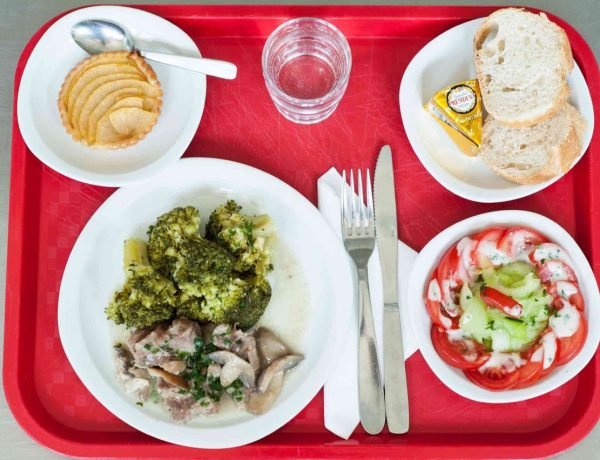
Every lunch quietly teaches children what a normal meal looks like. It teaches them that vegetables belong on the table, that fruit follows the main course, that meals change with the seasons and that trying unfamiliar foods is simply part of growing up.
👉 Read more on what a typical French school tray looks like here.
None of these lessons happens because someone stands at the front of the room and explains them. Children absorb them because they experience them hundreds of times. They also experience them in one of the most powerful learning environments imaginable: surrounded by their friends.
Every lunch becomes a form of quiet social reinforcement. Eating vegetables, sitting down together, trying unfamiliar foods and finishing a meal with fruit simply become normal because everyone around them is doing the same thing. No one calls it nutrition education. It just feels like lunch.
I also love listening to the small conversations that happen every day between kitchen staff, teachers and children. Someone reminds a child to finish their starter before moving on to the main course. Another gently encourages a reluctant five-year-old to try just one spoonful of a vegetable they’ve never tasted before. There are no battles and very little drama. “Just have a taste,” they’ll say.
More often than not, a few minutes later the same child comes running back to proudly announce whether they liked it or not. Sometimes they did. Sometimes they didn’t. But tasting it was the victory.
One lunch changes very little. But I would argue that a thousand lunches can change a great deal.
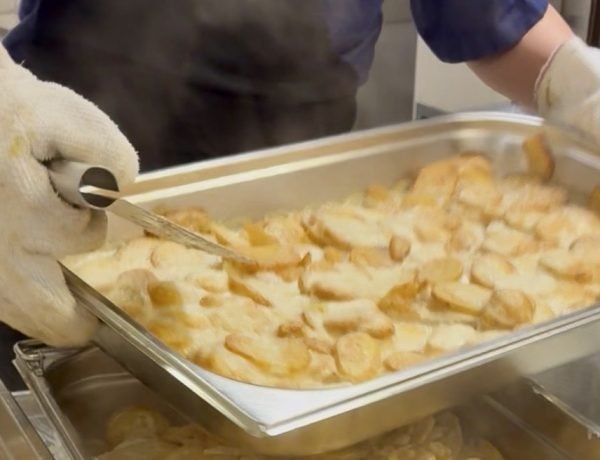
👉 Read more on the typical day of a French school chef here.
Join my free monthly newsletter
for everyday French life, simple habits & sustainable wellbeing.
And get The French Guide to Everyday Wellbeing straight to your inbox!
Habits Become Culture
One of the things I’ve come to appreciate after years inside French school kitchens is that culture is built remarkably slowly.
No single chef creates it and no single law creates it. And certainly not a poster hanging in the cafeteria—although I do appreciate those. One of the latest I noticed in an elementary school featured sardines and explained why they are so healthy.
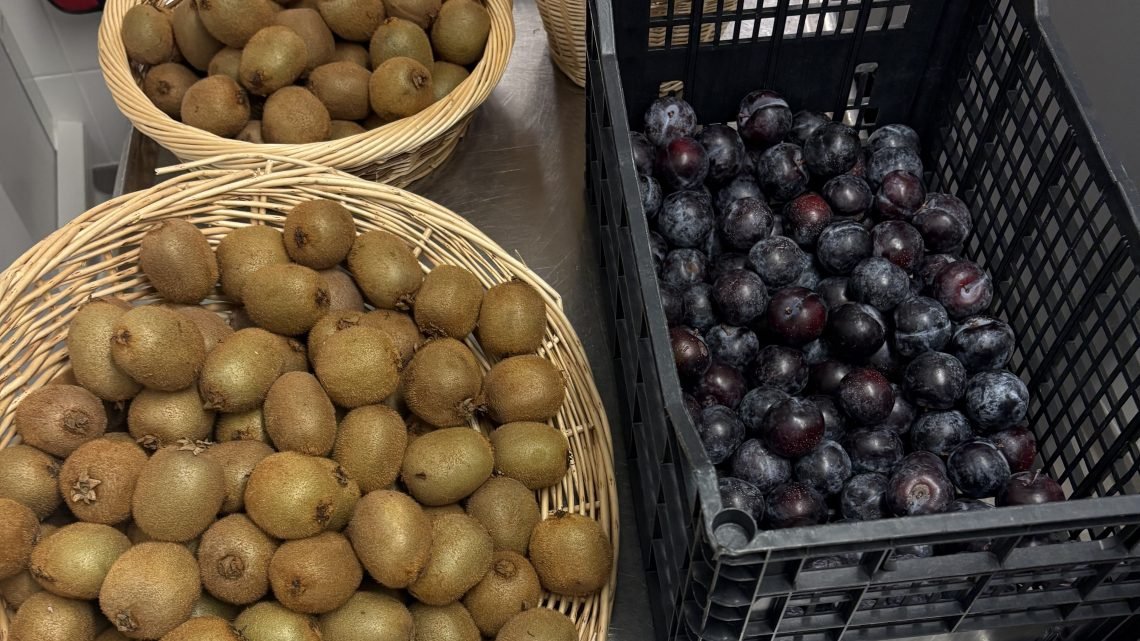
Instead, hundreds of small decisions reinforce one another. For example, municipalities invest in kitchens, chefs plan balanced menus, and nutrition guidelines establish a framework. The kitchen staff encourage children to taste unfamiliar foods and parents expect schools to serve real meals. And the farmers supply seasonal ingredients.
I’ve lost count of the number of times a school chef has quietly pulled me aside to show me a crate of beautiful heirloom tomatoes from a nearby farm, or a particularly nice cut of local meat they managed to fit into the budget. They never show me these ingredients because they’re expensive. They show me because they’re proud. Proud that, despite the realities of public budgets, they can still serve children food they genuinely believe is worth eating.
Each of these decisions seems relatively small on its own. But together, they create an environment in which eating well simply feels normal. That may be the most powerful lesson of all.
👉 Read more about the inside of a French school kitchen here.
Children Eventually Become Adults
This is the part of the story that fascinates me most – children don’t remain children.
The five-year-old learning to enjoy green beans eventually becomes the thirty-five-year-old buying groceries for a family. The teenager who has grown up eating seasonal produce becomes the parent deciding what to cook for dinner. The child eating lunch in the school cafeteria today may one day become a teacher, a doctor, a mayor, a chef or someone responsible for shaping the next generation.
If we accept that childhood experiences influence lifelong habits, then school meals stop being just about children. They become an investment in the future health—and perhaps more importantly, the future food culture—of an entire society.
And let me not sound as though I’m sitting on a high horse. I’ve raised three teenagers in France. And I’ve watched them go completely off the nutritional rails at times.
Stand outside a French supermarket after school and you’ll often see groups of middle-schoolers buying liter bottles of iced tea, giant tubs of Haribo candy to share, and chips in flavours that somehow combine truffle, roast chicken and barbecue all at once.
I don’t panic when I see it. To me, those moments are outliers in the lifespan of a child. Those kids know where nutritional north is. That compass comes from many places—family, culture and, I believe, the thousands of meals they’ve shared at school over the years. They’ve simply decided to wander in the opposite direction for a few years. I worry much less about that than I do about the complete absence of a foundation.
The Ripple Effects Extend Far Beyond the Cafeteria
This is why conversations about school food are rarely just about lunch. They’re also about public health.
Of course, diet is only one of many factors that influence lifelong health. Genetics, physical activity, education, income and access to healthcare all play important roles. But nutrition is one of the few factors societies can begin influencing very early in life, which is why so many countries increasingly see children’s nutrition as a public health investment rather than simply a personal responsibility.
While no single school meal determines a person’s future health, helping children develop healthy eating habits from an early age has the potential to influence far more than what happens in the cafeteria.
Like I mentioned before, adults who are comfortable cooking vegetables are more likely to serve them at home. And parents who value balanced meals often pass those habits to their children.
Communities that expect good school food are more likely to continue supporting it.
Little by little, one generation helps shape the next.
👉 Read more about how French toddlers learn to eat a bit of everything here.
👉 Read more about what French women eat in a day here.
Why France’s Proposed Sugar Ban Didn’t Surprise Me
Recently, France proposed banning added sugars in foods marketed to babies and toddlers.
Some people viewed it simply as another public health measure. To me, it felt like part of the same philosophy I’ve been observing for years. The proposal wasn’t only about sugar.
It reflected a broader question: What eating habits are we helping children develop from the very beginning?
Seen through that lens, school lunches, nutrition education and early childhood food policies all become connected. They’re different expressions of the same long-term investment.
This Isn’t About Perfection
None of this means the French system is flawless.
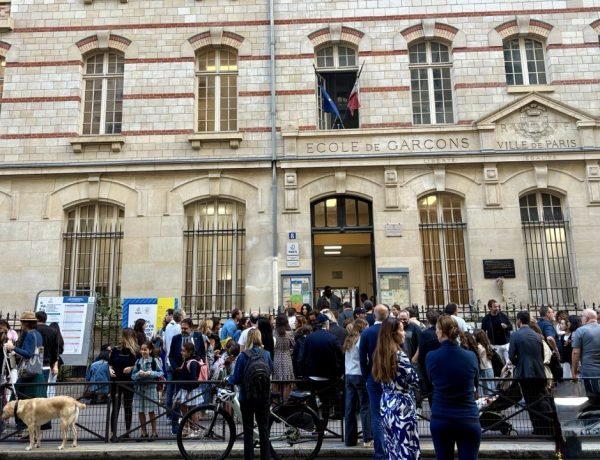
I’ve watched school lunches become political footballs during municipal election campaigns, with candidates criticizing menus or promising changes in hopes of winning votes. I’ve seen parents criticize school lunches without ever having stepped inside a cafeteria or visited the kitchen.
Then something interesting happens.
Occasionally those same parents accept an invitation to eat lunch at the school or tour the kitchen. More often than not, they walk away genuinely impressed. They’re surprised by the organization, the professionalism of the staff and the amount of care that goes into preparing hundreds of meals every day.
Over the years I’ve come to realize that this criticism isn’t always a sign that the system is failing. Often, it’s a reflection of expectations. People expect school lunches to be good. They expect quality and transparency. And because those expectations remain high, municipalities, parents, chefs and elected officials continue pushing one another to do better.
I’ve also noticed something else. French people often say, “Ce n’est pas bon.” At first, I assumed they meant the food didn’t taste good.
Over time, I realized they often meant something quite different. They were talking about quality.
I’ve had young schoolchildren tell me that something “wasn’t good” because it wasn’t homemade. That was their benchmark—not whether it tasted sweet enough or salty enough, but whether it had been made properly.
I find that fascinating. Perfection isn’t the point. The willingness to keep discussing, questioning and improving children’s food is.
Looking Beyond Today’s Lunch
When I first walked into a French school kitchen, I thought I was writing about what children were eating.
More than a decade later, I realize I’ve been writing about something much bigger.
Every lunch tray tells a story—not only about nutrition, but about the kind of adults a society hopes today’s children will become.
When communities consistently invest in helping children build a healthy relationship with food, they’re investing in future parents, future consumers, future voters and future leaders. Those adults, in turn, help shape the food culture their own children will inherit.
Perhaps that’s the most fascinating thing about French school lunches. They’re not simply feeding today’s children. They’re quietly helping shape tomorrow’s society.
After many years of standing in French school kitchens, watching children eat, talking with chefs, teachers, mayors and parents, that’s a conclusion I’ve become increasingly comfortable making.
More From France
If you’re curious about how France nurtures healthier habits — from school lunches to everyday food, movement, and wellbeing — I share practical tips and stories each month. Sign up for the free newsletter below and receive my guide, The French Guide to Everyday Wellbeing, straight to your inbox. Merci!
Come see it for yourself!
Follow along on Instagram and TikTok for real footage from inside French school cafeterias and kitchens, plus everyday life in France.