
When I first arrived in France, in my early 30s, my idea of “wellbeing” was a mess. I swung between indulging and restricting, over-exercising to “compensate” for whatever I’d eaten. There were 5 a.m. runs around the Champ de Mars, and later, intense triathlon schedules when my kids were small.
My energy was terrible, and my skin and hair showed it. I didn’t realise just how much my relationship with food needed to change until I wrote an article about what my French friends ate in a day.
That’s when it finally clicked: they ate variety. Real food. No dramatic restrictions. Cheese, meat, fruit, carbs (yes, carbs), the occasional dessert… and they seemed to have a much calmer relationship with food than I did.
I wish I’d put two and two together sooner — but once I did, everything shifted.
For an overview of everyday French wellbeing habits, start with → The French Approach to Wellbeing.
Why the Mediterranean Diet Fits Naturally Into French Life
One of the influences I began to recognise was the Mediterranean way of eating.
Of course, France is a large country with different regional food traditions, and not every French woman follows a Mediterranean diet. But many of the habits I observed — eating seasonal vegetables, cooking simple meals, enjoying food at the table, and making room for pleasure — fit naturally with its principles.
The Mediterranean diet isn’t really a “diet” in the restrictive sense. It’s a pattern of eating inspired by traditional food cultures around the Mediterranean, including southern France.
Rather than focusing on calorie counting or banning entire food groups, it emphasises vegetables, fruit, legumes, whole grains, nuts, olive oil, and fish.
And perhaps just as importantly, it encourages an approach to food that can be enjoyed over a lifetime.
I’ve written more about the habits I’ve learned in France here → French Healthy Eating Habits: What I Learned After 20+ Years Living in France.
Join my free monthly newsletter
for everyday French life, simple habits & sustainable wellbeing.
And get The French Guide to Everyday Wellbeing straight to your inbox!
What Do You Eat on a Mediterranean Diet?
One of the reasons I love this approach is that it focuses on what you can enjoy regularly rather than everything you’re supposed to avoid.
Foods to Prioritise
A Mediterranean-style diet generally includes plenty of:
- Vegetables and fruit, ideally with variety throughout the week
- Beans, lentils, chickpeas, and other legumes
- Whole grains, including oats, brown rice, and whole-grain bread
- Nuts and seeds
- Olive oil as a principal source of added fat
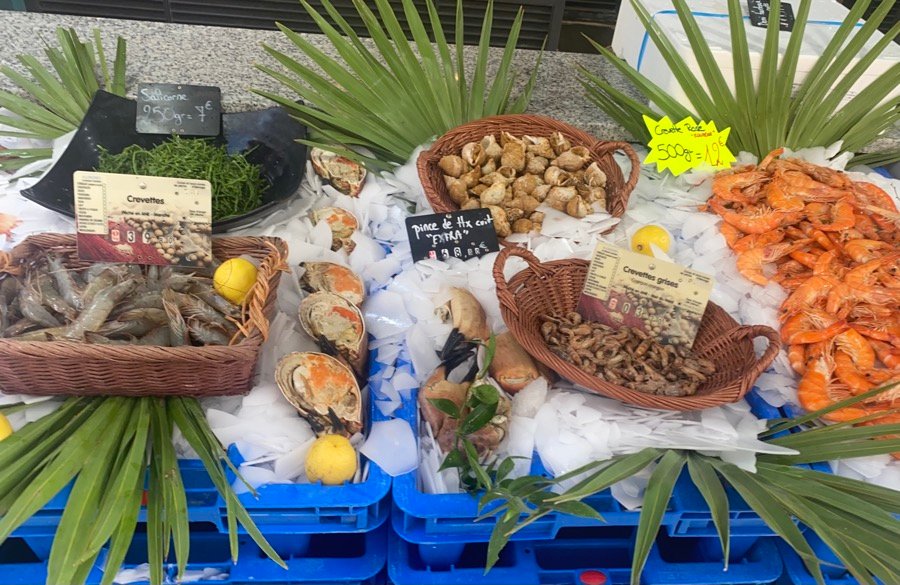
- Fish and seafood
- Moderate amounts of dairy, including yogurt and cheese
These foods provide fibre, vitamins, minerals, and different types of healthy fats.
Foods to Eat Less Often
Red and processed meats, ultra-processed snacks, sugary drinks, and foods high in added sugar generally play a smaller role.
That doesn’t mean they’re forbidden.
One of the most valuable lessons I’ve learned in France is that you can enjoy a particular food without feeling that you’ve somehow failed at eating well.
A croissant doesn’t undo a week of balanced meals. Neither does a slice of birthday cake.
It’s the overall pattern that matters.
A Simple Mediterranean-Style Day of Eating
Here’s one example of what an ordinary day might look like:
- Breakfast: Greek yogurt with fruit and nuts
- Lunch: Omelette, green salad, and bulgur
- Snack: An apple and a handful of nuts
- Dinner: Salmon, broccoli, and wild rice
It’s simple, flexible, and doesn’t require complicated recipes or unusual ingredients.
And of course — this is France — there’s room for pleasure.
A buttery croissant, a slice of country bread with dinner, or a square of chocolate after lunch can all have a place.
What I noticed among my French friends wasn’t an obsession with eating perfectly. It was the absence of constant food-related drama.
For a glimpse into what French women actually eat in everyday life, see What French Women Eat in a Day (2026).
Meals had a rhythm. Food was enjoyed. And eating didn’t have to become a moral judgment.
Even dessert often reflected that simplicity. On an ordinary weekday, fruit or yogurt might finish a meal, while a richer dessert was enjoyed on another occasion.
Bread was part of everyday life too. Not necessarily whole wheat or sourdough every time — a good baguette is still a French staple!
When I want something simple and comforting after a period of heavier meals, I often turn to vegetable soup → My French Detox Soup.
The Mediterranean Diet, Heart Health, and Ageing Well
The Mediterranean diet has been widely studied, particularly for its relationship with cardiovascular health.
Research suggests that following a Mediterranean-style eating pattern can help reduce cardiovascular risk, especially when it replaces a diet high in refined foods and less healthy fats.
It’s also associated with several markers of long-term health, although no single way of eating can guarantee healthy ageing or prevent disease.
What About Skin and Hormones?
French women are often associated with beautiful skin and an effortless approach to ageing, but I wouldn’t credit their diet alone.
Genetics, sun exposure, sleep, smoking, skincare, and many other factors influence how our skin looks and ages.
That said, a varied diet rich in vegetables, fruit, nuts, and healthy fats provides nutrients that support normal skin function and overall health.
The same goes for hormones. Nutrition is important, but the Mediterranean diet isn’t a magic solution for hormonal changes.
For me, the biggest benefit was much simpler: I stopped thinking of food as something I constantly needed to control or compensate for.
A More Sustainable Relationship With Food
Weight management is often mentioned as a benefit of Mediterranean-style eating, but I think its real strength is that it’s an approach you can live with.
There are no elaborate rules to memorise, no compulsory detoxes, and no reason to eliminate entire categories of food.
Instead, the emphasis is on variety, enjoyable meals, and habits that make sense over the long term.
And that, to me, is where the Mediterranean diet and the French approach to eating have so much in common.
What French Women Ultimately Taught Me About Eating Well
What I love most about the Mediterranean way of eating is how natural it can feel once you settle into it.
No rigid rules, no guilt, no perfection. Just real food, balance, and a calmer relationship with eating.
I often wish I’d stepped off my roller coaster long before I turned 30 and started a family. But I’m grateful I eventually found an approach that works for me.
It has supported my wellbeing ever since.
And perhaps that’s the greatest lesson I’ve learned from my years in France: eating well isn’t about getting every meal right. It’s about creating a way of eating that you genuinely enjoy, day after day.
For a simple vegetable recipe inspired by the south of France, try my French aunt’s easy baked ratatouille.
More From France
If you’re curious about how France nurtures healthier habits — from school lunches to everyday food, movement, and wellbeing — I share practical tips and stories each month. Sign up for the free newsletter below and receive my guide, The French Guide to Everyday Wellbeing, straight to your inbox. Merci!
Come see it for yourself!
Follow along on Instagram and TikTok for real footage from inside French school cafeterias and kitchens, plus everyday life in France.