
Note: This article documents French school lunches during the 2022–2023 school year. For a more current overview, see French School Lunches: How They Work Today.
In 2014, I wrote my first article about French school lunches for the American wellbeing platform MindBodyGreen.
I never imagined that millions of people would eventually read and share it — or that French school lunches would shape the direction of my writing and research for years to come.
Over the following four years, I visited school cafeterias across France and interviewed dozens of chefs, mayors, kitchen staff, parents, students, and elected officials.
Some were directly involved in preparing and serving school lunches. Others simply had a lot to say about them.
And that, I’ve learned, is very French. People care deeply about what children eat at school.
By the 2022–2023 school year, French school lunches had evolved considerably since I first started researching them. New policies placed greater emphasis on food quality, organic ingredients, vegetarian meals, and reducing waste.
But many of the traditions that originally fascinated me remained.
So what did French school lunches actually look like in 2022?
Let’s start with what hadn’t changed.
For a behind-the-scenes look at how meals are prepared, see → Inside a French School Cafeteria Kitchen.
A Sit-Down Meal and Time to Move
One of the most distinctive features of French elementary school lunches is that children sit down to eat a proper meal.
At the schools I’ve visited, the midday break generally falls between 11:30 am and 1:30 pm.
This two-hour period includes approximately 40 minutes for a sit-down, multi-course lunch, followed by outdoor recess.
Children either eat the school meal or go home for lunch. Bringing a packed lunch is generally not part of the routine in public elementary schools, although arrangements can be made for certain medical or dietary needs.
At our local school, children arrive to find tables already set with silverware, plates, glasses, napkins, a water pitcher, and a basket of bread.
They sit in groups of four.
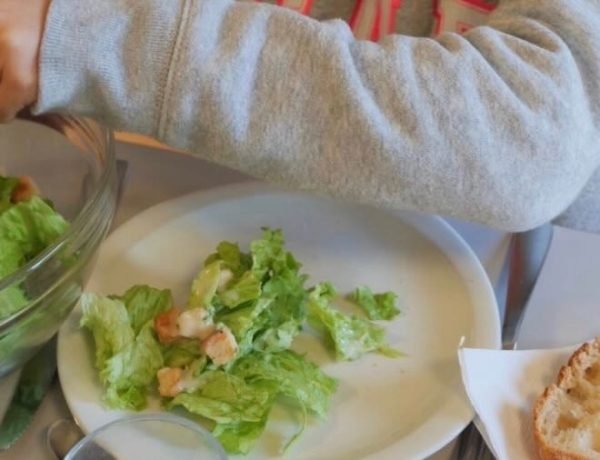
Older student volunteers help bring the first course to the tables. They return with the main course platter, allowing the children to serve themselves.
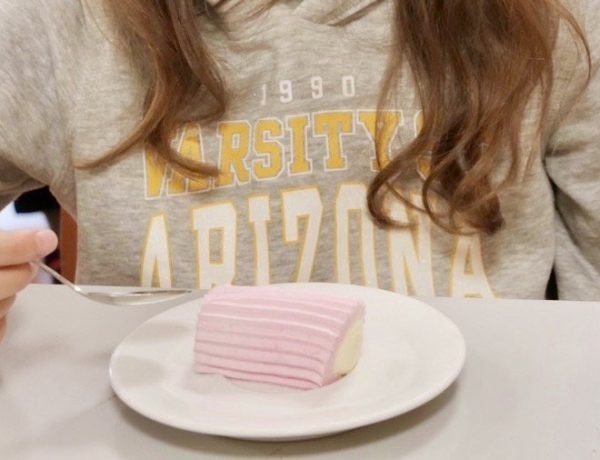
A cheese course usually follows, and then dessert.
Only one child per table is permitted to get up during the meal to refill the water pitcher or bread basket.
Everyone else remains seated until lunch is over and recess begins.
It’s a remarkably structured experience, especially when you consider the number of young children eating together.
And it’s about much more than getting food into their stomachs.
Children are learning to sit together, serve themselves, share food, and participate in the rituals of a meal.
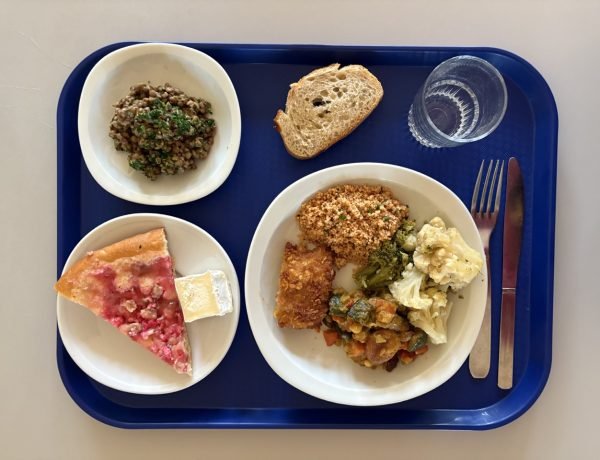
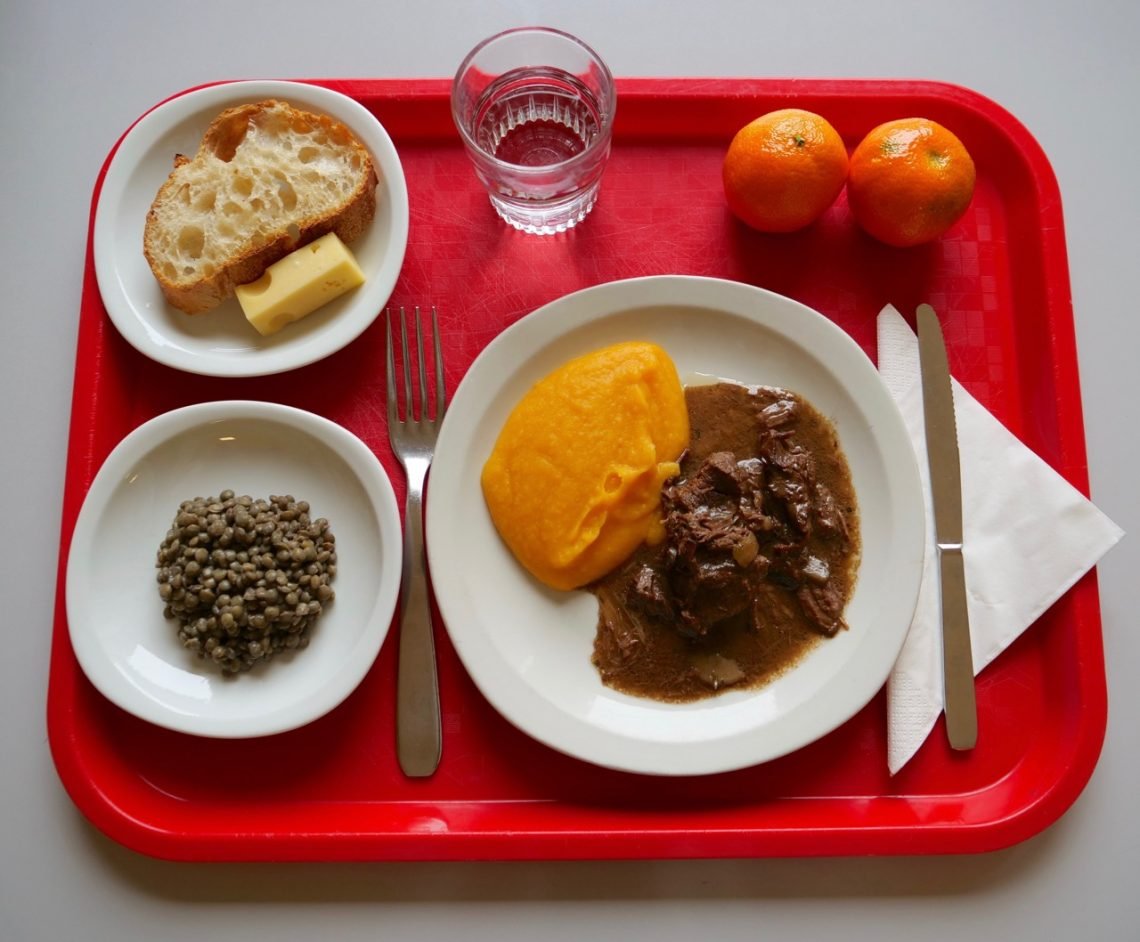
For a real example of what children were served that year, see → French School Lunch Menu (2022).
To see how school lunches have evolved, you can also explore a real week of French school lunches from 2026.
How French School Kitchens Prepared Lunches in 2022
One of the questions I’m asked most often is whether French school lunches are actually cooked from scratch.
The answer depends on the school and its kitchen arrangements.
Some schools have their own kitchens, while others receive meals from central kitchens or outside food-service providers.
At our local primary school, much of the food is prepared on-site.
Salads, soups, mashed potatoes, many desserts, and most main courses are made in the school kitchen.
The chef and two assistants arrive at around 7:00 am to begin preparing lunch.
They also receive daily deliveries, including fresh bread from the bakery down the street.
Menus are planned well in advance and reviewed for nutritional balance.
At our school, the planning process includes adjustments to ensure the meals meet nutritional requirements. That might mean changing a dessert or rebalancing the vegetables, protein, and starches across the menu.
It’s a professional kitchen operation, with the added challenge of serving hundreds of children within a relatively short lunch period.
And while the way meals are produced varies across France, public school cafeterias must follow national nutritional requirements.
Working with a French school chef, I’ve since created a downloadable collection of some of the best-loved dishes served in French school cafeterias → Explore the French School Lunch Recipe Guide.
Join my free monthly newsletter
for everyday French life, simple habits & sustainable wellbeing.
And get The French Guide to Everyday Wellbeing straight to your inbox!
What Changed in French School Lunches Between 2014 and 2022?
When I began writing about French school lunches in 2014, I was fascinated by the structure of the meals, the variety of foods, and the attention given to teaching children how to eat.
By 2022, another dimension had become increasingly important: sustainability.
Government policies, local initiatives, and pressure from parents and communities were changing how school meals were sourced and prepared.
Here are some of the biggest developments.
1. More Organic and Sustainable Ingredients
One of the most significant changes came through France’s EGAlim law.
From January 2022, public collective catering services, including school cafeterias, were required to aim for at least 50% sustainable and quality food products in their purchases, including at least 20% organic products, measured by purchase value.
This is an important distinction: the requirement wasn’t simply that 50% of ingredients had to be local or organic.
The law recognised several categories of qualifying products, while organic food had its own minimum share.
Local governments and individual schools were also pursuing their own ambitious sourcing policies.
Mouans-Sartoux, in southern France, became particularly well known for its commitment to organic school meals.
But the pace of change varied considerably from one municipality to another.
The ambition was clear, even if meeting the targets everywhere remained a challenge.
2. A Weekly Vegetarian Meal
By the 2022–2023 school year, French school cafeterias were required to offer at least one vegetarian menu per week.
This was a significant change in a country where meat and fish have traditionally occupied a central place in school lunches.
A vegetarian school meal might include lentils, chickpeas, eggs, cheese, grains, or vegetables prepared in a variety of ways.
The policy also encouraged cafeterias to explore new recipes and rethink how they built a balanced meal.
Some municipalities went beyond the minimum requirement, while others continued to debate the role of vegetarian food in schools.
As with many food-related subjects in France, it generated plenty of passionate discussion.
3. Greater Attention to Food Waste
Reducing food waste was another major priority.
Schools were increasingly measuring how much food was thrown away and looking for ways to reduce it.
That could mean adjusting portion sizes, giving children opportunities to taste unfamiliar foods, improving menu planning, or finding ways to reuse or redirect suitable food scraps.
At our local school, for example, some food scraps were collected for nearby farm animals.
But the issue wasn’t only what happened to leftovers.
It was also about helping children understand where food comes from and why wasting it matters.
For a closer look, read → How France Is Working to Eliminate Food Waste in School Cafeterias.
4. Reducing Single-Use Plastics
France was also introducing increasingly strict rules around disposable plastics.
By 2022, bans and restrictions on several single-use plastic products were already changing practices in food service.
School cafeterias were part of this broader transition, with increasing attention paid to reusable tableware, packaging, and food containers.
At our school, children also brought reusable water bottles on outings rather than relying on disposable bottles.
These might seem like small changes, but multiplied across thousands of schools, they represented a significant shift in everyday habits.
What Was Next for French School Lunches?
In 2022, the conversation about school food was far from over.
Parents, local governments, school associations, farmers, and nutrition professionals were continuing to push for improvements.
Among the priorities being discussed were:
- More organic and sustainably sourced ingredients.
- Greater support for local farmers and food producers.
- School gardens and food education.
- Further reductions in food waste.
- Less disposable packaging.
- Continued improvements in the quality and variety of school meals.
One of the things that has always interested me is that French school lunches are not simply a finished system that everyone agrees is wonderful.
They’re constantly discussed, debated, and adjusted.
And that’s part of what makes them interesting.
French School Lunches Are About More Than Food
Looking back at the 2022–2023 school year, I’m struck by how much of the original French school lunch experience remained intact.
Children still sat together at tables, ate multi-course meals, drank water, and learned the everyday rituals of eating with others.
But the conversation surrounding those meals had expanded.
School lunch was increasingly connected to agriculture, sustainability, the environment, food waste, and the way children learn about food.
After years spent inside French school cafeterias and kitchens, I keep returning to the same conclusion:
What children eat at school matters. But so does how they eat, where the food comes from, and what they learn along the way.
And that conversation matters wherever we live.
More From France
If you’re curious about how France nurtures healthier habits — from school lunches to everyday food, movement, and wellbeing — I share practical tips and stories each month. Sign up for the free newsletter below and receive my guide, The French Guide to Everyday Wellbeing, straight to your inbox. Merci!
Come see it for yourself!
Follow along on Instagram and TikTok for real footage from inside French school cafeterias and kitchens, plus everyday life in France.