
Cooking with children isn’t about keeping them busy. It’s about letting them participate in something real.
It builds skills that go far beyond the kitchen — confidence, patience, an understanding of process — but it also does something simpler and just as important: it connects them to food in a natural, everyday way.
For an overview of everyday French wellbeing habits, start with → The French Approach To Wellbeing.
I saw this very clearly when my daughter was between 18 months and 3 years old. She went to a local daycare two days a week while I worked from home, and I learned a lot just by observing how the children were introduced to food and to each other.
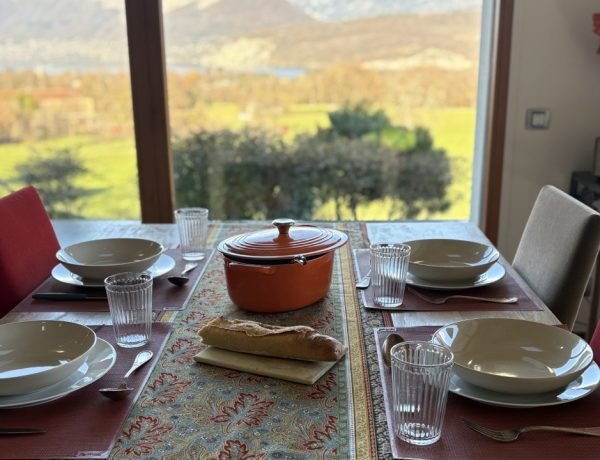
Of course, they ate well — sitting at the table, using real plates, glasses, and cutlery (yes, even at 18 months). But what struck me more was that food wasn’t limited to mealtimes. It was part of their day in a much broader way.
It’s something you see very clearly in the way children eat at school particularly in French school lunches.
They had access to a small vegetable garden. And they played with wooden and plastic fruits and vegetables, pushing them around in tiny shopping carts. The children went on mini outings to orchards to pick apples, and then came back to make apple tarts. They visited farms to see how milk, butter, and other foods were produced.
Food — and where it comes from — was simply part of their environment.
And just as importantly, they were involved in making it.
That early exposure continues as children grow. Through school lunches, they are introduced to a wide variety of foods. And beyond that, there are regular opportunities to engage more directly — whether through initiatives like la Semaine du Goût, where food professionals come into schools to encourage tasting and cooking, or more simply at home, with parents and grandparents.
Cooking isn’t treated as a separate activity. It’s part of life.
And over time, that familiarity builds something quietly but powerfully: children who are more comfortable with food, more willing to try things, and more capable in the kitchen ... one of the reasons picky eating is approached differently in France, something I explore in my post on picky eaters.
It’s Not About Complicated Recipes
Cooking with children isn’t about complicated recipes. It’s about connecting them to real food — and to where that food comes from.
It’s about making it normal to understand that an apple tart starts at the orchard, that butter begins with cows grazing in the fields. These connections aren’t abstract; they’re part of how children experience food from the very beginning.
With the growing presence of vegetable gardens in schools, children often have the opportunity to plant seeds and follow the entire process — watching them sprout, grow, and eventually become something they can cook and eat. That simple progression teaches something important: that real food is not only familiar, but delicious. It’s a way of eating that carries through into adulthood, as you see in my post on what French women eat in a day.
And over time, that understanding shapes how they see food.
I’ll never forget my son and his friend, in first or second grade, talking about a chocolate cake they had eaten. It was fait maison — homemade — and therefore, of course, it was good.
Join my free monthly newsletter
for everyday French life, simple habits & sustainable wellbeing.
And get The French Guide to Everyday Wellbeing straight to your inbox!
Start Small: What Children Can Do
If children can walk and talk, they can “cook.”
Even the smallest hands can help in the kitchen — if only to build awareness and interest. And there’s very little young children enjoy more than helping adults with everyday tasks, especially when it involves food… and when they get to be part of eating it too.
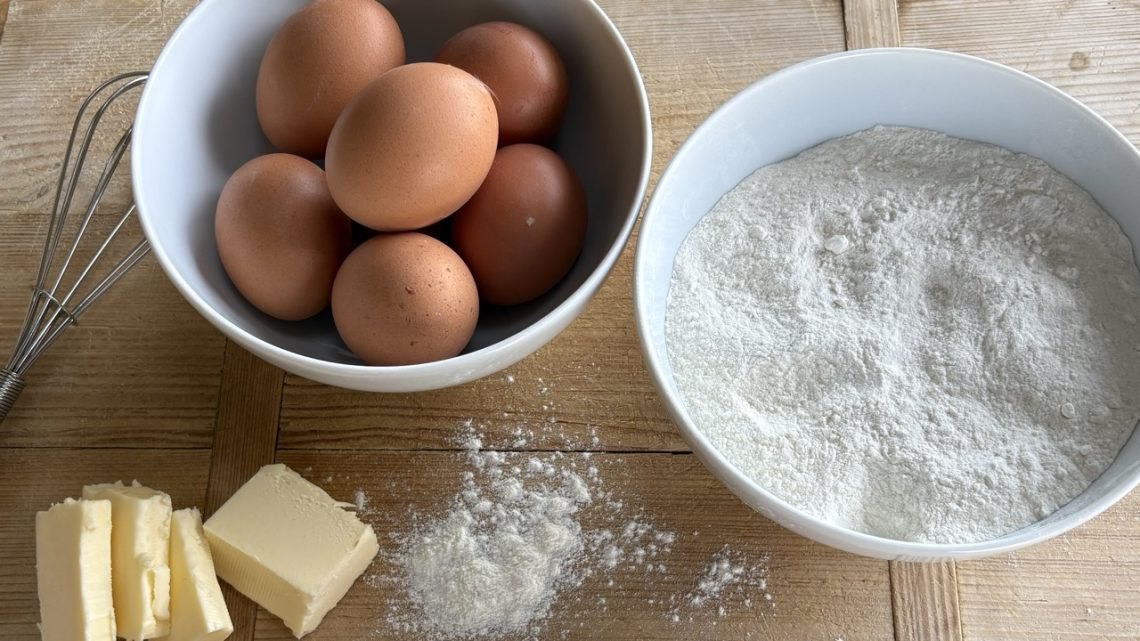
Even at a very young age, they can take part in simple ways: stirring a cake batter, peeling soft fruits and vegetables, picking ripe produce from the garden, cracking eggs, or helping assemble ingredients.
It doesn’t need to be perfect, efficient, or even particularly helpful.
It just needs to be part of what’s happening.
Working with a French school chef, I created a downloadable guide featuring some of the best-loved recipes served in French school cafeterias → Explore the French School Lunch Recipe Guide
So, How Do You Actually Do It?
So how do you actually do it?
First, don’t expect perfection — and don’t expect real help, at least not at the beginning. This is less about efficiency and more about what I think of as an edible education.
It’s about imitation. About children watching, participating, and slowly learning by doing.
A few practical things help along the way. Smaller tools make it easier for little hands to take part. Sturdy, everyday equipment works better than anything too delicate. And sometimes, something as simple as an apron or a small chef’s hat can make it feel like a real occasion — which, to a child, matters.
Below are a few of the tools that made it easier in our kitchen.
The Tools That Make It Easier
A few simple tools can make a big difference — not by making things more complicated, but by making it easier for children to participate.
Opinel Le Petit Chef Knife
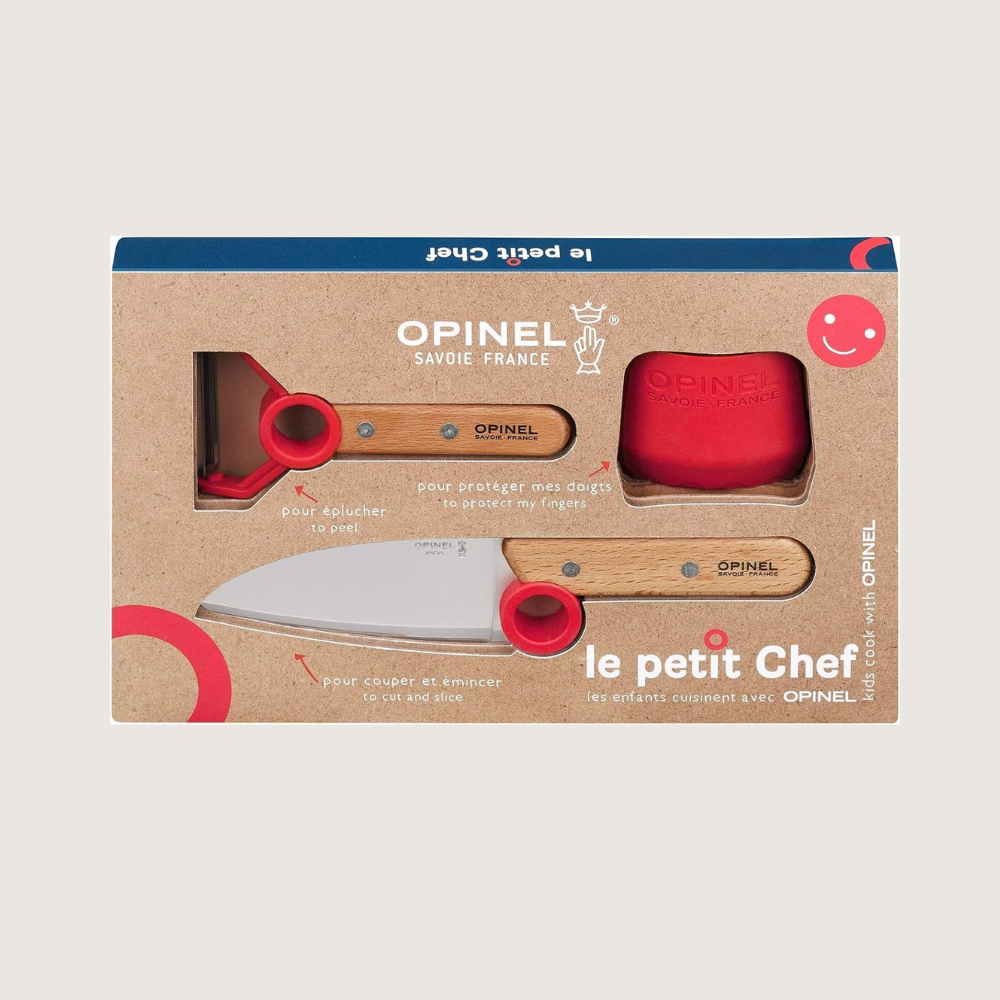
A simple, safe knife designed for small hands from France’s famous knife brand — one of the easiest ways to give children independence in the kitchen. This is the one we used the most when my children were little.
👉 View here
Mixing Bowls
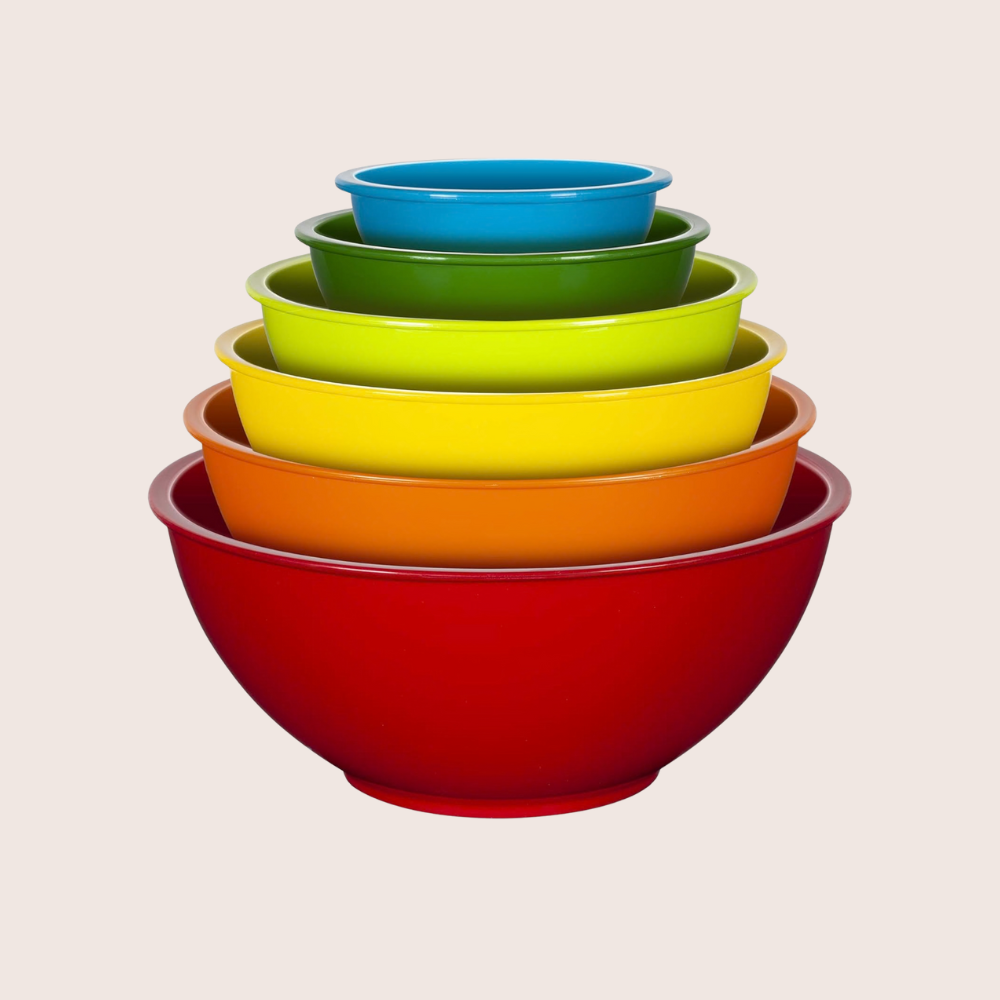
Bright, sturdy bowls that children can handle easily — perfect for baking or simple prep.
👉 View here
Mini Whisk
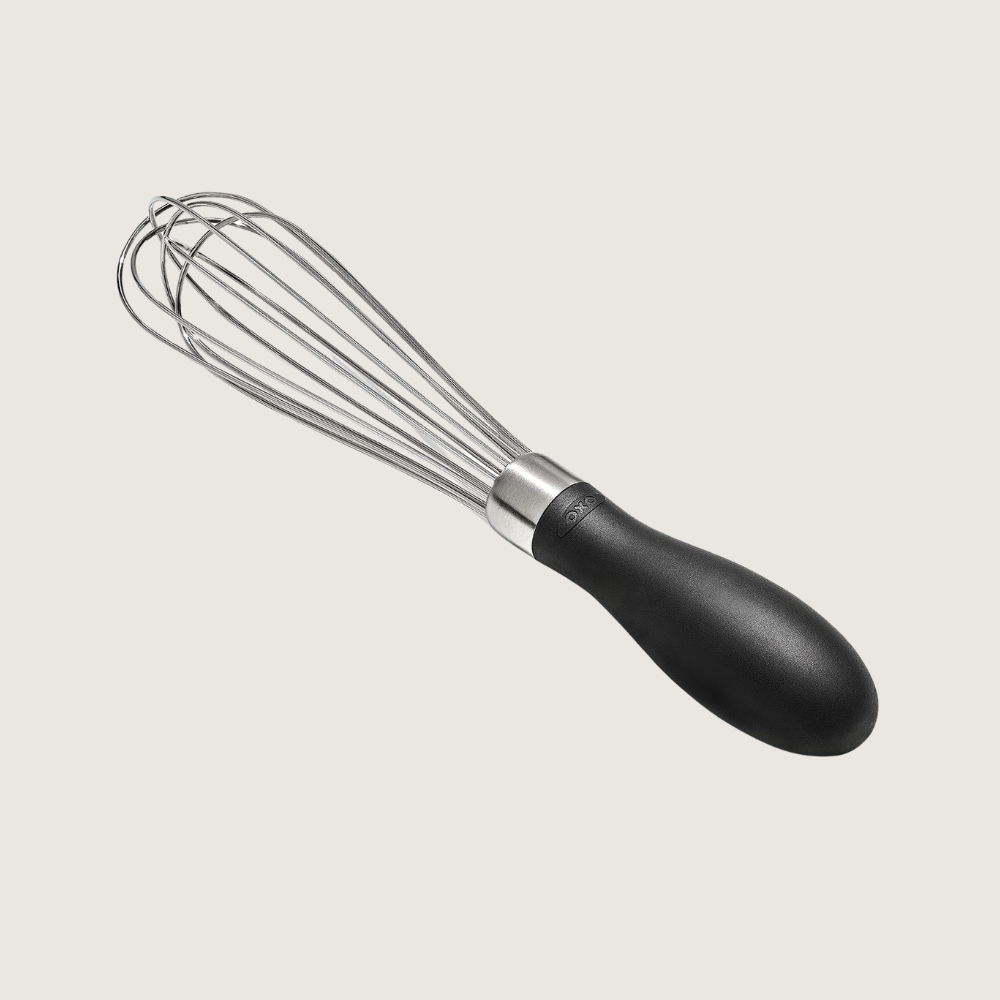
Small enough for little hands, but functional enough to actually use.
👉 View here
Apron & Chef Hat
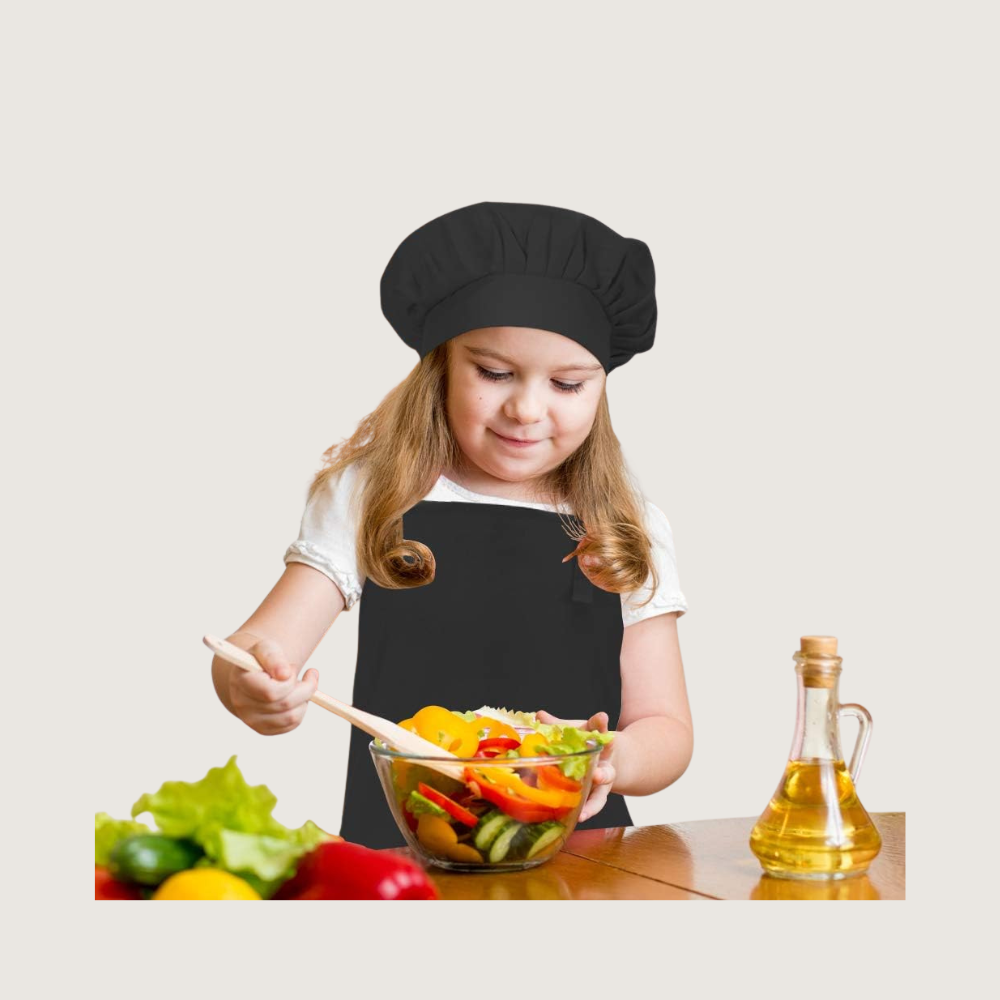
Not necessary — but fun. It turns cooking into something a bit more special.
👉 View here
You can find the full list of tools we’ve used and loved here:
👉 Children’s Cooking Tools
What Stays With Them
What stays with children isn’t the recipe.
It’s the feeling of knowing how to do something for themselves. Of being comfortable in the kitchen. Of recognizing ingredients, understanding where food comes from, and being part of the process from beginning to end.
And perhaps most importantly, it’s the sense that cooking — like eating — is not something separate or special, but simply part of a broader rhythm of life, something I wrote about in my post on simplifying life the French way.
More From France
If you’re curious about how France nurtures healthier habits — from school lunches to everyday food, movement, and wellbeing — I share practical tips and stories each month. Sign up for the free newsletter below and receive my guide, The French Guide to Everyday Wellbeing, straight to your inbox. Merci!
Come see it for yourself!
Follow along on Instagram and TikTok for real footage from inside French school cafeterias and kitchens, plus everyday life in France.
Some of these links are affiliate links. It doesn’t change the price for you — it just helps support my work here. Thank you for being part of it.