
Since moving to France, I’ve written often about the way people eat here — not as a set of rules, but as a quiet observation of everyday life. And one question continues to come up again and again: what do French women actually eat in a day?
I revisit this question regularly, because the answer is never exactly the same.
What follows is not a plan, a method, or a model to follow. Mainly, it’s simply a snapshot — a look at a few real days of eating from women living in France, each with their own habits, preferences, and rhythms. So, the photos don’t capture everything, and the notes help fill in what’s missing, but together they give a sense of how meals tend to unfold.
The women featured here are part of my immediate circle, so this reflects a particular slice of everyday life rather than a complete picture.
What stands out is not perfection, but structure. Meals have their place in the day. Moreover, lunch is often substantial. Additionally, dinner is usually simpler. While some women snack, others don’t. And some eat lightly in the morning, others not at all. Thus, there is variation, but also a quiet consistency.
This isn’t about eating “like the French.” It’s about seeing what eating can look like when there’s a rhythm to the day — and when food is simply part of it.
For an overview of everyday French wellbeing habits, start with → The French Approach To Wellbeing.
Sylvia
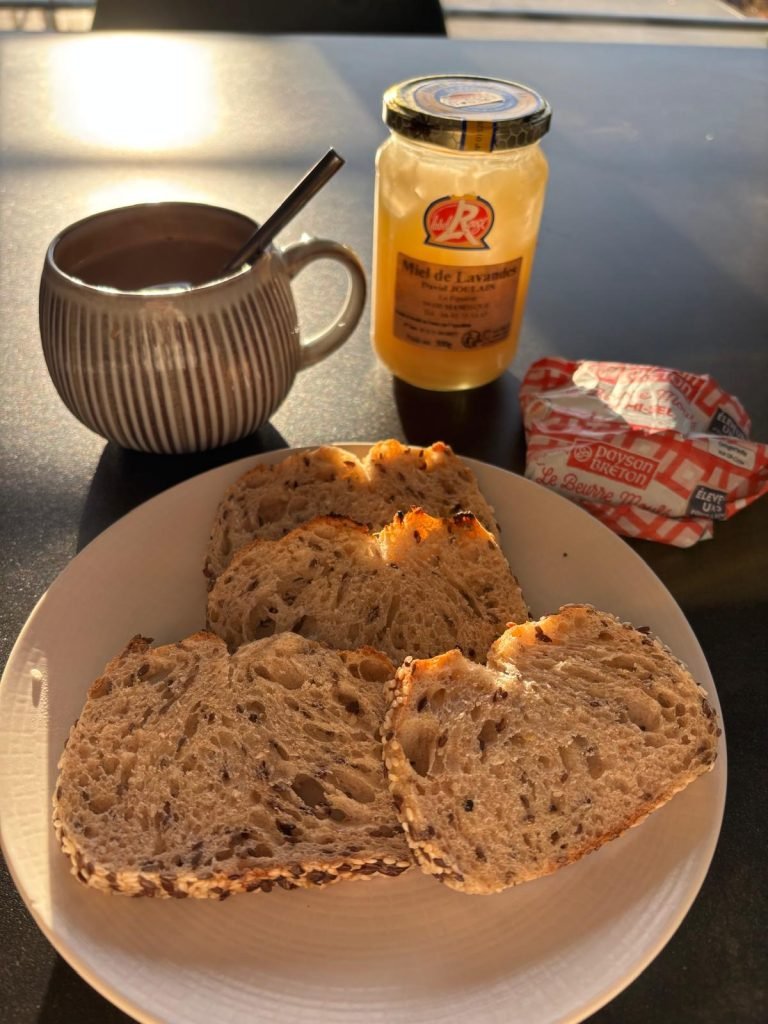
Breakfast (7:45 am)
Hot drink (chicory with milk), seeded bread with salted butter and honey.
Snack (11:00 am)
Fruit or a biscuit, especially if exercising between noon and 2.
Lunch (1:30 pm)
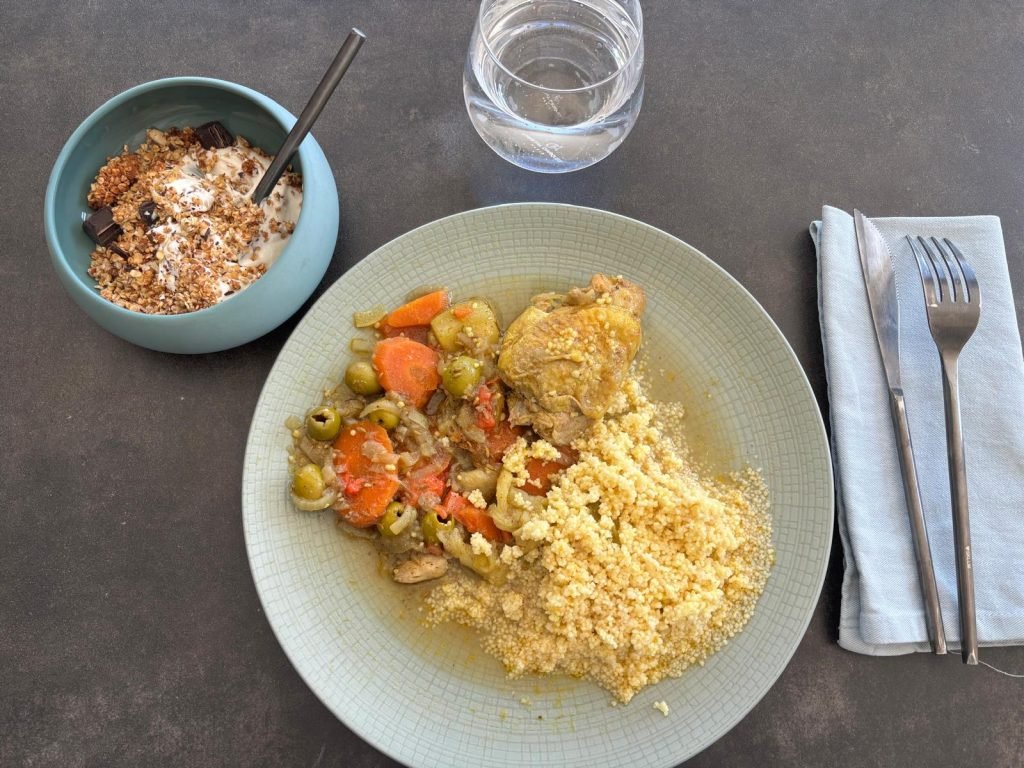
Tajine with chicken, carrots, turnips, zucchini, olives, preserved lemon, and spices, served with semolina.
Dessert: fromage blanc with homemade granola.
Snack (afternoon)
Fruit and a little chocolate.
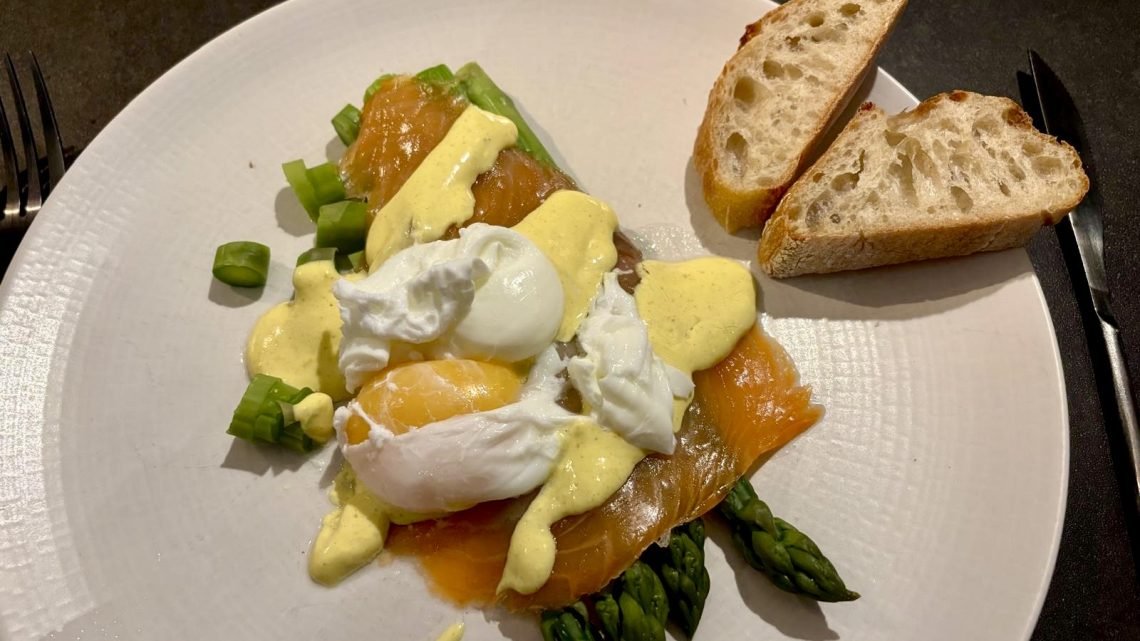
Dinner (8:00 pm)
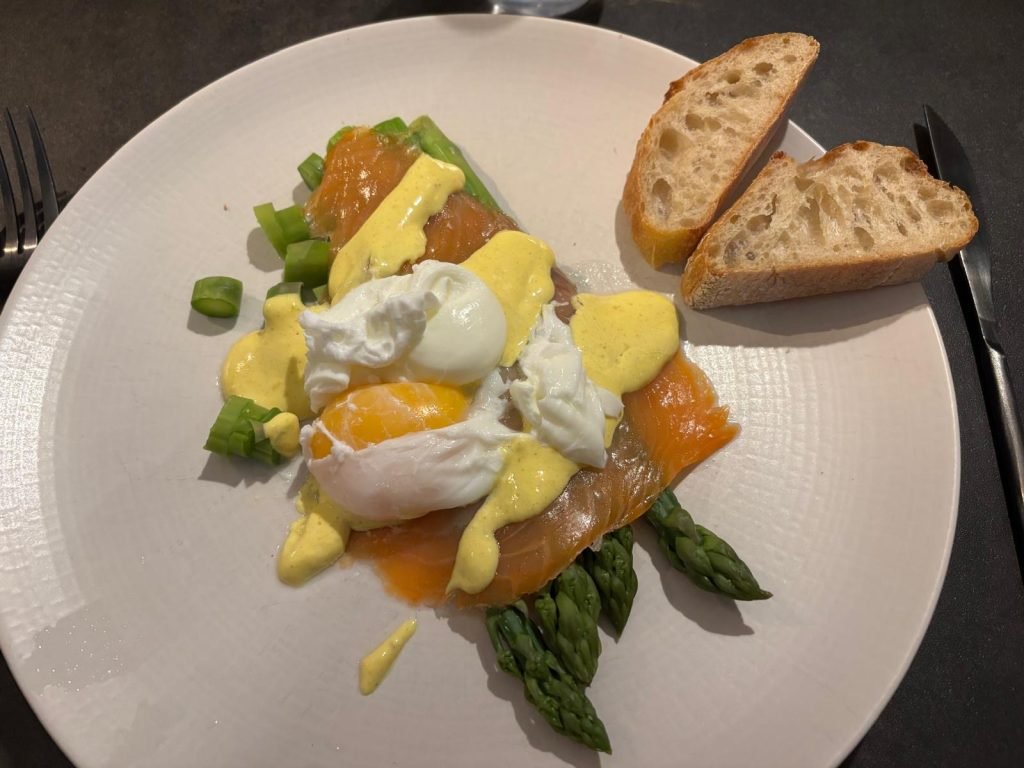
Green asparagus with one slice of smoked salmon, a poached egg, and a sauce made with crème fraîche, turmeric, saffron, and lemon juice.
Habits & Movement
Plans weekly menus before grocery shopping to save time, eat more balanced meals, reduce meat consumption, and limit food waste.
Moves around mostly by foot or bike because she lives close to work and leisure activities.
Weekly activities include:
- Tuesday: 45 minutes of strength training
- Wednesday: 1 hour 30 minutes of rowing on the lake
- Thursday: 45 minutes of outdoor HIIT
- Weekend: rowing, skiing, hiking in the mountains with family, or wakesurfing in summer
Read more → What French Women Eat in a Day (2022 edition)
Livia
Breakfast (8:00 am)
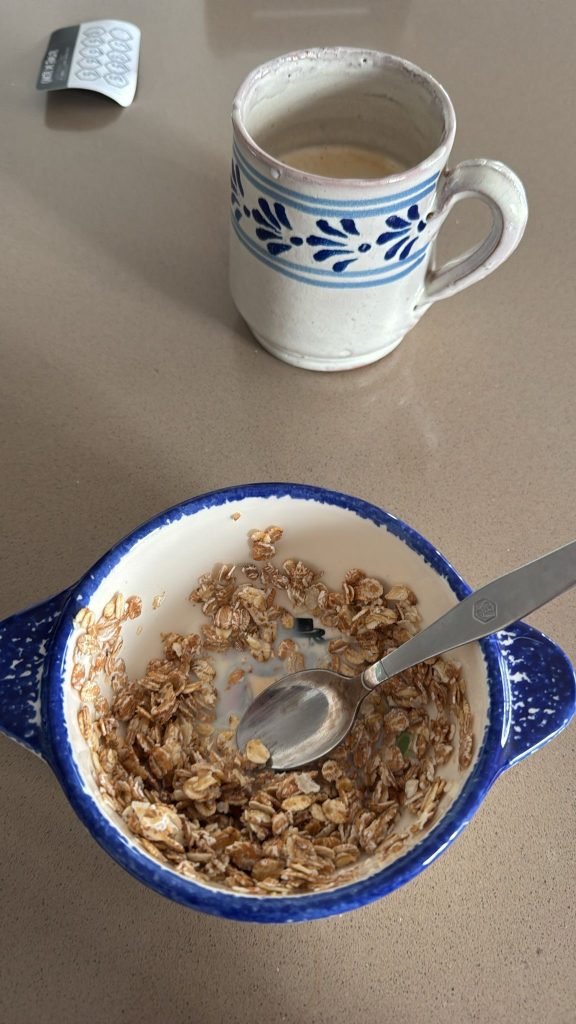
Bowl of oats with milk and coffee (with a dash of milk).
A second coffee around 11:00 am.
Lunch (12:00 pm)
Vegetarian meal, either at the office canteen or reheated leftovers.
Typically includes carbohydrates, vegetables, and some dairy.
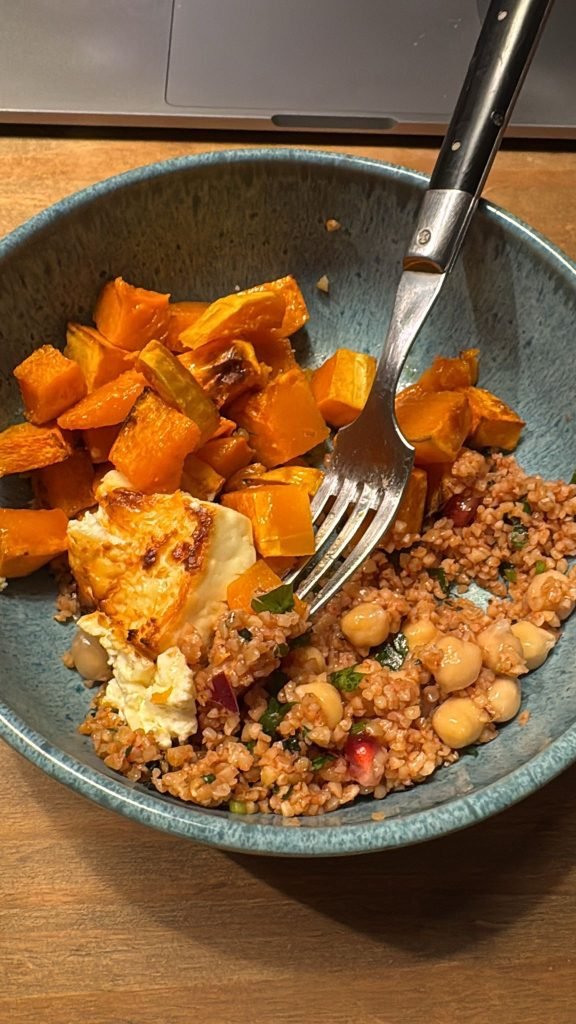
On this day: bulgur salad (tabbouleh-style) with chickpeas, roasted butternut squash, and feta cheese.
Coffee after the meal.
Snack (afternoon)
Either fruit with yogurt, or sometimes rice cake with peanut butter.
Dinner (8:00 pm)
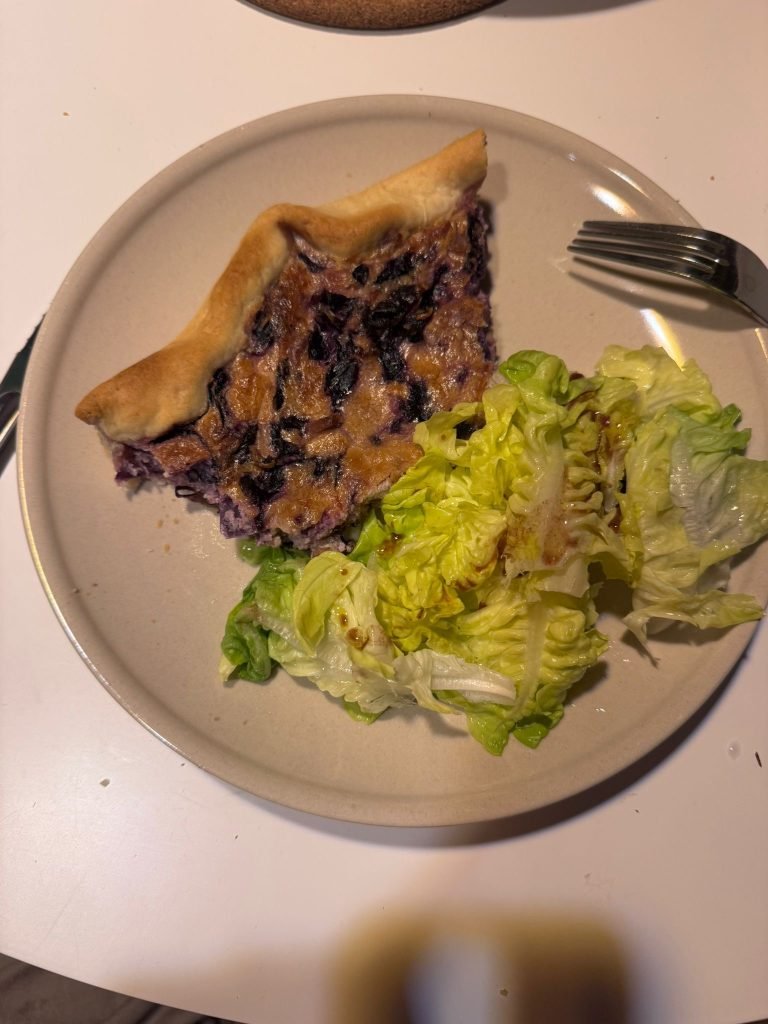
Homemade quiche (using what’s on hand), served with a side salad.
On this day: red cabbage, ham, and cheese quiche.
Piece of chocolate for dessert.
Habits & Movement
Occasional glass of wine or cocktail once or twice during the week when out with friends. Saturday mornings usually has a latte with a pastry (banana bread, carrot cake or pain au chocolat).
Exercises regularly, alternating between running, cycling, and at-home strength training with weights and a resistance band.
Has recently adopted a more regular sleep schedule during both weekdays and weekends.
Join my free monthly newsletter
for everyday French life, simple habits & sustainable wellbeing.
And get The French Guide to Everyday Wellbeing straight to your inbox!
Capucine
Breakfast
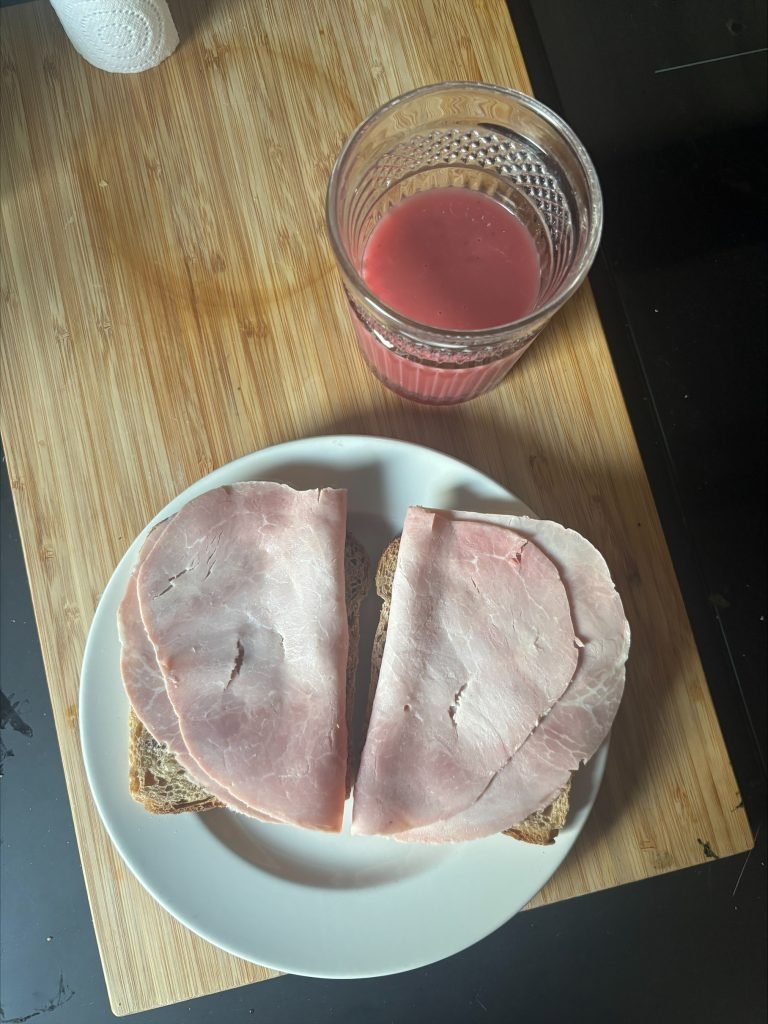
Savory breakfast: two slices of bread with ham or with an egg, served with orange juice or black tea.
Lunch
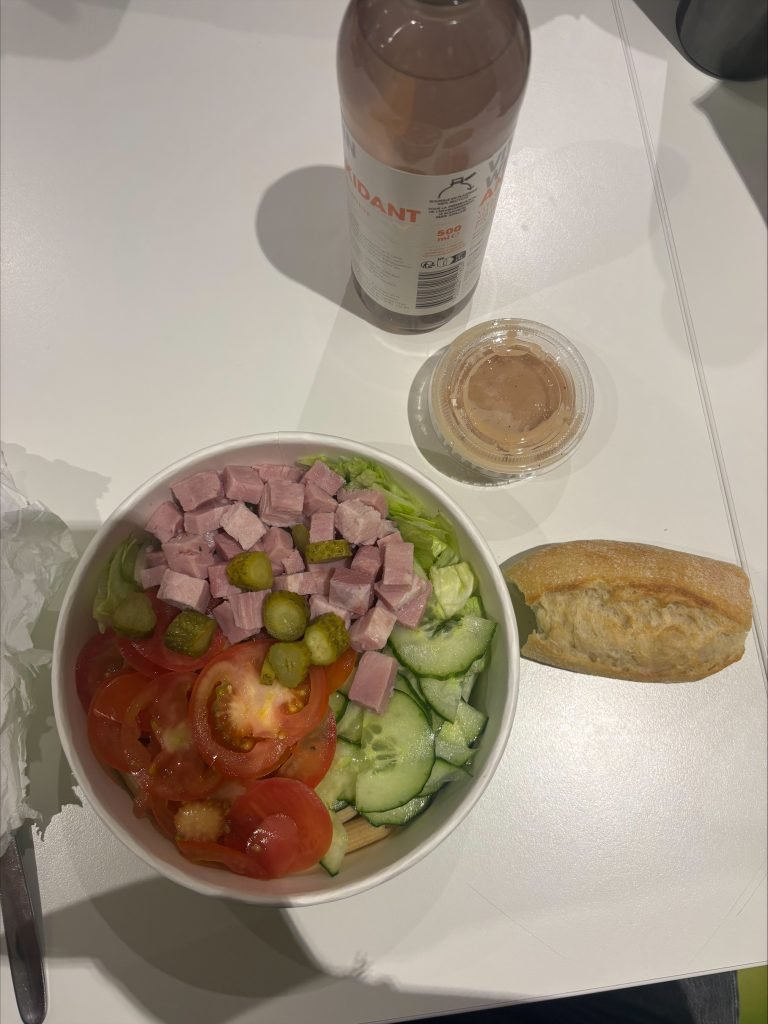
Composed salad (varies). On this day: whole wheat pasta, lettuce, ham, tomatoes, cucumber, and pickles.
Snack
None (except during long cycling sessions, when she has energy bars).
Dinner
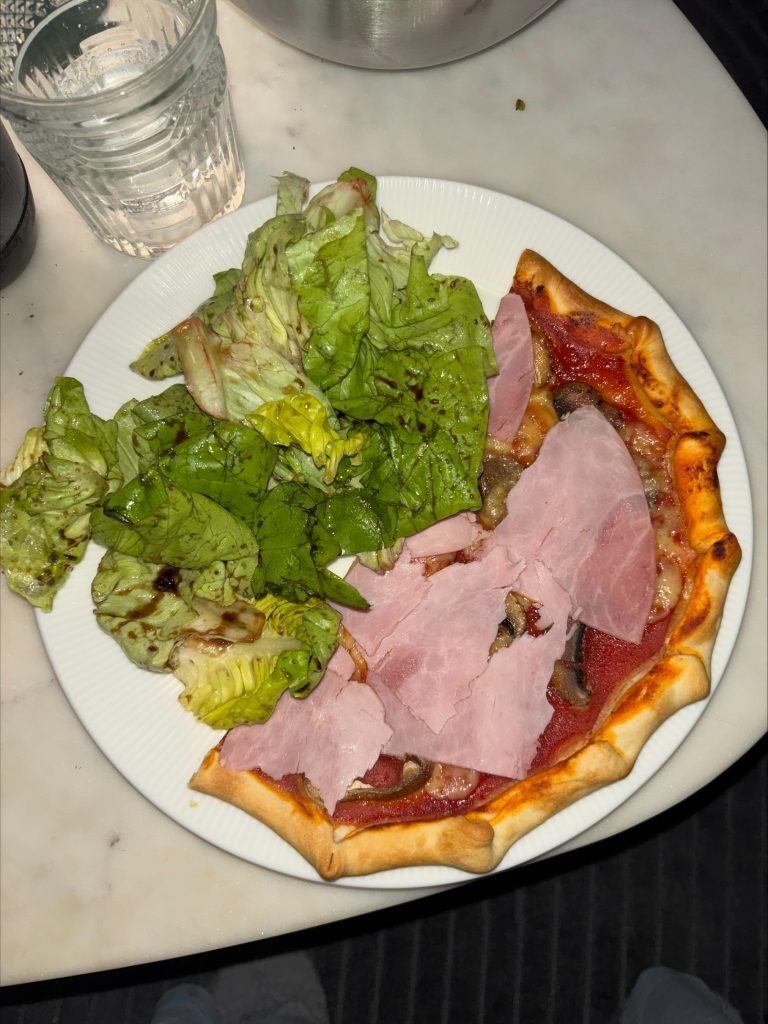
Green salad and homemade pizza with mushrooms, tomato sauce, Comté cheese, and ham.
Dessert (occasionally): compote.
Habits & Movement
Exercises about three times per week: running, strength training, and road cycling.
Also plays tennis or squash when time allows.
Does not drink alcohol during the week except when invited to friends’ homes; drinks on weekends when going out.
Does not restrict food and eats what she wants.
Read more → Why French Women Love the Mediterranean Diet
Vanina
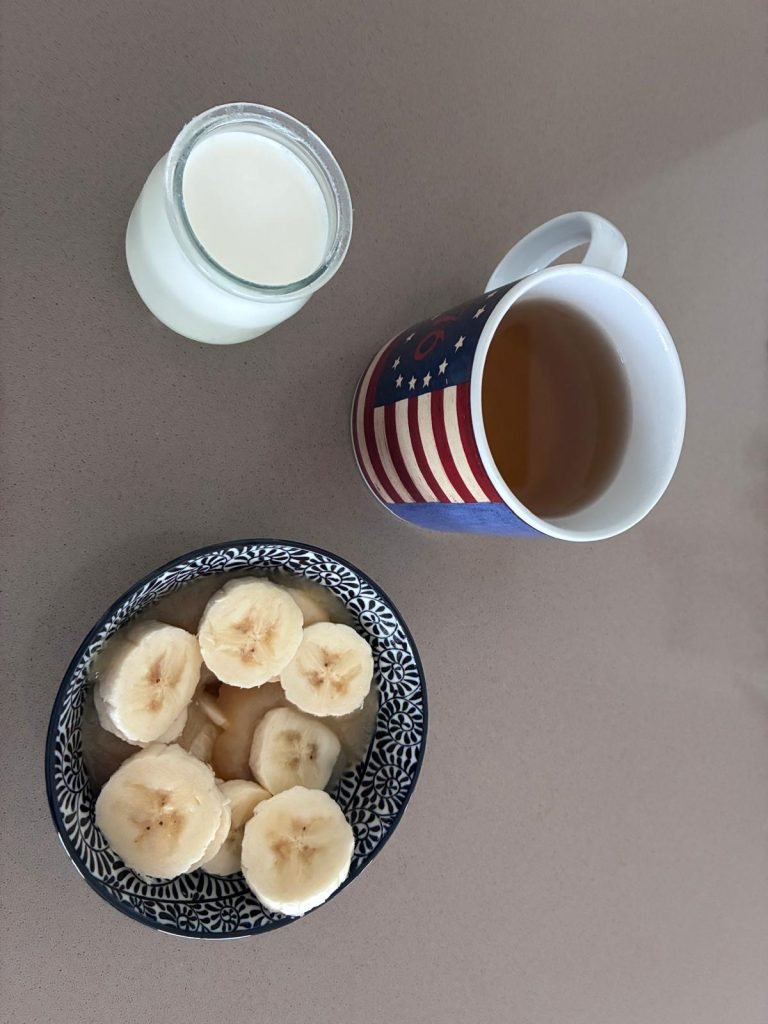
Breakfast (7:30 am)
Often skipped (intermittent fasting), with several cups of tea in the morning.
When eaten: tea with fruit salad, applesauce, and yogurt or cottage cheese.
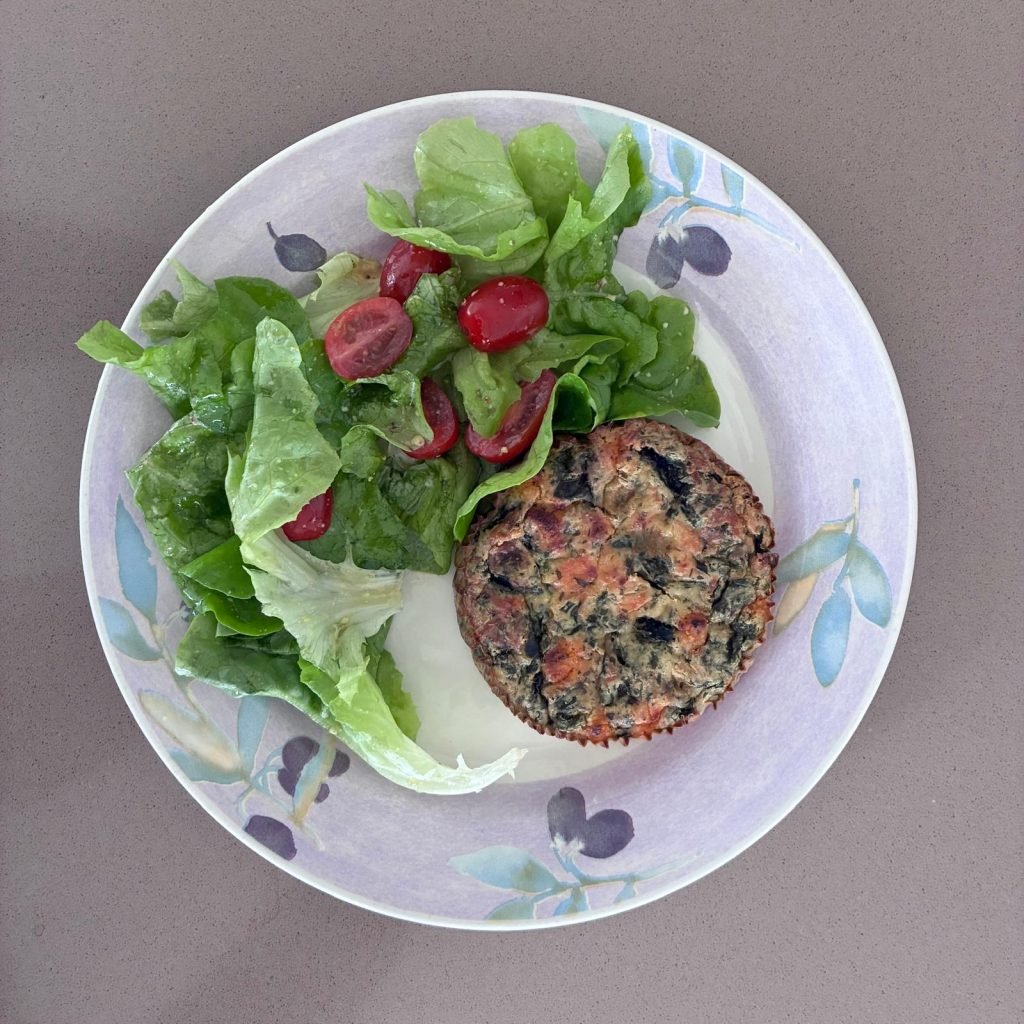
Lunch (1:00 pm)
Large seasonal salad (lettuce, tomatoes, zucchini, endives, avocado, grapefruit, apples, nuts depending on the season), paired with either a quiche, soup, or cheese.
On this day: salad with spinach and salmon quiche.
Snack (4:30–5:00 pm)
Yogurt, applesauce, or fruit (especially when at home).
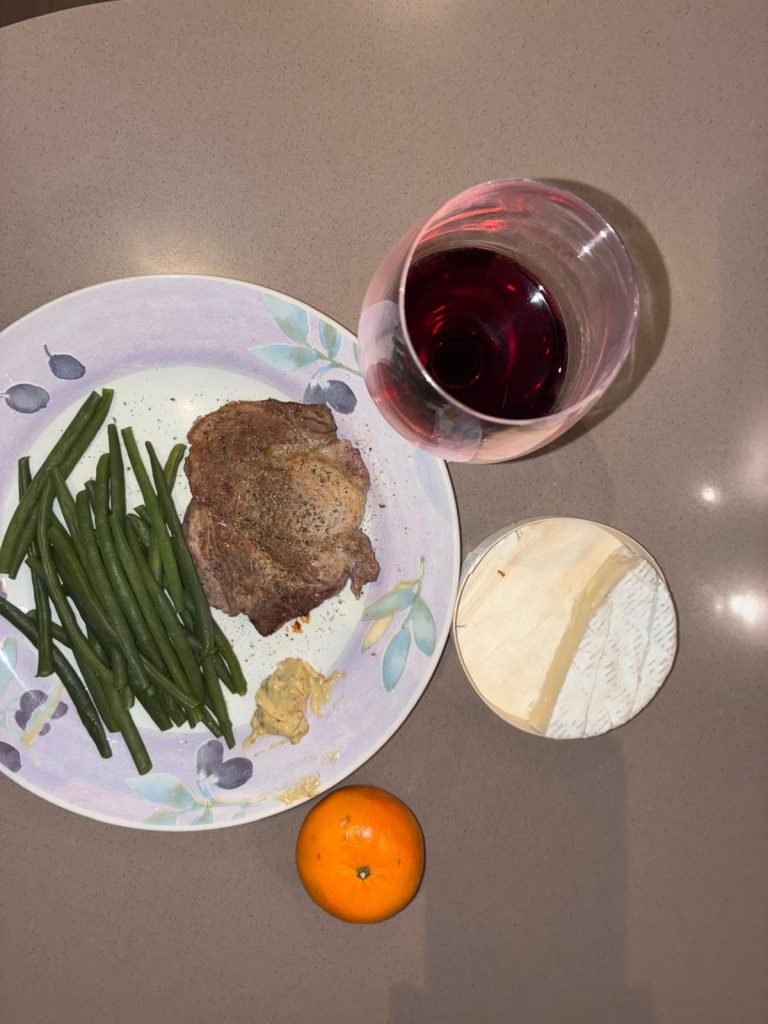
Dinner (8:00 pm)
Warm meal: vegetables with meat, followed by cheese (often goat cheese).
Occasionally a glass of wine.
Sometimes fruit or a piece of chocolate.
Habits & Movement
Limits alcohol during the week and drinks it only at dinner.
Practices Pilates one to two hours per week.
Plays golf weekly and walks regularly, including hiking trips.
Skis during the season.
Also follows online strength workouts at home using weights.
Drinks water, tea, and herbal tea throughout the day.
Adjusts portions depending on activity level (eating more when skiing or hiking, less on evenings with late Pilates classes).
Weekend habits vary, with more regular breakfasts and more meals out.
Returns to a structured routine during the week, aiming to limit starches, alcohol, and processed foods.
Read more → 10 Ways French Women Practice Self Care
Rebeca
Breakfast
No breakfast. This isn’t intentional — I’ve just never really had the habit.
Coffee in the morning.
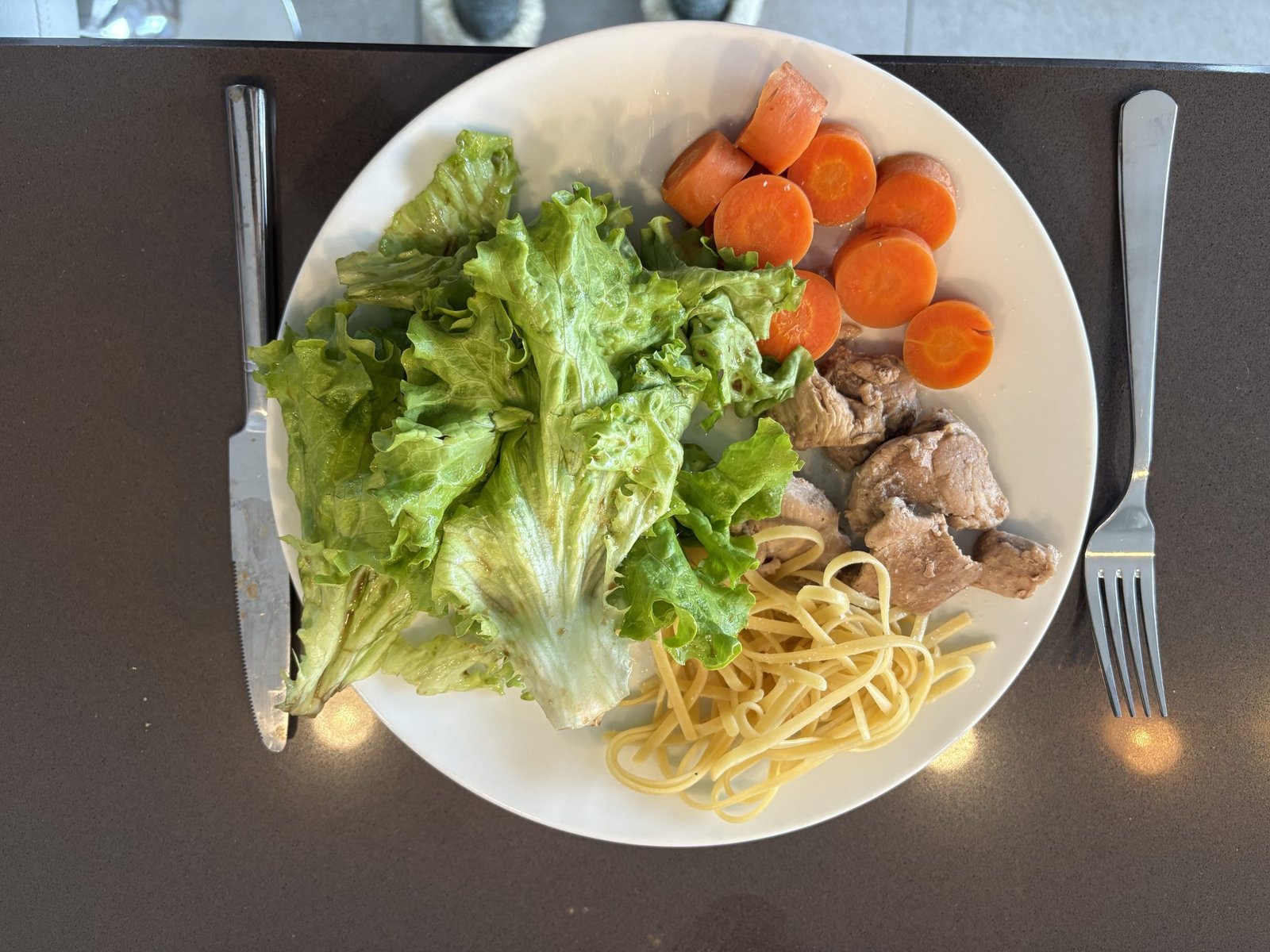
Lunch (12:30 pm)
Chicken, carrots, a small portion of pasta, and green salad.
Also: a small Greek yogurt and a square of milk chocolate.
Snack (4:30 pm)
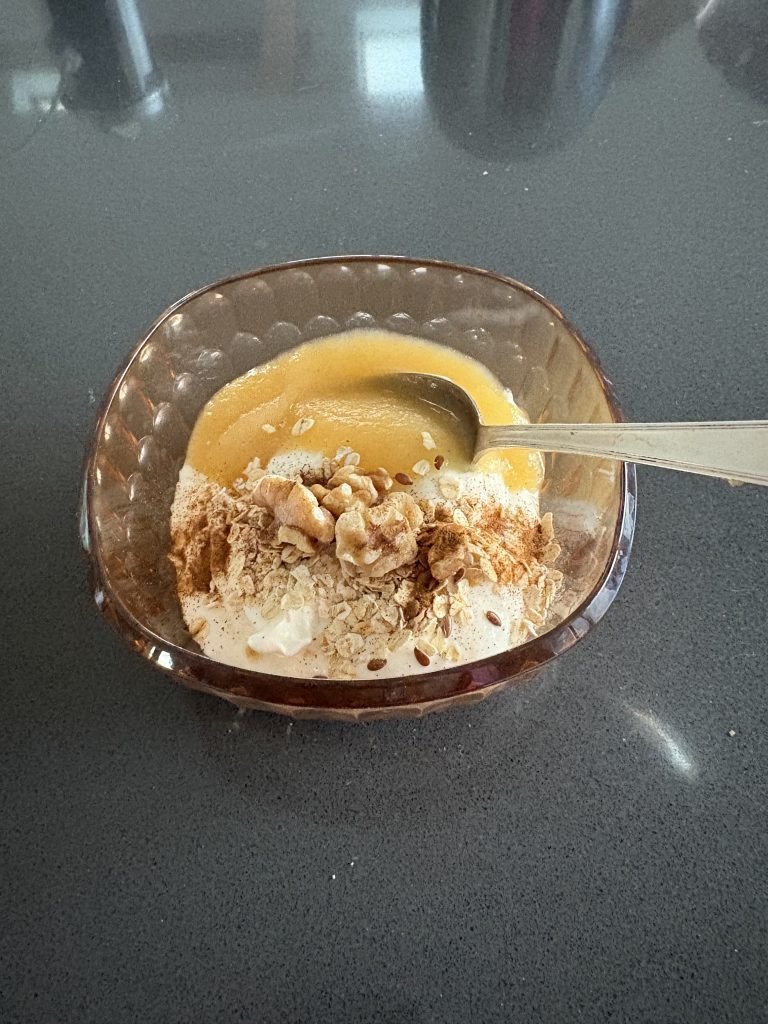
Small bowl of Greek yogurt with a bit of applesauce, a sprinkle of oats, a few nuts, and cinnamon.
Dinner (7:30 pm)
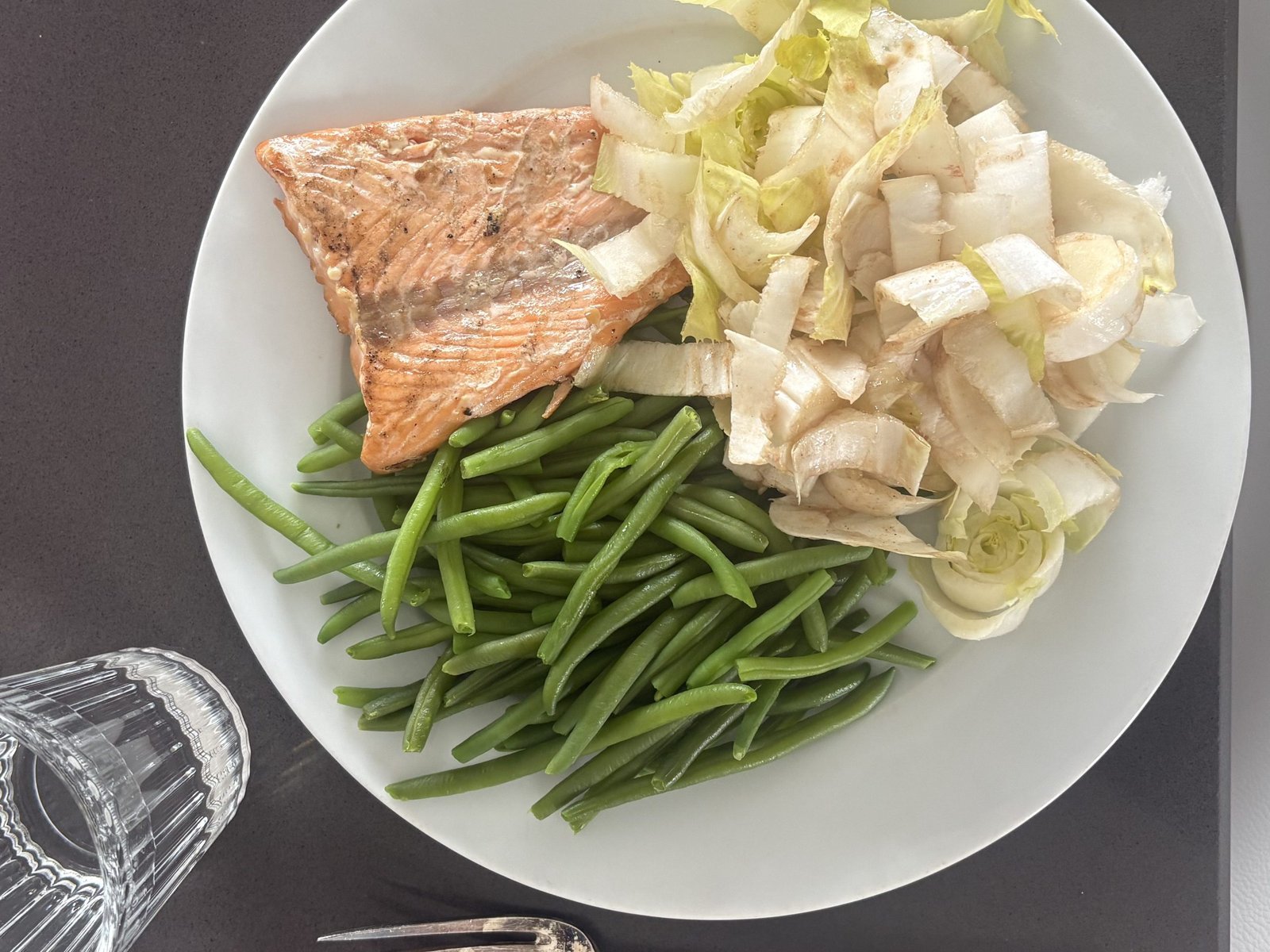
Salmon with green beans, endives. Also: small greek yogurt.
Habits & Movement
Walk 1–2 hours every day.
Strength training four times a week (20–30 minutes each session).
Depending on the season: hiking, lake swimming (winter and summer), cross-country skiing.
Rarely drink alcohol, except when socializing on weekends.
Coffee in the morning, then herbal tea from lunch onwards.
Try to drink plenty of water (a work in progress).
Read more → French Detox Soup
What We Can Learn From These Days
What becomes clear across these days is how unremarkable the eating is — and that’s precisely the point.
There’s no single way of doing things, but there are patterns. For example, meals are defined. Moreover, lunch is often the anchor of the day. Dinner tends to be lighter. Some women snack, others don’t. There’s flexibility, but not constant adjustment. Food isn’t treated as something to manage all day long.
Finally, nothing is really off limits. There’s bread, cheese, pasta, sweets, chocolate, wine, coffee, tea — all of it appears, just within the rhythm of the day. Portions, at the same time, tend to be moderate. Vegetables take up space on the plate, protein is present but not excessive, and meals feel balanced without being heavy.
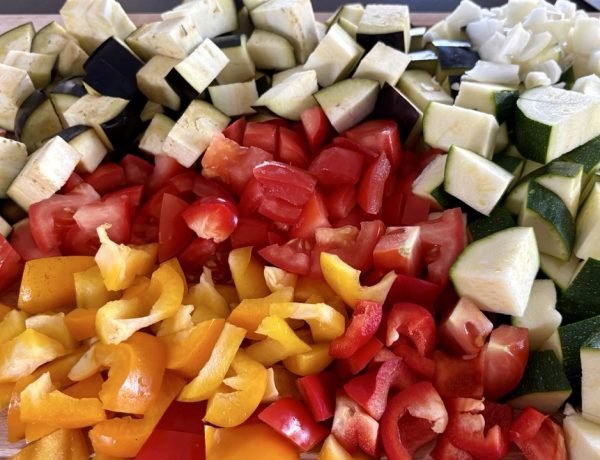
👉 For an easy vegetable recipe, I’ve written about my French aunt’s easy baked ratatouille here.
Another thing that stands out is how much of this food is prepared at home. Meals are simple — vegetables, grains, meat or fish, salads, soups, quiches. Nothing particularly complicated, and very little that is fried or highly processed. Even something like pizza is often made from scratch. Eating out happens, but more often on weekends or social occasions.
For me, this rhythm took time. Before living in France, my eating was much less structured — more snacking, more thinking about food, more variation from one day to the next. Over time, without really deciding to change anything, meals simply fell into place. Lunch became something to sit down for. The in-between eating faded. And the day felt simpler.
What stands out, in the end, is not a focus on food, but a lack of obsession around it. Meals are expected, prepared, and enjoyed — but not constantly questioned or managed. At the same time, there is a clear value placed on quality. Ingredients matter. Even simple meals are made with care. It doesn’t need to be elaborate or creative to feel satisfying.
In a country known for its gastronomy, the everyday reality is much simpler. Most meals are not remarkable. They are just made at home, with real ingredients, and eaten at the right time.
This isn’t about doing it “right.” It’s just a different way of organizing the day — one where meals have a place, and where not every decision revolves around food.
And perhaps that’s what stands out most: not what is eaten, but how little it needs to be thought about once a rhythm is in place.
It’s not perfect. But it works.
More From France
If you’re curious about how France nurtures healthier habits — from school lunches to everyday food, movement, and wellbeing — I share practical tips and stories each month. Sign up for the free newsletter below and receive my guide, The French Guide to Everyday Wellbeing, straight to your inbox. Merci!
Come see it for yourself!
Follow along on Instagram and TikTok for real footage from inside French school cafeterias and kitchens, plus everyday life in France.